
Activity CZ 80
How to Start an Auto Exhaust Repair Business in Dubai
Exhaust work stopped being about silencers. Most of a modern exhaust is emissions equipment, the expensive part of it is worth stealing, and the margin now sits with the shop that can still fabricate and weld.
ConsultZone licensing desk
- Activity code
- CZ 80
- Category
- Trading
- Reviewed
- Read
- 8 min
Listen instead
48 seconds
An audio summary of this guide.
Topic summary
How to Start an Auto Exhaust Repair Business in Dubai
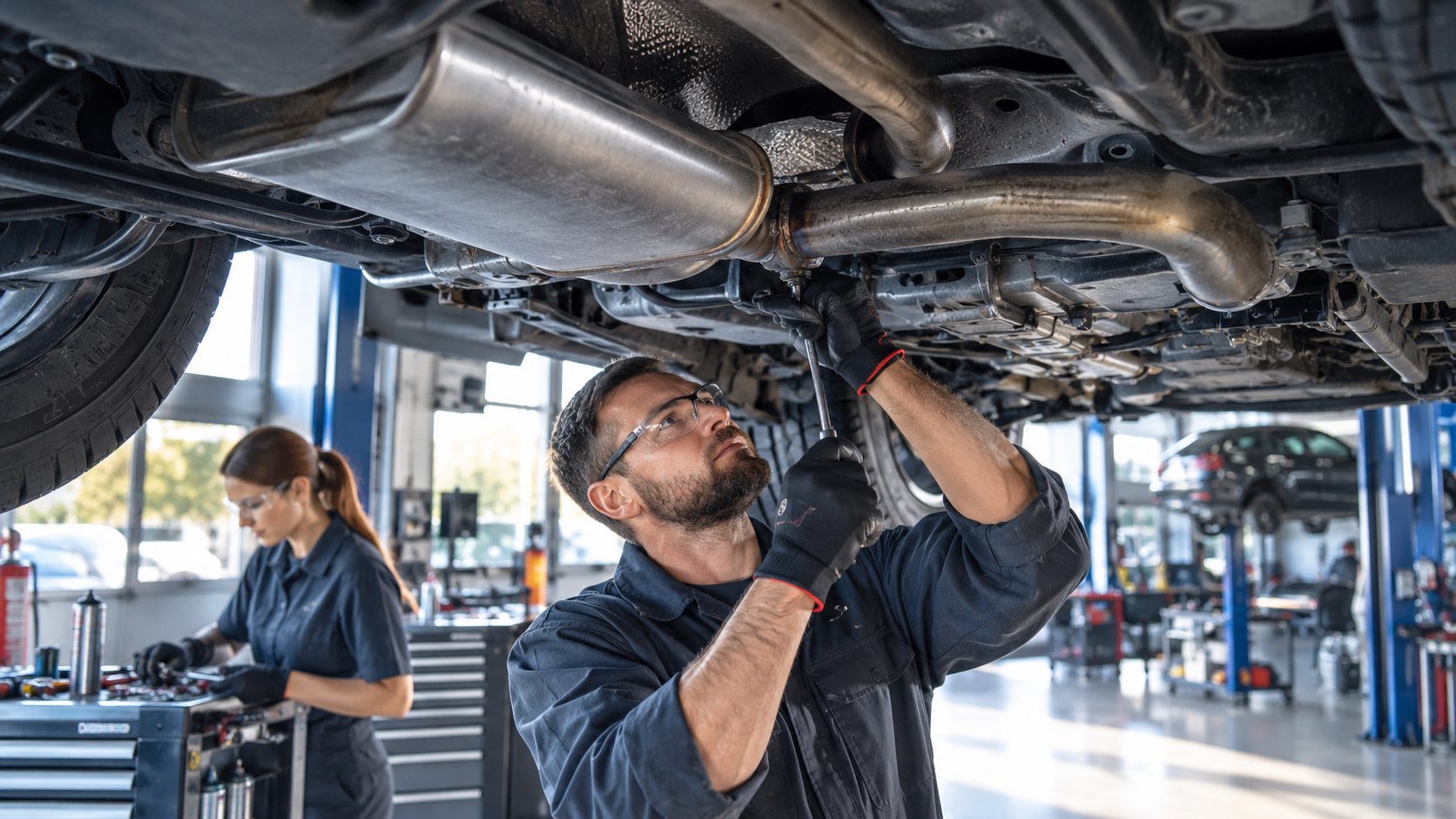
The sign outside still says exhaust repair and the trade behind it has changed almost completely. A generation ago the job was a rotted silencer, a hacksaw and a clamp, sold to a customer who had been embarrassed by the noise. Today most of what hangs under a car between the engine and the tailpipe is there to clean the gas rather than to quieten it, the most valuable component in it is a theft target, and the customer who walks in is more often carrying a warning lamp and a test date than a complaint about noise.
That shift splits the work into two halves that behave nothing like each other. One half is metal: pipes, silencers, resonators, flanges, hangers and heat shields, which corrode, crack and break, and which a shop with a bender and a welder can make. The other half is emissions equipment — the catalytic converter, the oxygen sensors that tell the engine how combustion is going, and on diesels a particulate filter — matched to the vehicle, bought in rather than fabricated, and diagnosed rather than inspected. A workshop that only fits parts competes on the price of a part number. One that can genuinely fabricate has something a parts counter cannot sell.
The other change is where the deadline comes from. A vehicle here has to pass a periodic technical inspection to keep its papers current, and the condition of the exhaust and emissions system is part of what that inspection reads.¹ So much of the work is calendar-driven rather than fault-driven: the customer's real problem is a date, and a shop that understands that is selling against a deadline instead of against the workshop across the street. It also means the honest answer is sometimes that a repair will not survive the test — a better conversation to have before the money is taken than after.
One more feature of the modern trade changes how a shop is set up. A catalytic converter contains precious metals, which is why converters are stolen off parked cars and why a removed one has scrap value rather than none. A workshop accumulating used converters is holding something worth taking, and the sensible arrangement is that they leave through a proper scrap channel with a record of where each one came from.
The trade suits a welder more than a parts fitter
An experienced fabricator or welder going out alone
The most natural owner. The skill the trade is short of is welding thin-wall tube overhead, in a confined space, next to a fuel line, well enough that the joint does not leak or crack on a hot exhaust. That is a hand skill, it takes years, and it cannot be bought in a tool catalogue.
A general workshop turning away work it should be keeping
A mechanical shop already sees exhaust faults arrive, sends most of them down the road, and loses the diagnostic work attached to them. Adding a bay and a bender converts referrals into revenue, and the diagnosis is usually the better-paid half.
A parts trader who wants the labour as well
A business already importing silencers, converters and sensors has the supply side solved and earns only a trading margin on it. Fitting the same parts captures the labour — but it is a different licence line, a different premises and staff on a payroll.
Where this is the wrong purchase. If the intention is a full-service workshop taking engines, brakes, suspension and servicing, the general repair line is the correct one and this narrow activity will constrain the business. If the intention is to import and sell exhaust components without touching a vehicle, a trading activity is cheaper to hold and needs no ramp.
What actually comes through the door does not all belong to the same answer, and being clear about that is how a shop stops losing money on jobs it should have passed on.
six complaints arriving as one, three different destinations
- A rotted silencer, mid-pipe or tailpipeThe section gets made rather than bought, and the labour is the margin
- A cracked flange, a blown joint or a broken hangerAn hour of welding and a gasket, sold as skill rather than as a part
Your own bench, cut and welded
- A blocked or collapsed catalytic converterIt is emissions equipment matched to the vehicle, not something a bender can make
- An oxygen sensor reading out of rangeThe diagnosis is the work; the part is a number ordered against the vehicle
A component bought in and fitted
- A diesel particulate filter that will not clearCleaning or replacing it is its own equipment and its own trade
A specialist outside this line
- A rich mixture or burnt oil the exhaust is only reportingThe exhaust is the symptom and the fault is upstream of it
A general repair workshop
What the line lets you cut out, and what it does not
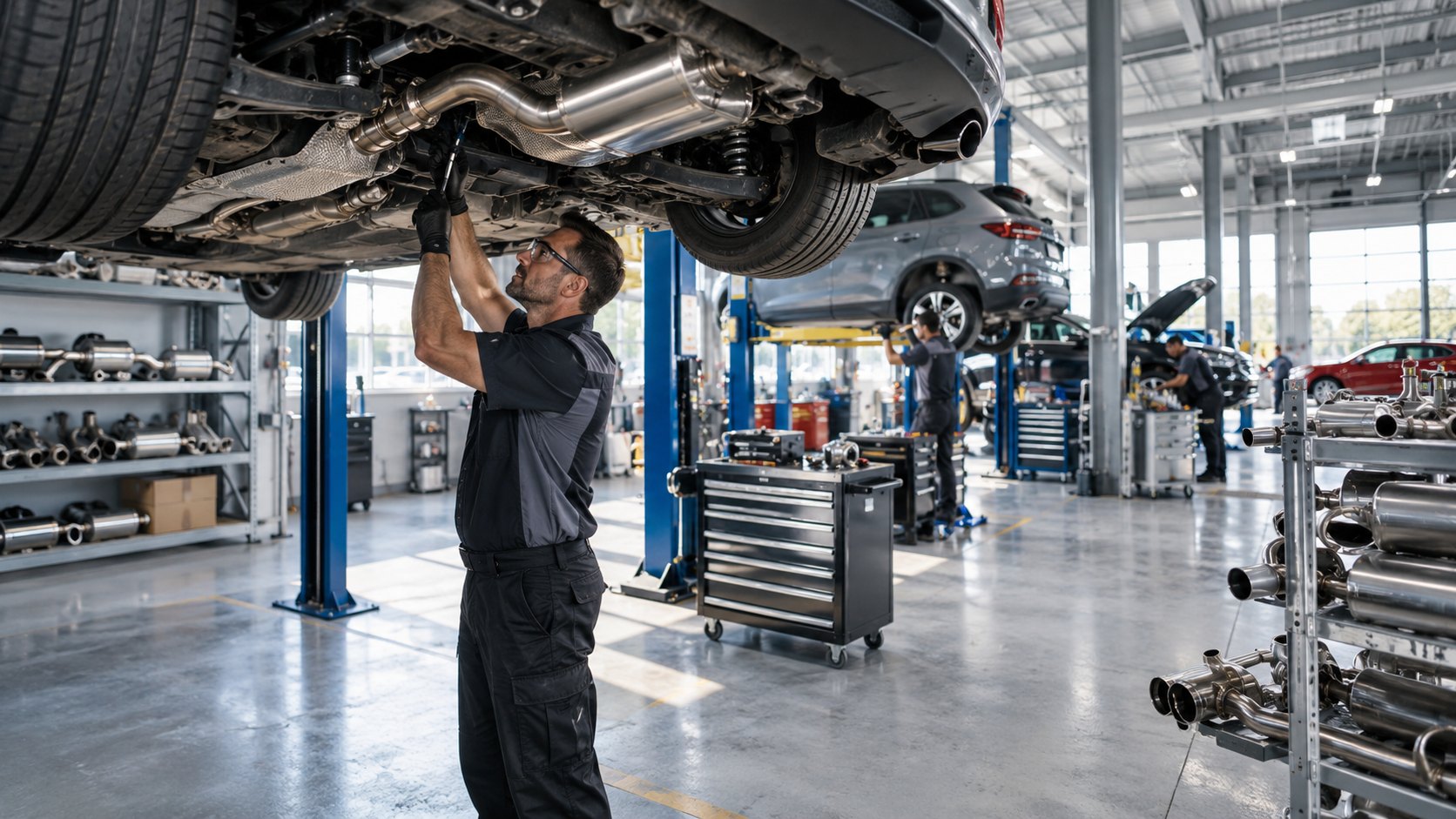
On its own terms the activity covers work on the vehicle's exhaust system: cutting out and replacing corroded sections, bending and fabricating pipework, replacing silencers and resonators, renewing flanges, gaskets, clamps, hangers and heat shields, tracing and sealing leaks, and fitting replacement converters and sensors as part of putting the system back together.
Three things sit outside it and each one catches somebody. The engine fault that an exhaust complaint is reporting is engine work, and a shop that chases a smell of fuel or a smoking tailpipe past the tailpipe is working outside its line. Tuning, remapping and anything that changes how the engine is calibrated is a separate competence and a separate proposition. And dealing in used converters as a commodity is a metal trade with its own scrutiny, not an incidental by-product of a repair bay.
The fourth boundary is not about scope but about judgement, and it is worth being direct. Customers ask for exhausts to be made louder, and they ask for emissions equipment to be removed because a replacement costs real money. Noise and emissions limits apply to a vehicle using a public road, and a modification that defeats them leaves the customer with a vehicle that will not pass its inspection and the workshop with a reputation for work that has to be undone. The shape of the requirement is what matters here: exactly what is permitted, and by whom, is a question for the transport authority in the relevant emirate rather than something a workshop should be deciding at the counter.¹
A bay that can take hot work, not just a ramp
The premises requirements in this trade come from the nature of the work rather than from the vehicles. Cutting and welding under a car is hot work carried out a short distance from a fuel tank and fuel lines, so how a bay is arranged, what is kept in it and how fire risk is controlled is a matter for the building's fire-safety approvals rather than a workshop layout preference.² Extraction is needed twice over — once for welding fume, and again because engines are run indoors while a leak is being traced, which is the single most common gap in a small workshop's setup. Grinding sparks, metal dust and hot offcuts belong to the same conversation, and the municipality's premises-suitability conditions and waste requirements are cheaper to satisfy in a unit chosen for the purpose than in one adapted to it afterwards.³
Stock is the quiet working-capital trap. Aluminised and stainless tube in a usable spread of diameters, mandrel bends, flexible sections, clamps, hangers and gaskets is a lot of slow-moving steel on a rack, and a diameter you do not hold is a job you turn away. Almost all of it is imported, so the company wants a customs code in its own name.⁴ A lift or a pit is not optional either: this is overhead, two-handed work, and a shop working off jacks is slower, more dangerous and visibly less credible.
Location behaves unusually here. Passing retail traffic matters less than being on a street where workshops cluster, because a large share of the work is sent by other workshops that do not weld, and being near a testing centre is worth more than being near a shopping centre. The whole business also rests on one or two people: a welder who can work thin-wall tube overhead is the asset, their permits run through the Ministry of Human Resources and Emiratisation, and losing one is a capacity problem no equipment answers.⁵
A mainland licence is the ordinary answer, because the customers are vehicles on UAE roads and the unit sits in a municipality's industrial area with the approvals that attach to it. A free zone licence describes a different business with the same skills — holding and re-exporting components without clearing them into the local market. Which activity name fits the intended scope, which approvals attach to a particular unit and what the licence costs to hold all depend on the emirate and the licensing authority, and ConsultZone confirms that for the specific case before a lease is signed.
References
- Roads and Transport Authority — vehicle testing, vehicle and transport permits, and the conditions applying to vehicles used on the road in Dubai. Roads and Transport Authority
- Dubai Civil Defence — fire-safety requirements for premises where cutting, welding and other hot work are carried out. Dubai Civil Defence
- Dubai Municipality — premises suitability, workshop ventilation and the conditions attaching to industrial waste. Dubai Municipality
- Dubai Customs — importing tube, silencers, converters and sensors, and holding a customs code in the company's own name. Dubai Customs
- Ministry of Human Resources and Emiratisation — work permits and labour contracts for welders and technicians. Ministry of Human Resources and Emiratisation
Elsewhere in Trading
Activities that sit beside this one
Most licences carry more than one activity. Adding a neighbouring line at the application stage costs a fraction of amending the licence afterwards.
Begin with a clear conversation
Tell us what you intend to build.
A consultant will map the structure, jurisdiction, approvals and likely cost against what you actually described — not against a package.
