
Activity CZ 79
How to Start an Auto Rust Proofing Services Business in Dubai
Rust proofing is sold at the moment a car is bought, not when it corrodes. That makes the dealership and the fleet manager the customer, and it makes this a channel business with a workshop attached.
ConsultZone licensing desk
- Activity code
- CZ 79
- Category
- Trading
- Reviewed
- Read
- 8 min
Listen instead
50 seconds
An audio summary of this guide.
Topic summary
How to Start an Auto Rust Proofing Services Business in Dubai
Almost nobody wakes up and decides to have a car rust proofed. The decision is made for them, in a showroom, in the twenty minutes between agreeing a price and signing the paperwork, when a menu of protective extras is put in front of a buyer who has already committed to a much larger number. A rust proofing operation that waits for drivers to notice corrosion is a workshop with an empty bay. One that has an arrangement with a dealer group is a production line with a delivery schedule.
The physical case for the service is easier to make here than in most markets. Most of the population lives within a short drive of the sea, the air carries salt and holds moisture for much of the year, and an air-conditioned car moving through that air is a machine for making condensation inside its own box sections — sills, chassis rails, door bottoms, wheel arches, the seams a factory coating reaches least well. Add sand that scours the underside at road speed, and the bottom of a vehicle here works harder than its bodywork.
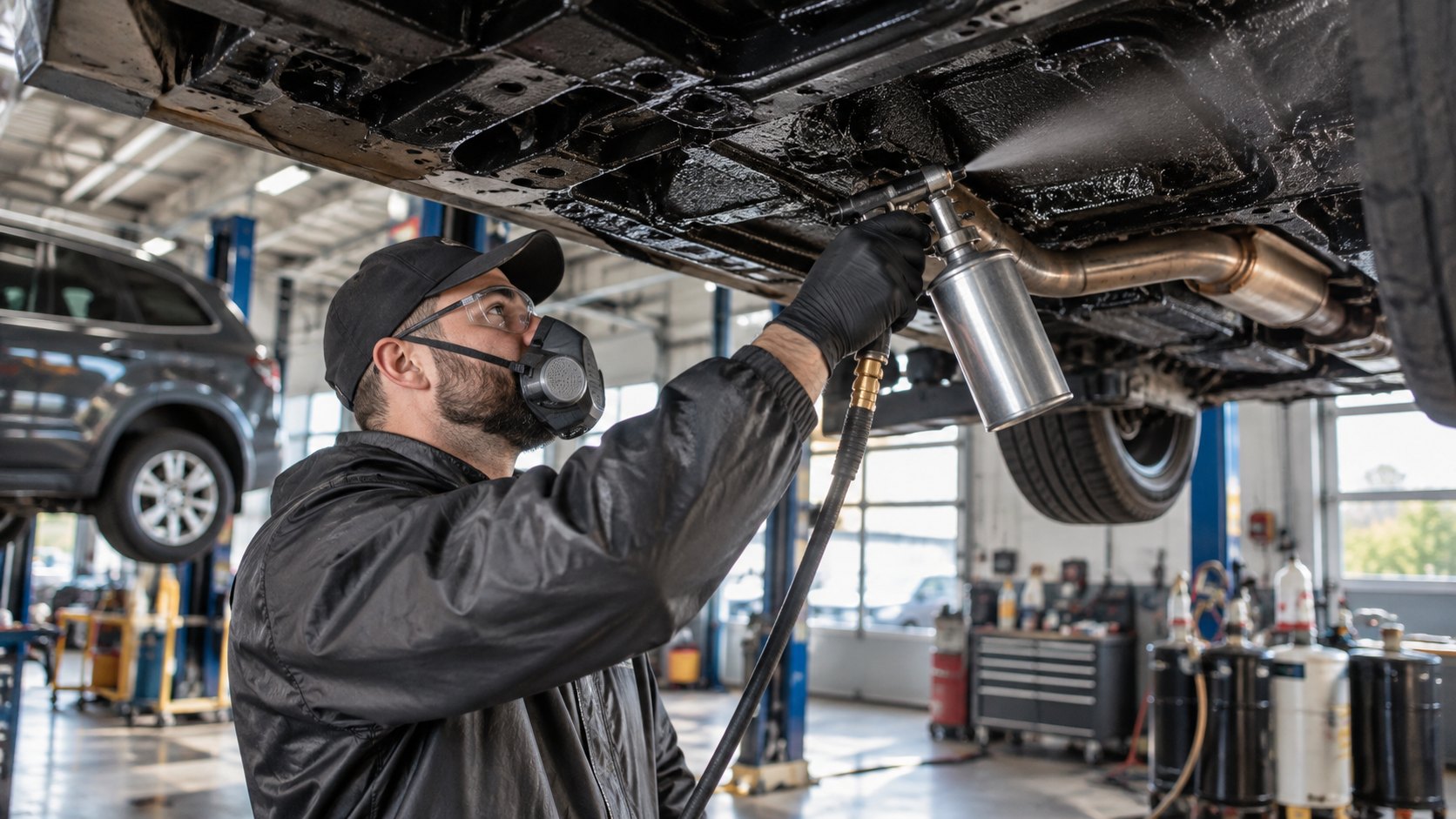
What the trade does about it is preventative and mostly invisible. A sealing compound is applied to the underbody and the exposed structure; a creeping wax or oil is injected into closed cavities through the drain and access holes the manufacturer already put there, so it wets the seams from the inside; arches and exposed panels get a tougher coating that also absorbs stone chips. It is done best when the metal is new and clean, which is exactly why the sale belongs at the point of purchase and why a three-year-old car is a harder job and a harder sell.
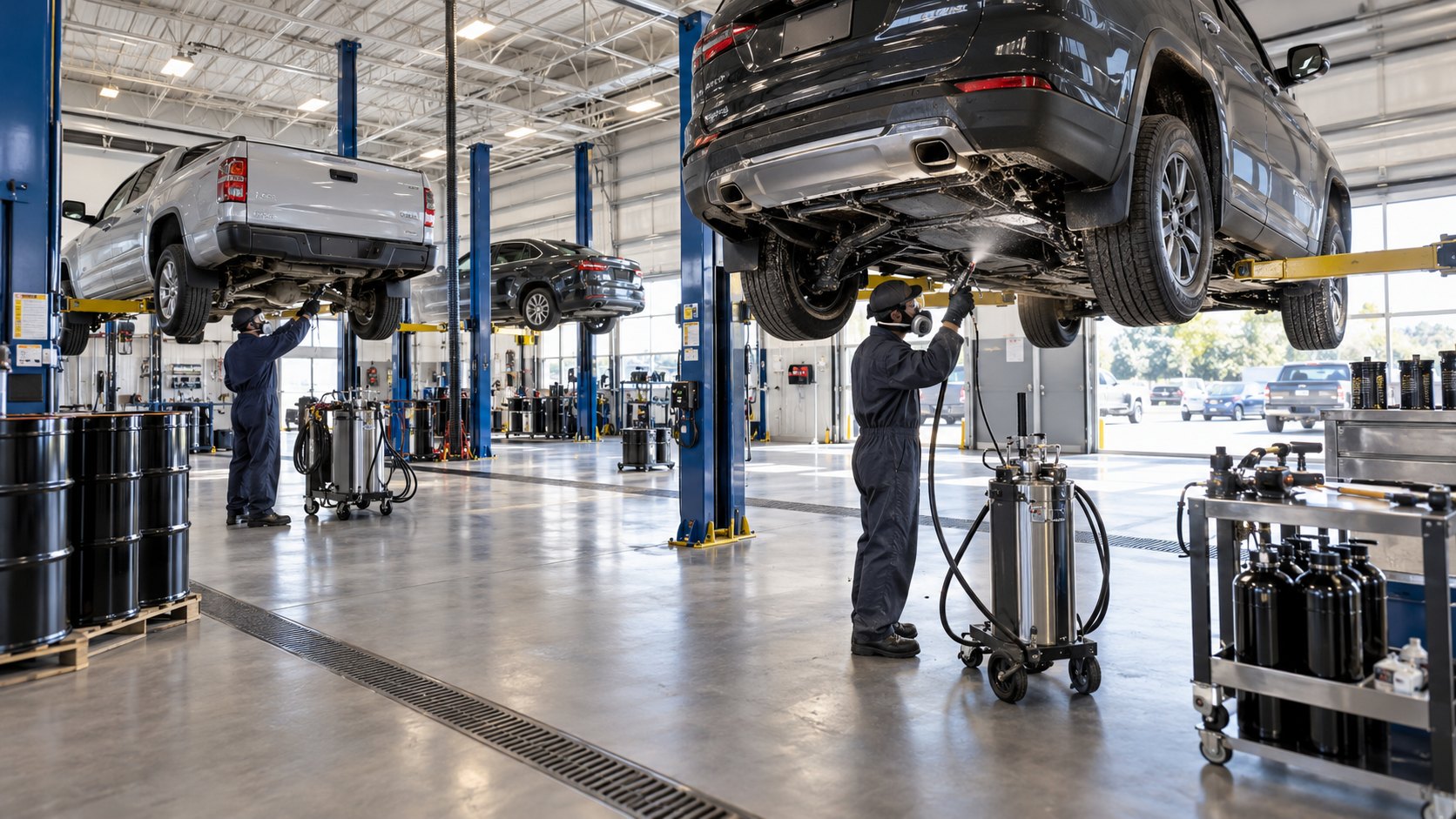
The commercial shape follows from that. Material cost per vehicle is modest and stock is small — a trade in consumables rather than in parts. The capital is a bay with a lift, extraction, spray equipment and a clean floor. The real asset on the balance sheet is not on the balance sheet at all: it is the relationship that puts cars in the queue. And the real liability is the warranty, because a multi-year promise against corrosion is a commitment that outlives the invoice, sits on the books long after the money has been spent, and is only as good as the application that was rushed on a busy Thursday.
CZ 79 — Auto Rust Proofing Services
Read on its own terms, this line is the service: applying protective and anti-corrosion treatment to a customer's vehicle, on your premises or at theirs, and charging for the labour, the bay and the result. It is usually sold beside the rest of the protection menu — paint sealant, interior treatment, underbody coating, arch protection — and a workshop that offers only one item on that menu is leaving the easier half of the invoice on the table.
What the line does not do is repair what has already happened. Corrosion that has broken through a sill or a floor pan is cut out, replaced and refinished, and that is body and paint work with its own premises, its own booth and its own trade. Nor does the line cover selling the chemistry in a container to somebody else who will apply it, which is a trading proposition with a completely different balance sheet. Mechanical work on the vehicle while it is on your lift is a general repair activity and belongs to a workshop licensed for it.
Because the sale is made in someone else's building, the channel matters more here than in most trades. Five routes are genuinely available, they are not variations on one another, and choosing between them decides how many bays you need, how you are paid and whose name the warranty carries.
five channels, weighed against the same two questions
What it givesWhat it costs
- A pre-delivery arrangement with a dealer groupCars arriving in a queue you never had to sell to, on dates you can staff forA discount off your own price, and capacity committed before the volume is certain
- A yearly contract with a leasing or rental fleetPredictable bays, predictable dates, one invoice address and one credit riskA rate argued down in a tender and defended at every renewal
- Retail work walking into your own unitThe full price, paid on the day, with nobody standing between you and the customerAdvertising spend against a purchase almost no driver plans to make
- A mobile crew working at the customer's yardAccess to fleets that never release a vehicle, and no second premises to rentApplication conditions you do not control, on a floor that is not yours
- Applying under a detailing chain's own brandWork that arrives already sold, and a warranty in somebody else's nameA trade margin only, and a customer who never learns who did the job
The lines next to it are not the same trade
Four activities sit close enough to this one to be confused with it, and the boundaries are worth drawing because two of them are cheaper to hold and one of them is a different business entirely.
The closest neighbour is the anti-rust treatment line, and the honest distinction is where the money is. That line is about the treatment as a product — sourcing it, supplying it, standing behind what is in the tin. This one is about the service performed on a named vehicle: the bay, the hours, the applicator's judgement about how much wax a sill actually took, and the warranty that follows the car rather than the container. A company can genuinely want both, and the two read as one proposition to a customer; they are not one activity on a licence.
Detailing, polishing, ceramic coating and protective film are sold in the same conversation and priced on the same menu, and they are the opposite half of the car: they protect the surfaces a buyer looks at, while rust proofing protects the ones nobody sees until a panel fails. Same customer, same moment, different consumables and a different bay — which is why so many operators end up holding both.
Sound-deadening and undersealing for noise overlap physically, because the material goes to the same place on the car, but they are sold as refinement rather than as protection and the buyer is a driver improving a car they already own. Marine and industrial coating uses recognisably the same chemistry and is not a vehicle activity at all — a workshop treating it as an adjacent line usually finds it has entered a second business rather than extended the first.
The owner who does best already has the phone number
An accessories or protection shop already inside a dealership
The strongest position in the trade, because the hardest part is already solved. The cars arrive, the sale happens upstream, and the operator's job is throughput and consistency. The risk is concentration: one commercial relationship carrying most of the revenue is a relationship that can be renegotiated.
A fleet workshop turning a cost centre outward
An operator already protecting its own vehicles has the bay, the applicators and the volume to justify the equipment. Selling the same capability to other fleets converts an overhead into a line of business, and the first customers are competitors who trust the vehicles they have seen.
A body shop that would rather prevent than repair
The skills transfer almost whole — masking, spraying, working under a car, knowing where water actually sits. Prevention work is scheduled and repair work is not, so it smooths a workload that otherwise arrives in bursts.
Where this is the wrong purchase. If the intention is to repair corrosion rather than prevent it, a body and paint activity is the correct line and this one will not cover the work. If the intention is to import and sell the coating itself, a trading activity costs considerably less to hold and does not need a bay at all.
The conditions that attach to the premises come from the materials rather than from the vehicles. Coatings, waxes and solvents are flammable, so how much is held on site and how it is stored is a fire-safety question for the building rather than a matter of workshop preference.¹ Spray application needs real ventilation and extraction, and overspray, empty containers and solvent-soaked absorbents form a waste stream with municipal conditions attached — both far cheaper to answer before a lease is signed than after.² Almost every consumable is imported, so the company wants a customs code in its own name.³ Applicators' permits run through the Ministry of Human Resources and Emiratisation.⁴
A mainland licence is the straightforward answer where the vehicles are UAE-owned and the bay sits in a municipality's industrial area, which describes almost every version of this business. A free zone licence suits a different one: holding and re-exporting the coatings. What the licence costs, which approvals attach to a specific unit and what the activity is called on it all depend on the emirate and the issuing authority, and ConsultZone confirms that before anything is committed.⁵
References
- Dubai Civil Defence — fire-safety requirements for premises storing and handling flammable coatings, waxes and solvents. Dubai Civil Defence
- Dubai Municipality — premises suitability, workshop ventilation and the conditions attaching to workshop waste streams. Dubai Municipality
- Dubai Customs — importing coatings and consumables, and holding a customs code in the company's own name. Dubai Customs
- Ministry of Human Resources and Emiratisation — work permits and labour contracts for workshop applicators. Ministry of Human Resources and Emiratisation
- UAE Government portal — federal government information and the emirate-level authorities that issue and condition trade licences. UAE Government portal
Elsewhere in Trading
Activities that sit beside this one
Most licences carry more than one activity. Adding a neighbouring line at the application stage costs a fraction of amending the licence afterwards.
Begin with a clear conversation
Tell us what you intend to build.
A consultant will map the structure, jurisdiction, approvals and likely cost against what you actually described — not against a package.
