
Operating site
DAFZA — Dubai Airport Free Zone
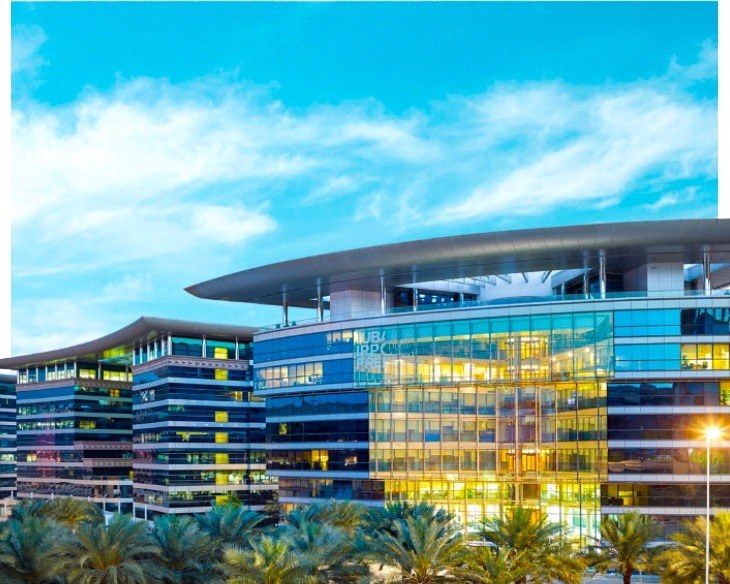
DAFZA is the one UAE free zone whose case cannot be made on a price list, and the reason is geometric. The zone is a strip of offices and industrial units along the edge of Dubai International Airport.
The site
DAFZA — Dubai Airport Free Zone is a site before it is a licence.
Premises, visa allocation and customs standing decide whether the operation actually works at this address. They lead the record where we hold them, because they are what you are buying; the licence is the paperwork that follows them.
- What you can occupy Rental office space, DAFZ Industrial Park units, retail space, and business-centre and Regus desks
- Customs and VAT standing Free zone — a Dubai Airport Free Zone entry sits on the FTA Designated Zone schedule; confirm which address it covers
The record
The standing facts behind the site.
These are the standing facts we hold, restated against the authority before any application is filed. Where the authority’s own sheet and this page disagree, the authority wins and this page changes.
- Emirate
- Dubai
- Known for
- Air-freight and re-export tenants working against the Dubai International cargo terminals
- Visa allocation
- Confirmed against the authority for your package.
Packages, fees and visa allocations are set by the authority and revised annually. Nothing on this page is a quotation — we confirm the current position in writing before you commit to anything.
In detail
DAFZA is the one UAE free zone whose case cannot be made on a price list, and the reason is geometric.
The zone is a strip of offices and industrial units along the edge of Dubai International Airport. What a tenant buys is the distance between a warehouse door and a cargo terminal, and the customs handling in that gap. Everything else on the page — the licence, the desk, the boardroom — exists in cheaper form within an hour's drive, and in two cases within the same authority.
So the question is not whether DAFZA is a good free zone. It is whether your cargo is worth the metres.
What you are buying is measured in metres to a cargo terminal
DAFZA was founded in 1996 and describes itself, on its own site, as sitting next to Dubai International with direct access to the airport. On its own count it holds more than 3,400 businesses and more than 20,000 professionals across more than 20 sectors — self-reported figures that move, so treat them as an order of magnitude.
The geography is the part that does not move, and it runs the opposite way to every other goods zone in the emirate. Jebel Ali sits at the far southwestern edge of Dubai and Dubai South further out still, around an airport still being built out. DAFZA sits in the middle of the city, against an airport already operating at full scale. And that same fact is the constraint: the footprint is fixed. The zone cannot expand — airport on one side, city on the other — and a landlord with no more land and a queue at the door does not discount.
The product line, as DAFZ publishes it, is rental office space, retail space, the DAFZ Industrial Park, and serviced desks through DAFZ Square Business Centre and Regus by DAFZ, with a Government Centre, a Smart Police Station and the Halal Trade and Marketing Centre on the estate. What is absent is as informative: no land plots, no berths, no five-figure square-metre sheds.
The authority changed in 2021, and most material you will read predates it
DAFZA has not been licensed by a standalone Dubai Airport Free Zone Authority for years, and a good deal of advice still assumes it is. Law No. (16) of 2021 established the Dubai Integrated Economic Zones Authority, consolidating DAFZA with Dubai Silicon Oasis and Dubai CommerCity under one licensor, and the operative rulebook is the DIEZA Implementing Regulations issued 27 January 2023. On DIEZ's own account the three zones together held more than 56,000 companies and more than 84,000 employees in 2024, with AED 13.3 billion of asset value and 5.1% of Dubai's GDP.
Read that group figure carefully. Those 56,000 companies are not DAFZA's. They belong to the authority, across three very different estates, and the overwhelming majority are not at the airport. DAFZA's own count is the 3,400 above.
The consolidation also carries a consequence that works in a founder's favour and is never raised at the sales desk. The authority licensing DAFZA also licenses the two cheaper alternatives to it. If the airport premium does not survive contact with your business plan, the next conversation is with the same people about a different postcode.
Designated Zone status attaches to a fence, and one DAFZA address has already lost it
A Dubai Airport Free Zone entry sits on the Federal Tax Authority's schedule of Designated Zones under Cabinet Decision No. 59 of 2017 as amended. A Designated Zone is treated as outside the UAE for VAT on the movement and storage of goods — not on services, so a consultancy leasing a floor here derives nothing from it.
Now the part that should stop anyone reading a brochure. The schedule has been amended, and a DAFZA address has already come off it. The same list that carries the airport entry shows DAFZA Industrial Park – Al Qusais with an end date of 1 July 2021. Al Qusais is not the airport estate; it was a DAFZA-branded industrial address, and its designated treatment lapsed.
Designated status attaches to a fenced, customs-controlled area, not to a brand: the word DAFZA on a lease does not settle it, the address does. And the schedule moves — confirm yours against the current list before you sign, and again at each renewal.
Corporate tax runs the same logic from the other direction, and here the airport estate is genuinely well placed. Under Ministerial Decision No. 229 of 2025, logistics services and distribution of goods in or from a Designated Zone are Qualifying Activities. For a freight or distribution business at a designated DAFZA address that is load-bearing on the tax outcome. For the consultancy on the floor above it is nothing at all.
Air freight buys hours, and hours are only worth money to some cargo
Airside proximity compresses one interval: the time between cargo landing and cargo being under your control, and between goods leaving your unit and being on an aircraft. That is the whole commercial judgement, and it is worth a great deal to a narrow class of cargo and almost nothing to everything else.
It is worth serious money when the clock is on the invoice. Pharmaceuticals and trial material with a cold chain and a shelf life. Perishables. Aircraft spares under an aircraft-on-ground call, where a grounded airframe costs more per hour than a year of rent. High-value electronics, where working capital tied up in transit dominates the cost. Jewellery, watches and precious stones, where the security chain is shorter the fewer times the goods change hands.
It is worth very little when the clock is not on the invoice. Goods that sit for six weeks after they land have bought storage at an airport premium, and storage is the one thing an airport estate is structurally worst at supplying cheaply. Ship by sea and airfreight the exceptions, and you pay a permanent premium for an occasional problem.
The test is arithmetic and takes ten minutes. Take the annual rent difference between a DAFZA unit and the same floor area at another airport zone on your shortlist, and divide it by the consignments a year on which those saved hours change what a customer pays you. If that number exceeds the margin on a consignment, the geography is not paying for itself.
The licence is the quick part, and the customs file is what lets you trade
Founders sequence this backwards, and the cost of doing so is months rather than money.
The lease is the gate, not the paperwork at the end. The space decides the visa quota, decides whether an industrial activity can be licensed at all, and on a fixed footprint decides when you can start. Negotiating the licence first and the unit second is negotiating in the wrong order.
Holding the licence is not the same as being able to trade. A DAFZA company with no customs client code cannot clear a shipment, and every step after the licence sits in somebody else's queue — immigration, customs and handling have their own lead times, and no zone compresses them for you.
No day count appears on that device deliberately. DAFZ's published licensing turnaround could not be confirmed against the authority at the time of writing. When you are quoted one, ask what it is measured from — a complete file, or your first phone call.
Nobody can quote you a DAFZA price honestly, and this page will not pretend otherwise
There is no AED figure anywhere on this page, and that is a decision rather than an omission. DAFZ served no public tariff that could be read and cited at the time of writing, and every "DAFZA cost from AED —" headline in circulation traces to an agent's page rather than the authority, bundling the intermediary's margin into the government fee so neither can be checked. A number we cannot trace back to DAFZ is a number we will not print.
What we can set out is where the money goes, because on this zone the order of the lines is itself the decision:
- The licence is not the expensive line. Nobody chooses or rejects DAFZA on its licence fee, and any comparison that leads with one is comparing the thing that does not decide.
- Rent is the expensive line, and the only one that matters. Rent per square foot, and how much of it you are obliged to take, decides this — and it is the number no package sheet leads with.
- Fit-out, racking, cold chain and security are yours, on top of rent, and sunk when you leave. Visas, medicals, Emirates ID and stamping are per person; the annual audit is both a cost and a renewal gate.
- Customs, handling and gate charges are transactional, so they scale with volume rather than appearing in the setup budget where founders look for them.
Ask for the authority's fees itemised separately from any intermediary's, and for the rent as a rate per square foot with the minimum area you must take. A quotation that will not separate those two numbers is not a quotation.
Visa allocation follows the floor you lease, which is the expensive way round
Quota is a function of the space held, as at every zone built around premises rather than packages. This page quotes no ratio, because none is published by the authority and the numbers circulating on agency sites are convention, not policy.
The consequence is a multiplication, and it bites harder here than at a cheaper estate. Where floor area is cheap, buying quota by leasing more space is an irritation. On a fixed airport footprint, every additional visa is bought at airport rent, and a headcount plan that was affordable at SAIF Zone or Dubai South becomes the largest line in the budget.
Count headcount eighteen months out and get the quota confirmed in writing before the lease is signed. Federal company law gives no general route for moving a UAE free zone company to another zone — whether it can go depends on both zones' own rules — and on a fixed footprint it may not be able to take more floor here either. Where no move is provided for, the remedy for getting the number wrong is incorporating somewhere else and starting the immigration file from nothing.
A DAFZA file banks well, for reasons that have nothing to do with the address
Compliance officers award no marks for postcodes. They award them for what they can verify, and a real DAFZA operation supplies an unusually good set: a lease on identifiable floor area, a customs client code, inventory that moves, staff on the establishment card, and named counterparties at both ends of the trade flow.
Two refusals are specific to this zone; the rest are familiar — no UAE-resident signatory, thin source-of-funds evidence, a general trading activity with no supply chain behind it.
- A desk package against a trading plan. A business-centre seat with projected turnover in the millions. The premises contradict the plan, and the airport address sharpens the contradiction rather than rescuing it — a compliance officer knows what airport floor space costs and can see you bought none.
- Corridors and cargo that invite enhanced due diligence. Air freight out of Dubai reaches geographies some banks have exited, and high-value low-volume cargo attracts questions by its nature.
A bank cannot be argued into any of this after the file is open. It is settled when the lease and the activity list are chosen, because those two documents are what say whether an air-freight operation exists. Our banking advisory page sets out what an application has to be able to show.
The federal obligations do not care that you are at the airport
Corporate tax applies, and enrolment is mandatory whatever your rate. The federal rate is 9% above AED 375,000 of taxable income under Federal Decree-Law No. 47 of 2022, and under FTA Decision No. 3 of 2024 a company incorporated on or after 1 March 2024 has three months from incorporation to file. Missing it costs AED 10,000, and no zone waives it.
The 0% is conditional, self-assessed, and better founded here than at most Dubai zones — if the address is designated. Qualifying Free Zone Person status needs adequate substance, qualifying income, documented arm's length related-party dealings and audited accounts, and non-qualifying revenue above the de minimis — the lower of 5% of revenue or AED 5 million — forfeits it for that period and the four that follow. Our UAE corporate tax page covers whether Small Business Relief under Ministerial Decision No. 73 of 2023 is the better answer instead; it is closed to a Qualifying Free Zone Person.
VAT applies at 5%, mandatory above AED 375,000 of taxable supplies. Designated Zone treatment covers goods, not services, and goods moving into the mainland are an import with duty and VAT at entry.
Audited financial statements are a renewal gate and feed the tax position, so budget the audit from year one. Beneficial ownership records are required under Cabinet Decision No. (109) of 2023, filed with the zone as incorporating authority and updated on change. Employment sits under Federal Decree-Law No. 33 of 2021. Economic substance filings have ended for financial years ending after 31 December 2022 under Cabinet Decision No. 98 of 2024, so anyone billing you for a current-year notification is billing you for abolished work.
AML obligations attach by activity, not by address, under Federal Decree-Law No. 10 of 2025. Dealers in precious metals and stones are a designated category, they cluster at airport zones for obvious reasons, and enrolment on goAML with a named compliance officer is not optional. Settle this at activity selection, not at your first shipment.
Where DAFZA is the wrong choice, and it is the wrong choice more often than it is the right one
This section runs longer than on our other zone pages. DAFZA is a specialist instrument sold to a general audience.
Your goods do not travel by air. The whole test, and it disqualifies most enquiries. Cargo arriving in containers means you are paying an airport premium for a seaport problem: Jafza. Cargo that arrives by air and then sits for weeks means you have bought storage at the dearest rate on your shortlist.
Your goods travel by air, but on cost rather than on the clock. SAIF Zone is a fenced, customs-controlled estate at a working cargo airport in the next emirate, on Sharjah floor rates — the same budget takes materially more space, which is the whole of its case. Dubai South gives you a bonded corridor to the Jebel Ali terminals and room to expand, at the price of a long commute and an unfinished district.
You are an e-commerce fulfilment business. Go one conversation sideways, to Dubai CommerCity — a joint venture of the same authority and wasl Properties, built for digital commerce near the same airport, with logistics and fulfilment clusters designed around your operation. A general-purpose estate over a purpose-built one at the same postcode is a strange trade.
You are a technology or software business. Dubai Silicon Oasis is licensed by the same authority, costs materially less, and is built for you.
You are a consultancy, an agency or a solo professional. You will pay airport rent for adjacency to freight you never touch, and receive a postcode that impresses nobody outside logistics. IFZA, Meydan or SHAMS license the same activity for a fraction of it. This is the most common expensive mistake made about this zone.
You need heavy industry, large plots or serious power. DAFZA sells floors and units on land it cannot make more of. Manufacturing at scale belongs at KEZAD or RAKEZ, marine and heavy fabrication at Hamriyah or Jafza. Regulated financial services, insurance and virtual assets belong to DIFC, ADGM or VARA — DIEZA licenses businesses, it does not regulate finance.
You need to sell into the UAE mainland directly. A free zone licence does not authorise it. Executive Council Resolution No. (11) of 2025 opened routes for a Dubai free zone establishment to operate inside the emirate, each needing prior approval and separate financial records — and the tax point is the one people miss: mainland income is not qualifying income, and enough of it costs the 0% on everything.
You assumed every DAFZA address is a Designated Zone. One already is not. If your VAT modelling depends on designated treatment, confirm your address against the current schedule before you sign, and again at renewal.
You are buying the address rather than the adjacency. An airport postcode is not a credential the way a DIFC one is. It signals that you move freight; if you do not, it signals that you overpaid. And it is not a cheap thing to be wrong about — leases carry terms, notice periods and restoration obligations, and fit-out is sunk.
How it compares to the two zones it actually loses to
Air freight narrows to three zones in this country, and on every row that is measured in space DAFZA is the one that loses.
Against SAIF Zone, DAFZA wins on the Dubai address, on bank and enterprise recognition, on recruitment, and on hours saved at the terminal. SAIF Zone wins on everything measured in square metres — and where the floor area is doing the work it is not a compromise but the correct answer.
Against Dubai South, DAFZA wins on being in the city and on an airport operating at full scale today. Dubai South wins on cost of space, on the bonded corridor to the container terminals, and on room to take more space next year. If you need both freight modes, or you need to grow, the commute is the price and it is usually worth paying.
And if nothing physical moves through the business at all, the answer is none of the three — which you should hear from us before a licence fee is paid, not after.
Tell us what is on the air waybill
Five physical questions decide this. What is the cargo. How many consignments a year. How many hours between landing and delivery does your customer actually pay for. How many square metres now, and how many in three years. Who signs the invoice.
Answer those and the zone answers itself — DAFZA, one of the two cheaper zones under the same authority, a cheaper airport in another emirate, or nothing at an airport at all.
Compare the zones honestly · Free zone company formation · Banking advisory · Mainland company formation
Provenance
How this record is verified.
Everything above is re-checked against DAFZA — Dubai Airport Free Zone’s own current published material and against the federal rules before any application is filed. Where the two disagree, the authority wins and we tell you.
Frequently asked questions about DAFZA
Why does this page carry no DAFZA price?
Because DAFZ served no public tariff that could be read and cited at the time of writing. Every "DAFZA cost from AED —" headline in circulation traces to an intermediary's page rather than the authority, and it usually folds the agent's margin into the government fee so that neither can be checked. What can be said is where the money goes: the licence is not the expensive line, rent per square foot and the minimum area you are obliged to take is, and fit-out, customs and handling sit on top of it. Ask for the authority's fees itemised separately from any intermediary's.
What does being next to the cargo terminal actually buy?
One interval, and only one: the time between cargo landing and cargo being under your control, and between goods leaving your unit and being on an aircraft. That is worth real money to a narrow class of cargo — pharmaceuticals with a cold chain, perishables, aircraft spares on an aircraft-on-ground call, high-value electronics, jewellery and precious stones. It is worth very little where goods sit for weeks after they land, because cheap storage is what an airport estate is structurally worst at. The test is the annual rent difference against another airport zone, divided by the consignments a year on which those hours change what a customer pays.
Is every DAFZA address a Designated Zone for VAT?
No. A Dubai Airport Free Zone entry sits on the Federal Tax Authority's schedule under Cabinet Decision No. 59 of 2017 as amended, but the same list shows DAFZA Industrial Park – Al Qusais with an end date of 1 July 2021. Designated treatment attaches to a fenced, customs-controlled area rather than to a brand, so the word DAFZA on a lease settles nothing and the address settles everything. It reaches goods and not services. Confirm your own address against the current schedule before you sign, and again at each renewal.
Who licenses DAFZA now, and does the change matter?
The Dubai Integrated Economic Zones Authority, established by Law No. (16) of 2021, which brought DAFZA together with Dubai Silicon Oasis and Dubai CommerCity under one licensor; the operative rulebook is the DIEZA Implementing Regulations issued 27 January 2023. It matters twice. Material written for a standalone airport authority is out of date, and the group figures often quoted — more than 56,000 companies in 2024 — belong to all three estates rather than to DAFZA, whose own count is more than 3,400. It also means the same people license the two cheaper alternatives to it.
Why does each extra visa cost more here than at a cheaper zone?
Because quota follows the floor area you hold, and here the floor area is the dearest on the shortlist. The authority publishes no ratio, and the figures circulating on agency sites are convention rather than policy, so get yours confirmed in writing before the lease is signed. Where space is cheap, buying quota by leasing more of it is an irritation; on a footprint hemmed in by an airport on one side and the city on the other, every additional visa is bought at airport rent. Count headcount eighteen months out.
When is another airport zone the better answer?
Whenever the floor area is doing the work rather than the hours. SAIF Zone is a fenced, customs-controlled estate at a working cargo airport in the next emirate on Sharjah floor rates, so the same budget takes materially more space. Dubai South offers a bonded corridor to the Jebel Ali terminals and room to take more space next year, at the price of a long run out to the southwest and an unfinished district. DAFZA wins on hours saved at the terminal and on being inside the city, and loses every row measured in square metres.
Begin with a clear conversation
Tell us what you intend to build.
A consultant will map the structure, jurisdiction, approvals and likely cost against what you actually described — not against a package.
