
Operating site
Ajman Free Zone
Ajman Free Zone is one of the cheapest credible routes into the UAE and one of several low-cost zones on the FTA's Designated Zones schedule for VAT.
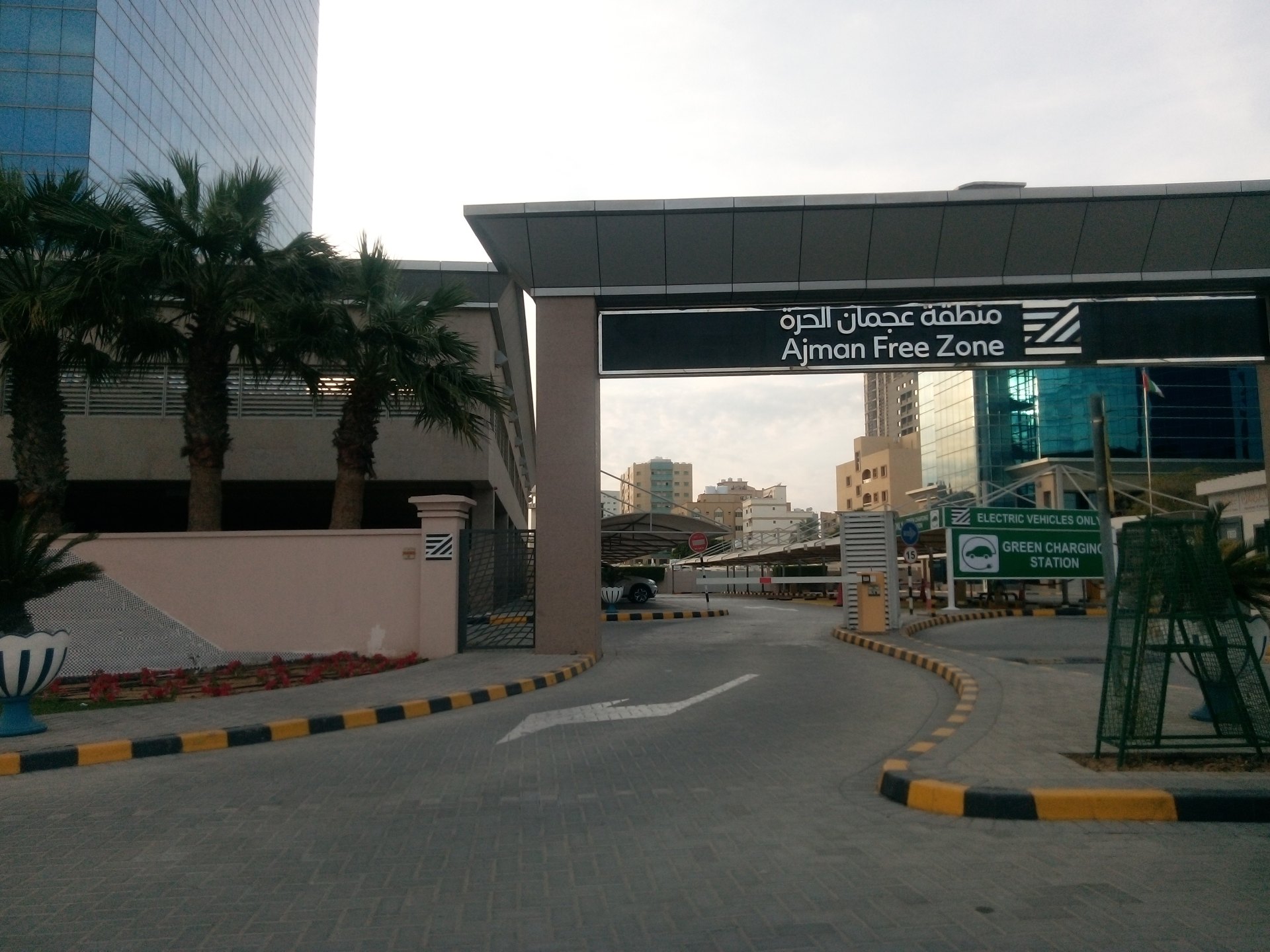
The site
Ajman Free Zone is a site before it is a licence.
Premises, visa allocation and customs standing decide whether the operation actually works at this address. They lead the record where we hold them, because they are what you are buying; the licence is the paperwork that follows them.
- What you can occupy Themed hubs and flexi-desks through offices, warehousing, land and staff accommodation
- Customs and VAT standing Free zone — Designated Zone for VAT
The record
The standing facts behind the site.
These are the standing facts we hold, restated against the authority before any application is filed. Where the authority’s own sheet and this page disagree, the authority wins and this page changes.
- Emirate
- Ajman
- Known for
- One of the cheapest credible routes into the UAE, and on the FTA's Designated Zones schedule for VAT
- Visa allocation
- Confirmed against the authority for your package.
Packages, fees and visa allocations are set by the authority and revised annually. Nothing on this page is a quotation — we confirm the current position in writing before you commit to anything.
In detail
Almost everything written about Ajman Free Zone is about how cheap it is. Almost none of it mentions what actually distinguishes the zone: Ajman Free Zone sits on the Designated Zone schedule for VAT, and the cheap Dubai zones it gets compared against do not.
That splits Ajman's audience in two. If your business moves physical goods, this is a serious jurisdiction that happens to be inexpensive. If it does not, you are buying a low price and leaving the only real advantage on the table — and here, the cheapest headline is rarely the cheapest three-year outcome.
What the zone is, and who runs it
Ajman Free Zone opened in 1988 and was granted autonomous status in 1996 by Amiri Decree of H.H. Sheikh Humaid bin Rashid Al Nuaimi, Ruler of Ajman — the decision that made it an incorporating authority in its own right rather than a department of the Ajman government. It sits beside Ajman Port, whose container terminal Hutchison Ports Ajman operates under concession from the emirate's Department of Port and Customs.
Since 2021 it has answered to the Free Zones Authority of Ajman, which also holds Ajman Media City, Al Zorah, the Ajman Car Souq and China Mall. AFZ reports more than 9,000 companies from over 165 countries, concentrated in construction, food and beverage, technology and jewellery. In March 2026 the Authority announced that companies across its portfolio grew 216% during 2025, revenues up 17%, occupancy at 95%. Read that growth figure carefully: it is a real achievement, and also the best available predictor of how a bank compliance team will treat your file.
Three different things are called an Ajman free zone, so establish which one a quote refers to before you pay. Ajman Free Zone is the 1988 government zone described here. Ajman Media City Free Zone launched in 2018 with a separate incorporating authority and pricing. Ajman NuVentures Centre Free Zone is a third, privately marketed zone advertising almost identically — "3,500+ activities", setup "in 2 hours", and a headline price of AED 4,888 on 1 September 2026. AFZ's website has also moved to a government address; a PDF still citing the old one has pricing as stale as the link.
Who it genuinely suits
Distributors and traders with real goods. The strongest case by a distance, and the one nobody markets. Designated Zone status governs the VAT treatment of goods movements, and it also keeps the 0% corporate tax route open to a distributor here when it is closed to the same business in a non-designated zone.
Light manufacturing, assembly and processing. Pre-built warehouses from 100 m², LEED Gold units in the eco-friendly zone, land on leases of 20 years and longer from 1,000 m², and onsite labour accommodation — at costs Dubai cannot approach.
Businesses whose people already live in the northern emirates. The commute penalty that ruins the economics for everyone else does not apply to you.
Solo practitioners. The Freelancer permit and Pioneer licence are among the cheapest legitimate routes to a UAE licence and residence visa anywhere in the country.
Cost-sensitive service companies invoicing abroad. Legitimate, and the weakest case on this list — you accept a location penalty for a capability you will never use.
The common thread is physical goods, or a footprint small enough that location stops mattering. Businesses in between regret it.
Licence types and what each permits
Entity forms are FZE (single owner), FZC (two or more), and branches of a UAE-licensed or foreign company.
Ajman Offshore is not this, and the two are quoted interchangeably by people who should know better. It is a separate non-resident company authority for holding structures, formed only through a licensed corporate agent: no trade licence, no premises, no residence visas, no route to a UAE bank account on its own merits, and it must still enrol with the FTA. If someone has quoted you a very cheap "Ajman company", establish which of the two they mean before you send money.
The general trading rule is counterintuitive. AFZ's own FAQ says a general trading licence carries only one activity, and that adding activities means converting to a commercial trade licence — the reverse of what most founders assume. If breadth is what you are buying, get the licence type confirmed in writing before you pay.
What setup involves, in the order it happens
- Activity and licence category first. The category sets the licence, the licence sets the facility, and the facility sets your visa quota. Every later constraint follows.
- Entity form and trade name reservation — the name checked for conflicts and for anything implying regulated or governmental status.
- Application and documents. Passports valid six months or more, photographs, visa and UID copies, and a no-objection letter where a shareholder holds a UAE residence visa under another sponsor. Branches add attested parent documents.
- Pre-approvals where the activity needs them — industrial, food, health and education routinely do.
- Facility selection and lease. Nothing issues until the lease is executed and paid.
- Licence issue, then establishment card and the immigration and e-channel file.
- Entry permit, medical, Emirates ID and stamping — through Ajman immigration, not Dubai.
- Bank account. Open this conversation alongside the licence application, not after it.
Amendments such as changing a manager or transferring shares require you to attend AFZ in person to verify signatures. Renewal takes about four working days, with a one-month grace period.
What it costs
AFZ publishes no price list. Its facility pages carry no figures; the cost calculator takes your details and emails a quote. Its own words are "no hidden fees, just clarity" — true of the quote you receive, less so of the market you are comparing it against. Treat these as indicative first-year ranges, not an authority tariff, and read them beside what the cheaper emirates actually charge rather than beside a Dubai package sheet.
A few charges are published on AFZ's FAQ page, and they matter because no package price includes them: e-channel renewal at AED 1,100 a year, change of manager AED 2,500, establishment card amendment AED 535, visa insurance AED 265, cancellation AED 2,135. Authority fees move without notice, and anyone quoting a fixed all-in figure for a year not yet reached is guessing.
Visa allocation, and how it relates to premises
AFZ's own answer to the quota question is worth reading as written: the quota is as per the location, and additional visa processing is completed as per approval from Immigration. Allocation therefore follows the facility you lease, not the licence you buy — and even within allocation, issue is an immigration decision, not an entitlement.
In practice the Pioneer licence carries one visa and the Freelancer permit two. A furnished office is marketed at two, and shared workspace tiers sit in the same low single digits. A warehouse or industrial plot with onsite accommodation supports headcount in a different order of magnitude — this is where Ajman beats every low-cost Dubai zone outright.
The widely quoted "one visa per nine square metres" is a common UAE free zone convention, but not a published AFZ rule. Count your year-two headcount first: upgrading mid-term to release more visas costs more than leasing correctly at the start, every time.
Office and flexi-desk requirements
Premises run from the Business Centre and the themed Freelancer and Pioneers, E-Commerce and AI Robotics hubs, through furnished and executive offices, to warehouses, land and onsite accommodation. Every tier is a real allocation, not an address.
The desk is the cheapest line on your quote and the most consequential. It is the first thing a bank compliance officer looks at, and what the Federal Tax Authority would weigh if it tested your substance. A shared desk is consistent with a one-person consultancy, not with a trading company projecting eight figures of turnover. If your model implies premises, take premises.
The activity you choose decides which second regulator you acquire
The AFZ licence is one permission. Across most of the sectors the zone is actually known for it is not the only one, and the second permission — not the licence — sets your real timetable and your real first-year cost.
Construction and contracting, AFZ's largest concentration by company count. A free zone licence authorises the activity in and from the zone. Where the work is physically performed on a site elsewhere in the UAE, whether you may perform it is answered by the authority with jurisdiction over that site, not by AFZ. Settle it before you sign a contract, not after you have mobilised labour against it.
Food and beverage. Trading in food adds facility approval and product-level approval by the municipality with jurisdiction, and the product approval attaches to the item and its label rather than to the licence. A consignment held at the border because a label was never approved is the standard first-year loss in this sector, and no free zone package anticipates it.
Jewellery, gold and precious stones. This one brings an AML regime rather than an approval. A dealer in precious metals and stones is a Designated Non-Financial Business or Profession: goAML enrolment, a named compliance officer, customer due diligence, record keeping, and reporting of qualifying cash transactions. It is supervised by the Ministry of Economy and Tourism, it applies from the day the licence issues rather than from first revenue, and it is the obligation most often discovered a year late — usually by a bank asking to see the policy.
Health, education and anything that touches people directly. Health facilities in the northern emirates are licensed by the Ministry of Health and Prevention, education by the relevant federal or emirate authority. The free zone licence substitutes for neither, and the sequence runs the opposite way from what founders expect: the sector regulator's requirements usually dictate the facility you have to lease, so leasing first wastes the lease.
Anything financial is not a second-regulator question at all. It is a wrong-jurisdiction question, and it is dealt with at the end of this page.
Banking reality — who is receptive, and why applications fail
AFZ has a signed arrangement with Mashreq, announced in June 2021, which the zone said had produced more than 270 corporate accounts for its licensees, and Ajman Bank has a strategic agreement with the Authority. Beyond those, RAKBANK, Emirates Islamic and Commercial Bank of Dubai appear regularly, and digital-first banks clear a first account fastest. A zone partnership shortens the queue; it does not decide the outcome, which belongs to the bank's compliance function.
The generic refusal reasons are in our banking advisory. Two are sharper here.
Volume and price shape the starting position. A zone that licenses cheaply, quickly and at scale attracts a share of dormant and never-traded entities. Compliance teams risk-rate portfolios, not only applicants, and your file inherits the average until you distinguish it. This is not a comment on Ajman's regulation, which is federal-standard: the UAE sat on the FATF list of jurisdictions under increased monitoring from March 2022 and was removed on 23 February 2024 after reforms that expressly addressed shell-company risk. The regime moved; bank behaviour is slower. A cheap flexi-desk entity in a high-volume zone still starts lower on the scorecard than the same business in DMCC.
Geographic incoherence ends applications quietly. A company licensed in Ajman whose sole director lives and works in Dubai, with no staff and a shared desk, invites one question the file cannot answer: where does it actually operate?
What separates an approved file from a refused one is narrower than most applicants think: substance proportionate to the claim and capable of being checked, an activity on the licence that matches how you describe the business out loud, and source-of-funds evidence assembled before anyone asks for it. Where a first application is likely to be marginal, the workable order is to open with a digital bank, accumulate six months of genuine transaction history, and approach a conventional bank from evidence rather than from intention.
The compliance that starts the day the licence is issued
Corporate tax. Federal Decree-Law No. 47 of 2022 applies and an Ajman company is not exempt. Enrol with the FTA whether or not tax is payable, on the timetable in FTA Decision No. 3 of 2024; returns fall due nine months after the period ends. The ordinary scale is 0% to AED 375,000 and 9% above.
The enrolment deadline carries its own penalty, and it is not proportionate to your size. Missing the FTA's window attracts a fixed administrative penalty of AED 10,000 — the same figure for a dormant Pioneer licence as for a trading group. The FTA has operated a waiver route for companies that file their first return or annual declaration within seven months of the end of their first tax period, including refunds where the penalty had already been paid. Treat the waiver as a rescue, not a plan: confirm it is still open before relying on it, and note that it is conditional on filing early, which most late enrollers are not set up to do.
Qualifying Free Zone Person status. Governed by Cabinet Decision No. 100 of 2023 and Ministerial Decision No. 229 of 2025, which repealed MD 265 of 2023 and applies retroactively from 1 June 2023 — any guide still citing MD 265 is out of date. The conditions are cumulative: adequate substance, qualifying income, no election out, arm's length dealings with transfer pricing documentation, non-qualifying revenue below the lower of AED 5 million or 5% of revenue, and audited financial statements, required of a QFZP regardless of revenue under Ministerial Decision No. 84 of 2025. Fail one and status is lost for that period and the four following. A QFZP also gets no AED 375,000 band — non-qualifying income is charged at 9% from the first dirham.
Why that lands differently in Ajman. MD 229 keeps distribution of goods or materials in or from a Designated Zone as a Qualifying Activity, where the activity is conducted in or from the Designated Zone and goods entering the UAE are imported through it. Ajman Free Zone is named in the Designated Zone schedule under Cabinet Decision No. 59 of 2017 — the Ajman entry reads simply "Ajman Free Zone". A distributor here can build a credible 0% position that the identical business cannot build from Shams, Meydan or Dubai Silicon Oasis. It needs a warehouse, staff, operating expenditure and an annual audit, so it is closed to a flexi-desk.
Small Business Relief — a change most guides have missed. Ministerial Decision No. 73 of 2023 lets a resident business with revenue at or below AED 3 million elect to be treated as having no taxable income. It is closed to QFZPs, and to members of multinational groups above the AED 3.15 billion consolidated-revenue threshold. The sunset was 31 December 2026 — but Ministerial Decision No. 131 of 2026, issued 29 July 2026, extended it to tax periods ending on or before 31 December 2029, threshold unchanged. For most small Ajman companies that is worth more than a 0% rate bought with an annual audit.
VAT. Mandatory above AED 375,000 of taxable supplies, voluntary from AED 187,500. Designated Zone treatment covers goods, not services, and depends on the fenced, customs-controlled area and the controls applied to it. The FTA tells taxable persons to confirm designated-zone status with their free zone authority, so get it in writing before you sign a lease.
Economic substance is largely historic: Cabinet Decision No. 98 of 2024 removed notification and reporting for financial years ending after 31 December 2022, though 2019–2022 obligations remain live. Anyone still billing you for a current-year ESR filing is billing you for nothing. Beneficial ownership under Cabinet Decision No. 109 of 2023 requires records of shareholders and beneficial owners filed with the incorporating authority, changes notified within 15 days. AML attaches to the activity: a Designated Non-Financial Business or Profession — real estate brokerage, precious metals and stones, audit and accounting, corporate service provision — must enrol in goAML under Ministry of Economy and Tourism supervision, and it is the most commonly missed item on a new licence. Employment falls under Federal Decree-Law No. 33 of 2021.
Designated Zone status is a fact about a place, not a status on your licence
This page opens on the designation, so it is worth being exact about the mechanism — because it is the only structural reason to prefer Ajman, and it is routinely oversold by people quoting the schedule and nothing else.
A Designated Zone is a customs fact about a fenced piece of ground. Article 51 of the VAT Executive Regulation, Cabinet Decision No. 52 of 2017, sets what the area has to be: a specific fenced geographic area, security measures and customs controls that monitor the movement of people and goods in and out, internal procedures for keeping, storing and processing goods, and an operator that complies with the FTA's procedures. Appearing in the schedule under Cabinet Decision No. 59 of 2017 is necessary. It is not sufficient. Where an area stops meeting the Article 51 conditions it is treated as inside the UAE from that point, whatever the schedule still says — which is the reason the confirmation you want is facility-level and in writing, not a screenshot of a list.
Four consequences follow, and each of them catches someone:
Side by side, the four make a point that taking them in turn does not: only the second branch — goods standing still inside the fence — is genuinely outside UAE VAT, and even that leaks the moment something is consumed rather than stored. The designation is not a lighter tax position. It is a narrower one, decided on what the goods do rather than on what the licence says.
It reaches goods only. A service supplied inside a Designated Zone is treated as supplied inside the UAE and taxed accordingly. A consultancy in Ajman gets nothing at all from the designation, and neither does the service line of a trading company — the installation, the maintenance contract, the training day.
Goods you consume in the zone are inside the UAE. Where goods are consumed rather than incorporated into, attached to, or used in producing another good located in the zone, the place of supply is the UAE. The stock on the racking is outside; the fuel in the forklift that moves it is not.
Moving goods into the mainland is an import. Duty and import VAT arise on the way out of the zone and are accounted for by the importer of record. The designation defers the charge; it never removes it. A distributor whose customers are all in the UAE has bought a timing benefit and some paperwork, not an exemption.
Zone-to-zone movement is conditional, not automatic. A transfer between two Designated Zones is untaxed only where the goods are not released, used or altered in transit and the movement follows the customs suspension procedure — and the FTA may require a financial guarantee for the tax that would otherwise fall due.
There is a fifth consequence that is not about goods at all. Because supplies of goods inside a Designated Zone sit largely outside the scope of UAE VAT, a genuine trading business can find its taxable supplies below the mandatory threshold while it is still paying input tax on rent, freight, handling and professional fees. Voluntary enrolment from AED 187,500 is often the right answer for exactly that reason. It should be a decision taken deliberately in month one, not something discovered in month fourteen by an accountant reconciling irrecoverable VAT.
The mainland is a customer, not an extension of your licence
The single most expensive misreading of a free zone licence is that it lets you sell into the UAE. It does not. An AFZ licence authorises the activity in and from the free zone, and the UAE mainland is a market you reach the way any exporter reaches one:
- Through a mainland importer of record or distributor, who takes title at the zone boundary, clears the goods, pays duty and import VAT and sells on. The simplest route, and it costs you margin and the customer relationship.
- Through a mainland branch or a separate mainland company, which brings its own licence, premises and compliance — and which, for corporate tax, is likely to be a Domestic Permanent Establishment of the free zone entity, taxed at 9% on the income attributed to it.
- By selling to mainland customers who import in their own name, which works business-to-business and not at all business-to-consumer.
The mechanics are ordinary and worth pricing before you commit: a customs client code linked to your tax file before the first consignment moves, clearance through the emirate's Department of Port and Customs, and duty at the GCC common external tariff — 5% of customs value on most goods, with a short list charged very much higher. Confirm the rate against the HS code you will actually import, never the general rate. None of this is difficult. It is simply not what "0% tax, 100% ownership" suggests to somebody reading a package sheet at midnight.
The 0% is won on substance, and substance is the line nobody prices
Qualifying status is not a box you tick on a return. Ministerial Decision No. 229 of 2025 requires that the core income-generating activities are genuinely undertaken in the free zone — and for the distribution activity that carries Ajman's whole advantage, in the Designated Zone itself. Alongside that, the entity must hold adequate assets, employ an adequate number of qualified full-time staff, and incur an adequate amount of operating expenditure for what it claims to be doing. Activities may be outsourced to a related party or a third party in the free zone, provided you retain adequate supervision of them — outsourcing the work does not outsource the responsibility for it.
"Adequate" is deliberately relative, and that is both the trap and the protection. A two-person distributor with a small unit, a warehouse hand and real freight invoices can satisfy it. A company invoicing AED 40 million from a shared desk cannot, however immaculate its bookkeeping, and the flexi-desk is the fact that decides it.
Three further conditions are missed more often than the headline ones:
Some income is never qualifying and never enters the de minimis test. Income attributable to a domestic or foreign permanent establishment, and income from immovable property in the free zone other than commercial property leased to other free zone persons, is charged at 9% and sits outside the de minimis calculation altogether. This is better than it sounds: a free zone company that opens a mainland branch does not thereby destroy its qualifying status — but it does not shelter that branch's income either, and it now runs two tax positions in one set of accounts.
Transfer pricing documentation is a condition, not a large-group formality. Arm's length dealing with related parties, and the ability to evidence it, applies from the first intra-group transaction — the management charge from the offshore parent, the stock bought from a sister company, the director's own consultancy invoice. Formal master file and local file obligations attach only above the thresholds set by Ministerial Decision No. 97 of 2023, but the arm's length requirement itself does not wait for them.
The audit is a standing annual cost, and it should be modelled before you elect. Audited financial statements are required of every QFZP regardless of size. For a company under the AED 3 million Small Business Relief threshold, the audit fee alone can exceed the tax that qualifying status saves — which is the arithmetic most small Ajman companies should run before anyone mentions 0%. Small Business Relief and QFZP status are mutually exclusive, so this is a genuine election with a right answer, and for a great many businesses here the right answer is the unglamorous one.
Where Ajman Free Zone is the wrong choice
Your customers and your life are in Dubai. The distance is modest; the corridor is not. The route runs through the Sharjah stretch of the E11, where a 40-minute off-peak drive routinely becomes 90 minutes twice a day — a standing tax on every meeting, and the most common reason an Ajman company relocates within three years.
You are a service business with no physical goods. Designated Zone status — the one thing Ajman has that its price-peers do not — is worth nothing to you. Shams is cheaper; Meydan and IFZA put you in Dubai for a comparable figure.
Brand credibility is load-bearing. If you are raising institutional money, onboarding as a vendor to a large corporate, or expecting a difficult account opening, an Ajman licence makes each conversation slightly harder than a DMCC or DIFC licence would — slightly, but repeatedly.
Your activity is financially regulated. AFZ is a licensing authority, not a financial regulator. Banking, insurance, funds, payments, brokerage, lending and virtual assets belong in DIFC, ADGM, or under the Central Bank, the SCA or VARA.
You need breadth of activity on one licence. The general trading licence carries one activity.
Why cheapest is often not cheapest overall
The advertised figure is a first-year promotional licence-and-desk price. It typically excludes the establishment card and immigration file; medical, Emirates ID and stamping per person; the annual e-channel renewal; the AED 2,500 to change a manager and AED 535 to amend an establishment card, both of which you pay if the licence was drafted narrowly to hit a price; document attestation; and renewal, which is not always year one's number.
Then add what appears on no quote at all: the unbillable weeks while a bank application sits, the second application after the first is declined, the facility upgrade you take anyway because the file was not credible without it — at which point the advantage over a Dubai zone has gone — the audit fee if you chase qualifying status, and the sector approval nobody mentioned because it was not AFZ's to mention. Then the exit, which is the largest line of all and is set out below.
Cheap is a legitimate reason to be here when the business fits. It is a bad reason when it does not, and the bill arrives late enough that most people never connect it to the decision that caused it. If price is the whole brief, the cheapest company setup in the UAE takes the question apart across the country rather than inside one emirate.
Closing an Ajman company is a sequence, and the tax file outlives the licence
Founders plan the entry and improvise the exit. That is how a company nobody uses any more accrues federal penalties for two years after its owner stopped thinking about it, and it is the single most avoidable cost on this page.
The order is fixed, because each step produces the evidence the next one needs:
- The people close first. Employee and investor residence visas are cancelled before anything else can proceed, then the establishment card, then the immigration and e-channel files.
- Then the facility. Lease terminated or run to expiry, dues settled, the unit or desk handed back.
- Then the licence. Cancellation with AFZ — published at AED 2,135 — producing the cancellation certificate. That certificate is the document the bank and the FTA will both ask for.
- Then the bank account, once the certificate exists and the last movements have cleared.
- The tax files last, and on the clock. The VAT file is closed by application to the FTA within 20 business days of the event that requires it. The corporate tax file has its own, longer window — an application within three months of cessation — and the final return still falls due after that application is made. Both windows carry administrative penalties charged monthly up to a cap when they are missed, and those accrue whether or not the company ever traded.
Two failures are worth naming plainly. A lapsed licence is not a closed company — the entity and its federal obligations survive the expiry date, so simply not renewing converts a tidy exit into a penalty position against a shareholder who believed the matter was finished. And federal company law gives no general route from one UAE free zone to another: a move between zones depends on both zones' own rules, and a transfer to an emirate's mainland authority — which the law now allows, keeping the company's legal personality — needs both authorities' systems to allow it and both authorities to approve. Where neither is available or approved, "moving to Dubai" is this entire sequence plus a fresh incorporation, run in parallel, with a bank application that starts again from nothing and a trading history that does not travel with you. Over three years that rebuild routinely exceeds the entire difference between Ajman and the zone that would have been right at the start — which is the real reason to spend a week on the choice rather than an afternoon.
How it compares to its two closest alternatives
Against RAKEZ. The two low-cost northern zones with genuine industrial capability, and the choice is close. RAKEZ is larger and better known, licenses a wider range including a non-free-zone route through RAK Department of Economic Development, and has deeper industrial land. Ajman is cheaper at entry tiers and closer to Dubai and Sharjah airports. Both work on VAT — the RAK designated zones are named separately in Cabinet Decision No. 59 of 2017, as is Ajman Free Zone. RAKEZ wins on scale and lender familiarity; Ajman on price and proximity.
Against Shams. Cheaper still and closer to Dubai, and for a solo consultant invoicing overseas usually the better buy. But Shams is not a Designated Zone, has no warehousing and no industrial land, and cannot support a goods business at all. The moment anything physical enters the model, the comparison stops being close.
If what you need is a Dubai address, look at Meydan or IFZA; if warehousing at scale, Hamriyah, JAFZA or KEZAD. Sharjah's airport free zone sits on the same corridor and is profiled separately as SAIF Zone. And for the lowest number in the emirate, Ajman Media City Free Zone publishes its packages openly — on 1 September 2026 they started at AED 4,999 with no visa and AED 12,999 with one — more price transparency than AFZ offers, on a licence that does none of the goods work. Package pricing in this emirate moves between quarters; read the current page rather than this one.
Tell us the activity, the customers, the headcount and where your people actually live, and we will tell you whether Ajman is right — including, often, that it is not.
Provenance
How this record is verified.
Everything above is re-checked against Ajman Free Zone’s own current published material and against the federal rules before any application is filed. Where the two disagree, the authority wins and we tell you.
Frequently asked questions about Ajman Free Zone
Is Ajman Free Zone actually the cheapest way into the UAE?
Not once the second year is in the picture. The advertised figure is a first-year promotional licence-and-desk price, and it usually leaves out the establishment card and immigration file, the medical, Emirates ID and stamping per person, the AED 1,100 annual e-channel renewal, document attestation, and renewal itself. The indicative ranges on this page run from AED 6,000 to 9,000 for a Pioneer licence up to AED 20,000 to 35,000 for a furnished office with two visas, with warehouse and land configurations quote-driven and materially higher. AFZ publishes no tariff at all, so every figure is a quote you have to ask for.
What does Designated Zone status actually save me?
Less than the schedule suggests, and only on goods. Goods standing still inside the fenced, customs-controlled area sit largely outside UAE VAT, but a service supplied in the zone is treated as supplied inside the UAE, goods consumed in the zone are inside the UAE, and moving goods out to the mainland is an import on which duty and import VAT fall due — deferred, never removed. The designation is a narrower position rather than a lighter one, and because it is a customs fact about a piece of ground it has to be confirmed for the specific facility in writing, not read off a list.
How many visas come with an Ajman Free Zone licence?
As many as the facility you lease supports, not as many as the licence implies. AFZ's own answer is that the quota follows the location and that additional visas are processed as per immigration approval, so issue is a decision rather than an entitlement. In practice the Pioneer licence carries one visa and the Freelancer permit two, a furnished office is marketed at two, and shared workspace tiers sit in the same low single digits. A warehouse or plot with onsite accommodation supports headcount of a different order. The widely quoted one visa per nine square metres is a market convention, not a published AFZ rule.
Can I sell to customers on the UAE mainland from Ajman?
Only the way an exporter reaches any market. An AFZ licence authorises the activity in and from the free zone, so mainland sales run through a mainland importer of record or distributor who takes title at the zone boundary, through a mainland branch or a separate mainland company, or by selling to business customers who import in their own name. The branch route is likely to be a Domestic Permanent Establishment for corporate tax, charged at 9% on the income attributed to it. Price in a customs client code linked to your tax file and duty at the GCC common external tariff, confirmed against your own HS code.
Which banks open accounts for Ajman Free Zone companies?
Mashreq and Ajman Bank both hold arrangements with the zone — the Mashreq one, announced in June 2021, produced more than 270 corporate accounts for licensees — and RAKBANK, Emirates Islamic and Commercial Bank of Dubai appear regularly, with digital-first banks clearing a first account fastest. An arrangement shortens the queue and decides nothing, because the outcome belongs to the bank's compliance function. Two things weigh against a file here specifically: a high-volume, low-price zone whose portfolio carries dormant entities, and a company whose only director lives and works in Dubai with no staff and a shared desk.
What happens if I simply stop renewing the licence?
The company and its federal obligations survive the expiry date, so not renewing turns a tidy exit into a penalty position. Closing properly is a fixed sequence: visas first, then the establishment card and the immigration and e-channel files, then the facility, then cancellation with AFZ at a published AED 2,135, which produces the certificate the bank and the Federal Tax Authority both ask for, then the account. The tax files close last and on the clock — 20 business days for VAT, an application within three months of cessation for corporate tax — with penalties charged monthly when either window is missed.
Begin with a clear conversation
Tell us what you intend to build.
A consultant will map the structure, jurisdiction, approvals and likely cost against what you actually described — not against a package.
