
Operating site
Fujairah Free Zone — FFZ, on the Gulf of Oman
Fujairah Free Zone is the only UAE free zone on the Gulf of Oman side of the Strait of Hormuz, next to a port that is one of the world's three largest bunkering hubs.
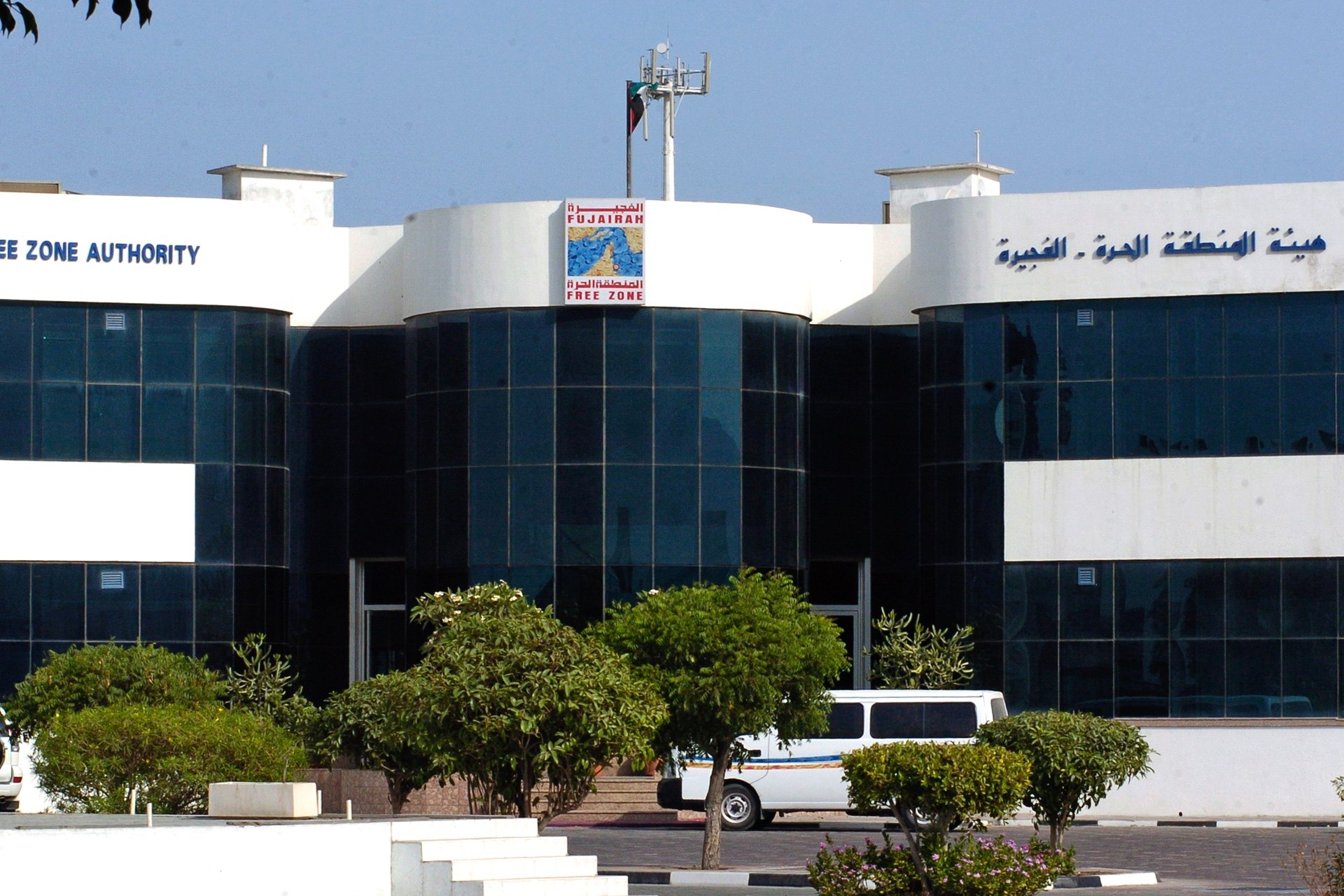
The site
Fujairah Free Zone — FFZ, on the Gulf of Oman is a site before it is a licence.
Premises, visa allocation and customs standing decide whether the operation actually works at this address. They lead the record where we hold them, because they are what you are buying; the licence is the paperwork that follows them.
- What you can occupy Virtual office and flexi desk through trading offices, warehouses and industrial land
- Customs and VAT standing Free zone — Designated Zone for VAT
The record
The standing facts behind the site.
These are the standing facts we hold, restated against the authority before any application is filed. Where the authority’s own sheet and this page disagree, the authority wins and this page changes.
- Emirate
- Fujairah
- Known for
- The only UAE free zone outside the Strait of Hormuz, beside the Port of Fujairah
- Visa allocation
- Confirmed against the authority for your package.
Packages, fees and visa allocations are set by the authority and revised annually. Nothing on this page is a quotation — we confirm the current position in writing before you commit to anything.
In detail
Every other UAE free zone sits inside the Strait of Hormuz. Fujairah does not.
That one geographic fact is worth more than any licence discount, and it is the only argument for this zone that no other emirate can answer. The Port of Fujairah lies on the UAE's eastern seaboard, approximately 70 nautical miles from the Strait, on the Gulf of Oman — so a cargo loaded there has already cleared the chokepoint before it begins. Fujairah Free Zone is the industrial estate beside that port.
If your business moves fuel, commodities, ships' stores or bonded cargo, read on. If it moves ideas and client meetings, start at the limitations section — it will save you more than the rest of this page.
What Fujairah Free Zone is, and who runs it
Fujairah Free Zone Authority was established in 1987. It licenses and incorporates, and that is the limit of what it is: not the port, not the oil zone, not a financial regulator. It describes the estate as approximately 4 million square metres, built to take investors in trading, manufacturing, assembly and distribution, and served by both Fujairah Port and Fujairah International Airport. It publishes a total foreign investment inflow estimated at AED 8 billion as of 2017 — that date is on the Authority's own page, so read the figure as an order of magnitude rather than a current number.
The fields it names for itself are revealing: manufacturing, processing, petrochemicals, engineering, aviation, mining, marine, logistics, trading and consultancy. Six of those ten are heavy or physical.
Fujairah has four routes to a licence and they are not interchangeable. The emirate's own government portal names three — Fujairah Mainland, Fujairah Free Zone, and Creative City, a separate media and creative zone under its own authority, which calls itself the UAE's oldest media free zone, has operated since 2007 and asks for no physical office at all. Alongside those sits FOIZ, the Fujairah Oil Industry Zone. Want a media licence and you want Creative City; want a storage tank and you want FOIZ. Choosing wrongly among the four is the commonest mistake made about this emirate.
Two structural facts outweigh everything in the marketing.
It is a Designated Zone for VAT. Cabinet Decision No. 59 of 2017 names exactly two in this emirate: Fujairah Free Zone and FOIZ. Designated status is not a label somebody applied — the Federal Tax Authority's own guidance makes the qualifying criteria physical, requiring security procedures that control the movement of goods and people in and out, and customs procedures controlling the movement of goods. It is a fence with officers at it. What it confers reaches goods only, and the limits are set out further down this page.
The port beside it is a bunkering and oil port first, and a container port second. That ordering decides whether this zone is right for you, and most comparisons get it backwards.
The capability you cannot buy elsewhere in the UAE
The Port of Fujairah began construction in 1978 and reached full operations in 1983. It calls itself the only multi-purpose seaport on the UAE's eastern coastline, and its own account is unusually concrete for a government port: quay length up from 370 metres at the start to more than 9.5 kilometres as at 2024; oil storage from 550,000 cubic metres in 1994 to almost 18 million cubic metres, held by 15 international terminal companies; around 12,000 vessels calling each year; an anchorage taking up to 174 positions at a time. The Authority places it among the top three bunkering hubs in the world.
On volume, marine fuel sales ran at 7.4 million cubic metres in 2025, about 3% below the previous year, which put Fujairah fourth globally that year after Zhoushan passed eight million tons. Worth stating plainly rather than quoting a rank from a brochure: this is one of a handful of genuinely enormous bunkering ports, and its position in the order moves from year to year.
On the oil side the port works 9 main berths or 14 wing berths taking vessels up to 200,000 dwt, with infrastructure held in reserve for a further twelve. Its VLCC jetty takes tankers from Aframax up to very large crude carriers of 330,000 DWT. And ADNOC's 360-kilometre pipeline has carried Murban crude from the Habshan fields since 2012 at a transmission capacity of 1.8 million barrels a day — crude arriving on the Gulf of Oman without a tanker ever entering the Strait. That pipeline is the physical expression of the whole argument for this emirate.
On the container side the terminal runs under a 35-year AD Ports Group concession signed in June 2017: four main quay berths of 243 to 257 metres on a 1,000-metre quay wall, a 380,000 square metre yard, 15 metres of water alongside, a maximum arrival draught of 13 metres, vessels up to 330 metres overall, and extended bonded warehousing. Capacity is expected to reach 720,000 TEU and 1.3 million tons of general cargo by 2030.
Note carefully what that list is. It is the port's capability, under Fujairah Ports Authority — a different body from the one that will issue your licence. A free zone licence conveys no berth, no jetty, no tank and no pipeline connection. Those are separate arrangements on separate timetables, and a consultant who lets you believe otherwise is selling you the view rather than the asset.
Who it genuinely suits
- Energy and commodity trading with physical flow — fuel oil, refined products, bunkers, crude. The one UAE zone where the local economy and the tax definition of a qualifying commodity point at the same thing.
- Marine services and ship supply — chandlery, lubricants, spares, crew services, survey and repair support, aimed at 12,000 vessel calls a year rather than a city of customers.
- Bonded distribution and re-export where stock genuinely sits inside the zone and leaves without ever entering the UAE market.
- Light manufacturing, processing and assembly on the zone's industrial land, particularly where feedstock or output moves by sea.
- Freight forwarding, customs brokerage and warehousing on other people's cargo, which is its own tax category and a narrow one.
The thread running through all five is physical movement through an east-coast port. Pull away from that and the case for Fujairah thins fast.
Licence scope, entity types, and the figures the Authority does not publish
The Authority offers three legal forms, defined in its own words: a Free Zone Establishment (FZE) for a single owner, whether a natural person or a corporate subsidiary; a Free Zone Company (FZC) for more than one shareholder, natural or corporate or a mixture; and a Branch of either a foreign or a local entity.
It publishes no minimum share capital figure, no visa allocation table and no tariff. That is a statement about what the Authority makes public, not a claim that no requirement exists. Its licence page is a contact form; quotes are issued directly, and it also runs a channel partner scheme through which agents bring investors in. The consequence is blunt: anyone handing you a confident capital figure, a visa count per unit, or a fixed annual all-in price for Fujairah is quoting their own sheet rather than a published schedule. Get each in writing from the Authority before you pay for anything — and we will not print a number here that we cannot source.
The document requirements the Authority does publish are conventional, and worth planning around because one of them sets your timetable. An individual shareholder needs little: a passport copy, two photographs, a completed application and incorporation form, and a no-objection letter if they already hold UAE residence. A branch or subsidiary needs considerably more — a board resolution of the parent, a power of attorney for the authorised signatory, the certificate of incorporation, the memorandum and articles, the parent's valid operating licence, a document evidencing the ultimate beneficial owner as a natural person, passports for every director and shareholder, the parent's last audit report, and a good-standing certificate. Every one of those must be notarised and attested by the UAE Embassy.
Attestation adds weeks, nobody budgets for it, and on a corporate structure it is almost always the longest item on the critical path.
What setup involves, in the order it happens
- Activity, mapped against what you expect to sell in three years rather than against the cheapest licence line on offer today.
- Entity type, following from the shareholder structure and whether a parent company is involved, then the trade name, cleared with the Authority.
- Facility selection. Treat this as a gating step, not a later detail. The unit decides your visa allocation, whether designated status means anything in your case, and what a bank can verify about you.
- Application and documents, with every piece of foreign corporate paperwork notarised and embassy-attested as above.
- External clearances where the activity needs them — industrial and processing work attracts health, environmental and safety sign-off, and these move a go-live date by months rather than days.
- Payment, then licence. The Authority markets issue within one hour once contract terms are agreed, the first year's financial commitments are met and documents are complete, under a one visit, one hour, one window formula. Genuinely true and genuinely narrow: that is the licence counter, not fit-out, customs onboarding or visas.
- Premises handover. Investors leasing trading offices or pre-built units take over with immediate effect on licence issue. An investor building a customised unit is on a construction timeline instead, with interim use of zone facilities allowed while the building goes up.
- Establishment card and immigration file, then entry permits, medicals and Emirates ID — plus the gate passes and access cards a cargo operation needs before anything moves.
- Customs client code, which turns designated status from a line in a Cabinet Decision into something usable, then the bank account and enrolment with the Federal Tax Authority.
For a desk-based services company that runs in a week or two. For anything with cargo, attestation, environmental approval, gate passes and customs onboarding set the date you can actually trade, and it is months rather than weeks.
Premises, and the trap inside the cheapest option
The Authority's facility ladder runs virtual office, flexi desk, trading offices, warehouses and industrial land. That lowest rung is a genuine difference from a pure industrial estate like SAIF Zone, which offers no virtual option at all — and it is also where most Fujairah decisions go wrong.
A virtual office in a Designated Zone is a contradiction for anybody trading goods. Designated treatment exists because the area is fenced and customs-controlled; the entire point is that the goods are physically inside that perimeter. A virtual office holds none, so it delivers none of the benefit that brought you to Fujairah — and it works against you twice more: on the substance condition a Qualifying Free Zone Person must satisfy, and in front of a bank.
So the honest reading of that ladder is not five prices on a sliding scale. It is two different companies wearing one licence: one that uses the port, and one that uses the postcode. Only the first is buying what Fujairah has.
Banking: who says yes, and why files fail
Fujairah is a smaller banking market than Dubai or Sharjah, and geography does real work in the file. A compliance officer reviewing a Fujairah company will ask where the business is actually conducted, and expects an answer that matches the premises on the lease. A warehouse or industrial operation banks far more easily than a virtual office here, because a lease, a customs client code, inventory, staff and gate passes amount to substance that can be verified rather than asserted.
Files fail predictably, and in this emirate they fail in a particular order:
- The virtual office against the projection. A flexi-desk or virtual package with stated turnover in the millions. The premises contradict the plan, and the file dies on that contradiction alone — the single most common refusal we see on Fujairah applications.
- Commodity and fuel trade corridors. Fujairah's natural trade is energy, and energy trading attracts enhanced due diligence as a matter of course — counterparty identity, sanctions screening, vessel tracking, proof of title. This is the biggest practical difference between banking a Fujairah fuel trader and a Sharjah warehouse, and it is a reason to prepare the file properly rather than to avoid the zone.
- Activity mismatch — a general trading line with no named suppliers, no identifiable customers and no describable supply chain.
- Thin source-of-funds evidence, common where the capital arrives from a related offshore entity with no operating history.
None of this is repaired at the bank. It is decided at formation, by choosing premises and activities that describe a real operation — our banking advisory page sets out the mechanics.
The compliance that starts the day the licence is issued
VAT, and the limit of designated status. Being inside a Designated Zone is not being outside the UAE, and the Federal Tax Authority is explicit on two points that cost people real money. The place of supply of services in a Designated Zone reverts to the UAE in all circumstances — so a consultancy fee, a management charge or a brokerage commission is an ordinary UAE supply whatever the fence outside says. And a person established or resident in a Designated Zone is deemed to have a place of residence in the UAE. Goods moving into the mainland are an import, with duty and VAT at entry. It is a goods treatment, considerably narrower than it is usually sold as.
Corporate tax. Federal Decree-Law No. 47 of 2022 applies, and a Fujairah company is not exempt: 0% up to AED 375,000 of taxable income and 9% above. A Qualifying Free Zone Person takes 0% on qualifying income, and this is where Fujairah is better placed than almost any zone in the country. Under Ministerial Decision No. 229 of 2025, which repealed and replaced the 2023 decision, the qualifying list includes manufacturing, processing, logistics services, distribution of goods or materials in or from a Designated Zone, ownership, management and operation of ships in international transport, and trading of qualifying commodities — where qualifying commodities expressly include energy commodities and their by-products, provided a quoted price exists. Four of those describe what this emirate does for a living.
Three traps sit inside that, and each springs after the structure is built.
- Logistics services means acting without taking title — storing and transporting goods on behalf of another person: cargo handling, warehousing, container storage, customs brokerage, inventory management, freight forwarding. Buy the cargo and you are distributing or trading instead, and each has its own test.
- Commodity trading has a 51% cut-off. It does not apply to a company whose revenue from distribution, warehousing, logistics or inventory management reaches 51% or more of revenue for the period. A fuel business that drifts into being a storage operation loses the limb it relied on, and will not notice until the return is prepared.
- Whole categories are excluded. Transactions with natural persons are an Excluded Activity, with narrow carve-outs for shipping, fund management, wealth management and aircraft financing — so a business-to-consumer model does not belong here. So are banking, insurance, and finance and leasing, and owning immovable property other than commercial property inside a free zone let to another free zone person.
The conditions are cumulative: adequate substance, qualifying income, arm's length related-party dealings, transfer pricing documentation, audited financial statements under Ministerial Decision No. 84 of 2025, and non-qualifying revenue within the lower of 5% of revenue or AED 5,000,000. Two points are misrepresented constantly and both are expensive. A Qualifying Free Zone Person does not also get the AED 375,000 band — non-qualifying income is taxed at 9% from the first dirham. And failing any condition removes the status from the beginning of that period and for the four that follow, turning one bad year into a five-year problem.
Small Business Relief lets a resident business with revenue at or below AED 3 million elect to be treated as having no taxable income, for tax periods ending on or before 31 December 2029 — extended from 31 December 2026 by Ministerial Decision No. 131 of 2026. It is elected on the return and is not automatic, and closed to a Qualifying Free Zone Person. On a small services company it usually beats a 0% rate bought at the price of an annual audit.
Anti-money laundering, and a document worth checking. The governing instrument is Federal Decree-Law No. 10 of 2025, in force since 14 October 2025, which repealed and replaced the 2018 law — adding standalone proliferation-financing offences, bringing tax evasion into the predicate offences and covering virtual assets expressly. The Authority's own download library still includes the superseded 2018 text, so check which version of the paperwork you are handed. For a fuel or commodity business, counterparty and sanctions screening is where the real exposure sits.
Beneficial ownership records are required under Cabinet Decision No. 109 of 2023, filed with the zone and updated on change. Economic substance is no longer a live filing — Cabinet Decision No. 98 of 2024 ended it for financial years ending after 31 December 2022, although 2019 to 2022 exposure survives, and anybody billing you for one today is billing you for nothing. Employment falls under Federal Decree-Law No. 33 of 2021.
Where Fujairah Free Zone is the wrong choice
We would rather lose the engagement than place a client here badly. These are the cases where we say no.
Your clients are in Dubai or Abu Dhabi. Fujairah is the only emirate on the UAE's east coast, with the Hajar mountains between it and everywhere else. It is not a drop-in address and it is not a commute: every client meeting becomes a planned trip, and no licence saving survives that arithmetic.
You want designated status but you are buying a desk. The two do not meet. Designated treatment is for goods inside a controlled perimeter; if nothing physical is inside the fence, you have bought an address with extra paperwork.
Your revenue is services. The place of supply of services in a Designated Zone is the UAE in all circumstances. A consultancy here gets the same VAT answer as a consultancy anywhere else in the country, with none of the convenience of being where its clients are.
You sell to consumers. Transactions with natural persons are an Excluded Activity for a Qualifying Free Zone Person; this structure is built for business-to-business flow in goods.
You need a tank, a berth, a jetty or a pipeline connection. Those belong to Fujairah Ports Authority and to FOIZ, not the free zone authority. Settle the asset first, then licence around it.
You are in media, content or creative work. Creative City is the other Fujairah zone, built for exactly that and asking for no office.
Your activity is regulated financial services, insurance or virtual assets. The Authority is a licensing body, not a financial regulator — and banking, insurance, and finance and leasing are Excluded Activities besides. These belong in DIFC, ADGM or under VARA.
You need to sell into the UAE mainland directly. Goods leaving the zone are an import, with duty and VAT at entry, and mainland income is generally non-qualifying. Selling locally means a distributor, a branch or an agent — or a mainland company instead, which is often cleaner.
Your growth depends on senior specialist hires. Candidates with options want a Dubai address and a Dubai school run. The cost advantage is real for operators and crews, and thinner above that.
You want to compare published prices before you commit. You cannot. No tariff is published, so every Fujairah cost comparison in circulation rests on somebody's quote.
You want an easy exit. Warehouse and land commitments carry terms, notice periods and restoration obligations, and fit-out is sunk cost. Federal company law gives no general right to move between UAE free zones either: it depends on both zones' own rules, and where they do not provide for it, leaving means a new entity, new visas and a new bank account.
How it compares to its two closest alternatives
SAIF Zone — the other side of the same decision, and the comparison most Fujairah enquiries should actually be making. Both are Designated Zones at Sharjah-or-below pricing, both are real fenced industrial estates. SAIF Zone is an airport estate twenty minutes from Dubai International, with pre-built warehouses from 125 square metres and no berth at all. Fujairah is a seaport estate on the opposite coast, with 15 metres of water and no comparable air freight. Choose SAIF Zone if your cargo arrives by air and your people need Dubai; choose Fujairah if it arrives by sea, especially if it is liquid.
JAFZA — the heavyweight, and the honest comparison on sea freight. Jebel Ali beats Fujairah comprehensively on container volumes, liner connectivity, bank recognition, recruitment and the depth of the surrounding market, and charges accordingly. Fujairah wins on exactly two things, and they are not small: it is outside the Strait of Hormuz, and it sits beside one of the world's three largest bunkering operations with almost 18 million cubic metres of storage behind it. If neither matters to your business, Jebel Ali is the better port and you should pay for it.
Beyond those two, Ajman is cheaper again for a small goods business with no need of a deep-water berth, and RAKEZ is the stronger answer on industrial land at scale.
Tell us what physically moves through your business — barrels, boxes, pallets, ships' stores, or nothing at all — and we will tell you which zone permits it and whether a free zone company is the right wrapper in the first place.
Compare the zones honestly · Free zone company formation · Banking advisory · Mainland company formation
Provenance
How this record is verified.
Everything above is re-checked against Fujairah Free Zone — FFZ, on the Gulf of Oman’s own current published material and against the federal rules before any application is filed. Where the two disagree, the authority wins and we tell you.
Frequently asked questions
Is Fujairah Free Zone a Designated Zone for VAT?
Yes. Cabinet Decision No. 59 of 2017 names two Designated Zones in the emirate — Fujairah Free Zone and FOIZ, the Fujairah Oil Industry Zone. Designated treatment puts the area outside the UAE for VAT on certain supplies of goods, and it exists because the zone is genuinely fenced, with security procedures controlling the movement of goods and people. Two limits matter more than the status itself: it does not reach services, because the place of supply of services reverts to the UAE in all circumstances, and goods moving into the mainland are an import with duty and VAT at entry. Transfers between two Designated Zones are not taxed, subject to conditions.
What does a Fujairah Free Zone licence cost, and is there a minimum share capital?
The Authority publishes no public tariff and no minimum share capital figure. Its licence page is a contact form, so every number in circulation comes from a quote rather than a published schedule, and we will not print one we cannot source. Where the money goes is more useful: the licence line is the small part, and the facility, embassy attestation, the establishment card, medicals and Emirates ID per person, industrial approvals, gate passes and fit-out decide the first-year total. Get the package and the capital position in writing, and ask what is excluded.
How fast can a company be set up in Fujairah Free Zone?
The Authority markets licence issue within one hour, once contract terms are agreed, the first year's financial commitments are met and documents are complete — one visit, one hour, one window. That is accurate and narrow: it describes the licence counter, not the job. Trading offices and pre-built units can be occupied immediately on issue, but attestation of foreign corporate documents, industrial approvals, immigration formalities, gate passes and customs onboarding set the date you can actually trade. With a corporate shareholder, embassy attestation is usually the longest step.
Why would I choose Fujairah over Jebel Ali or SAIF Zone?
For two reasons, and if neither applies you should choose one of the others. Fujairah sits on the Gulf of Oman approximately 70 nautical miles from the Strait of Hormuz, so cargo loaded there has already cleared the chokepoint — which matters a great deal to some counterparties and insurers, and not at all to others. And the complex beside it is genuine rather than aspirational: almost 18 million cubic metres of oil storage across 15 international terminal companies, a VLCC jetty taking tankers to 330,000 DWT, and a crude pipeline from Habshan at a transmission capacity of 1.8 million barrels a day. On container volumes, liner connectivity and banking depth, Jebel Ali is simply better.
Can I run a consultancy or an agency from Fujairah Free Zone?
You can be licensed for it, and we would usually advise against it. None of the zone's advantages reaches a services business: the place of supply of services is the UAE regardless of the fence, so there is no VAT benefit; your clients are almost certainly on the other side of the Hajar mountains; and a virtual office or flexi desk is the hardest premises type to bank anywhere in the country. If the attraction is a cheap licence with no office, Creative City in the same emirate is built for service and creative work and asks for no space at all.
What is the difference between Fujairah Free Zone, FOIZ and Creative City — and does a licence give me port access?
Three separate zones in one emirate, under three authorities, and they are not interchangeable. Fujairah Free Zone is the trading, logistics and light industrial estate beside the port, licensed by Fujairah Free Zone Authority, and it is what this page is about. FOIZ, the Fujairah Oil Industry Zone, is the dedicated oil-industry area and the place for storage terminals and refining — also a Designated Zone for VAT under the same Cabinet Decision. Creative City is the emirate's media and creative free zone, under its own authority, operating since 2007 and asking for no premises. A free zone licence conveys no port access: berths, jetties and tank capacity are negotiated with Fujairah Ports Authority or FOIZ on their own terms. Choosing the wrong zone is the commonest mistake made about Fujairah, and the correction is a new licence rather than an amendment.
Begin with a clear conversation
Tell us what you intend to build.
A consultant will map the structure, jurisdiction, approvals and likely cost against what you actually described — not against a package.
