
Operating site
Dubai South Free Zone
Dubai South is a customs-bonded logistics and aviation district wrapped around Al Maktoum International Airport.
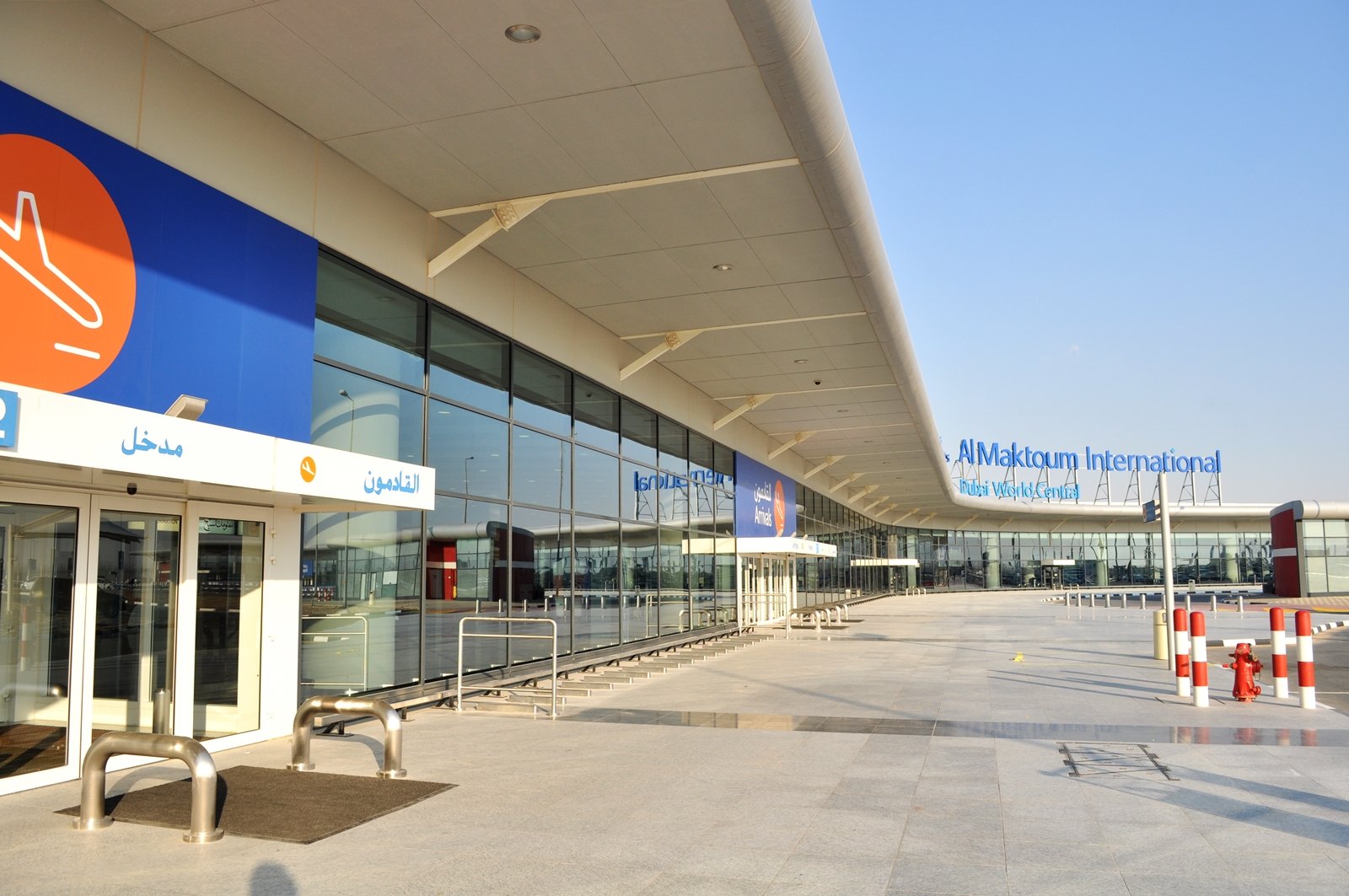
The site
Dubai South Free Zone is a site before it is a licence.
Premises, visa allocation and customs standing decide whether the operation actually works at this address. They lead the record where we hold them, because they are what you are buying; the licence is the paperwork that follows them.
- What you can occupy Logistics warehousing, aviation hangars, Business Park offices and flexi-desks
- Customs and VAT standing Free zone — Designated Zone for VAT (aviation city)
The record
The standing facts behind the site.
These are the standing facts we hold, restated against the authority before any application is filed. Where the authority’s own sheet and this page disagree, the authority wins and this page changes.
- Emirate
- Dubai
- Known for
- Customs-bonded logistics and aviation around Al Maktoum International Airport
- Visa allocation
- Confirmed against the authority for your package.
Packages, fees and visa allocations are set by the authority and revised annually. Nothing on this page is a quotation — we confirm the current position in writing before you commit to anything.
In detail
Most Dubai free zones sell you an address. Dubai South sells you a position on a map — beside a cargo runway, at the end of a customs-bonded road to the Jebel Ali container terminals. If freight moves through your business, that geography beats anything DMCC or Meydan can offer. If it does not, you have bought a forty-five-minute commute. Which parts of that picture a licence actually conveys, and which belong to operators who bill you separately, is taken apart in what a free zone licence gives you at the port.
That is the decision. The rest is detail.
What Dubai South is, and who runs it
A 145 square kilometre master-planned district at the far southwestern edge of Dubai, built around Al Maktoum International Airport. It opened in 2006 as Dubai World Central and was renamed Dubai South in 2015 — which is why companies here still carry the DWC suffix.
The licensor is the Dubai Aviation City Corporation (DACC), created by Law No. (8) of 2006 and re-founded on Law No. (10) of 2015. Article 3 makes DACC a public corporation "managed on commercial basis" with independent legal personality and financial and administrative autonomy. Article 2 defines the DAC Zones as the airport, the free zone and non-free zones; Article 3(b) leaves the free zone's boundaries to maps approved by the Chairman.
That last clause matters practically. The free zone footprint is not the district on a property brochure. Premises here can sit inside the free zone, inside a non-free zone, or on airport land — and which one changes your customs and VAT treatment. Confirm it before signing.
Article 5 makes DACC's objectives aviation-first, and that airport is the investment case. In April 2024 the Ruler approved designs for a new terminal at Al Maktoum International costing AED 128 billion, ultimately sized for 260 million passengers a year, 12 million tonnes of cargo, five parallel runways and over 400 aircraft stands, with Dubai International's operations transferring across in phases. Funded, under construction, still mostly unbuilt: you are buying adjacency to a future, at present-day rent.
The Ministry of Economy's incorporating authority profile records 4,392 licensed companies — 4,223 DWC-LLCs and 169 branches — a 2021 snapshot. DACC publishes no live count, so larger figures quoted at you are unverified, and several websites trading under a "Dubai South" name are formation agents, not the authority.
The districts, and the one that is no longer part of the zone
- Logistics District — the commercial heart of the zone. Direct access to the Al Maktoum cargo terminals, a Contract Logistics Zone, and uninterrupted access to Jebel Ali Port via a bonded logistics corridor, so sealed cargo moves port-to-airport under a single customs bond. In July 2025 it added combinable temperature-controlled multiuser units of roughly 2,152 and 3,767 sq ft, handover from Q1 2026, for operators too small for build-to-suit.
- EZDubai — 920,000 sqm inside the Logistics District dedicated to e-commerce, launched 2019. Fulfilment, last-mile and cross-border sellers cluster here.
- Aviation District / Mohammed Bin Rashid Aerospace Hub — over 8.5 sq km for business aviation, MRO, aerospace manufacturing and training, with hangars, FBO and VIP terminals.
- Business Park — conventional offices, where a non-logistics company would be licensed, and the least distinctive thing here.
- Commercial and Residential Districts — retail and mixed commercial still filling in, alongside substantial freehold housing: South Bay (roughly 1,000 villas, townhouses and waterfront mansions), The Pulse (around 1,400 apartments and townhouses), and Emaar South, around an 18-hole championship golf course. One of very few UAE free zones where living beside the business is a real option rather than a slogan.
The Exhibition District is the trap. The 4.38 sq km Expo 2020 legacy site is now Expo City Dubai — its own entity, free zone and regulator under Law No. (14) of 2022. Adjacent to Dubai South, legally separate from it. A Dubai South licence does not put you in Expo City, and an agent who conflates the two is misdescribing what you are buying.
Designated Zone status, and what it actually buys
The zone's most valuable technical fact, and its most overstated. "Dubai Aviation City" appears on the Federal Tax Authority's Designated Zones schedule under Cabinet Decision No. 59 of 2017, effective 1 January 2018, with no end date on the current list. A Designated Zone is treated as outside the UAE for VAT on the movement and storage of goods.
Three qualifications. It covers goods, not services — a consultancy in the Business Park gets nothing from it. The list moves: the same schedule shows Al Quoz ending 4 April 2021 and DAFZA Industrial Park – Al Qusais ending 1 July 2021, so check it current. And designated status attaches to a fenced, customs-controlled area — which is why the entry names the aviation city, and why the footprint question matters.
The status describes the fence, not the licence. Article 51 of the VAT Executive Regulations — Cabinet Decision No. 52 of 2017 — sets what a Designated Zone has to be: a specific fenced geographic area; security measures and customs controls monitoring the entry and exit of people and the movement of goods in and out; internal procedures for the keeping, storing and processing of goods inside it; and an operator complying with the FTA's own procedures. Two consequences follow. The schedule entry names the aviation city rather than the district, because the fence and the district are not the same shape. And the conditions are continuing ones — an area that changes how it operates, or stops meeting them, can be treated as inside the UAE again. Your unit's position against that fence is the whole question, and a leasing brochure does not answer it.
The corridor is a customs mechanism before it is a road, and there is a second mechanism sitting behind it. Sealed cargo runs port-to-airport under a single customs bond, which is a duty-suspension arrangement rather than a VAT one. Separately, Jebel Ali Free Zone is named on the same Designated Zones schedule as Dubai Aviation City, so a consignment that moves between the two is moving between two Designated Zones — and Article 51 keeps such a transfer outside the scope of UAE VAT provided the goods are not released into the country, not used and not altered on the way, and the movement follows the customs suspension rules. The FTA can require a financial guarantee against the duty and tax at risk. Duty suspension and the VAT position come from two different instruments that usually align and are not the same thing, so establish which one your movement actually relies on before you model it. Get the treatment of your specific route confirmed in writing: this is the part of the Dubai South case that is genuinely structural, and it is also the part most often described loosely.
Two edges cut back. Goods consumed inside the zone are treated as consumed inside the UAE — packaging used up, fuel in the forklift, anything that stops being stock and becomes overhead. And the exit is where the tax lands: the moment a consignment leaves for a mainland customer that is an import, duty and import VAT fall due, and somebody must hold the importer-of-record position with a code in their own name. Article 51 has been amended since 2017, including on the consumption clause, so read the current consolidated text rather than a summary written when the regime was new. Our customs codes and moving goods piece sets out the declaration side in full.
Who Dubai South genuinely suits
- Freight forwarders, 3PLs and contract logistics operators, particularly sea-to-air transhipment, where the bonded corridor is a structural advantage, not a marketing line.
- E-commerce fulfilment at real volume. EZDubai exists for this, and the economics work when you hold stock rather than drop-ship — with a tax qualification set out below that a consumer-facing seller has to read before signing.
- Air cargo-dependent trade — perishables, pharmaceuticals, high-value electronics, aerospace spares. Light manufacturing and assembly feeding air or sea export sits here too.
- Aviation businesses — MRO, parts distribution, ground handling, training, business aviation.
- Founders who want to live beside the business, which almost no other logistics zone makes possible.
If your business is none of these, skip to the limitations.
Licence types and legal forms
Dubai South issues Trading, General Trading, Logistics, Industrial, Service and Education licences, alongside the aviation-specific permissions that are the zone's reason for existing.
Two legal forms exist, and only two: the Ministry of Economy's incorporating authority profile lists DWC-LLC and DWC-Branch — no FZE/FZCO split as at Jafza, and no offshore vehicle. A DWC-LLC takes 100% foreign ownership; a branch is wholly owned by its parent and carries the parent's name and activities. Minimum share capital for a DWC-LLC is commonly stated at AED 300,000, not required to be paid up below AED 1,000,000 — indicative, so confirm it against the current Dubai South Free Zone Rules. Capital requirements elsewhere have been quietly dropped, and stale figures circulate for years.
What cannot be licensed here matters more. Banking, insurance, asset management and capital markets belong to DIFC or ADGM; virtual assets to VARA. No formation agent's enthusiasm moves a licensing perimeter.
The setup sequence, in the order it happens
- Activity mapping and district selection. Not "which zone" — which district, and whether it sits inside the free zone footprint.
- Legal form. DWC-LLC or branch, decided on liability and on whether a foreign parent does the trading.
- Trade name reservation with DACC.
- Premises. A gating item, not paperwork at the end — warehouse space carries lead time, and the lease sets the visa quota.
- Application and documents. Shareholder passports and proof of address; corporate shareholders need attested constitutional documents and a board resolution from home. The step that adds weeks when left late.
- Payment, licence issue and handover. Office files typically run three to seven working days from a complete application. Warehouse and industrial files do not, once fit-out, HSE and civil defence approvals are counted.
- Establishment card and the immigration file.
- Customs client code where goods move — what makes the airport and the bonded corridor usable.
- Bank account, then corporate tax enrolment with the Federal Tax Authority.
Step eight is the one that gets left until a container is already on the water. The customs client code is issued against a valid trade licence, so it cannot be obtained first, and it is what converts a location into a capability: the arrival into the zone, any transfer between zones and the exit into the mainland are each declared against it, filed through Dubai Customs and the Dubai Trade portal. It renews alongside the licence rather than independently of it. Confirm the application channel with DACC, because some zones route it through their own portal rather than sending you to the authority — and note that the same code will not cancel cleanly at the end of the company's life while declarations sit open or a re-export deposit sits unreconciled.
What it costs
Read this first. DACC publishes no live cost calculator of the kind Jafza offers, and the tariff schedule referenced from its Ministry of Economy incorporating authority profile dates to 2019. Fees move: in April 2026 the zone announced incentives covering new company formation, licence renewal and exemptions from late renewal fines, without publishing amounts. Every figure below is an indicative planning range from what we see clients quoted — not a quotation, and no substitute for a written offer.
A one-or-two-person company on a flexi-desk realistically lands at AED 25,000 – 40,000 in year one. A small logistics operation with a unit, a customs code and four or five visas starts near AED 250,000. No package price includes accounting, VAT compliance, attestation, or renewal — not always priced as the first year was.
Visas, and how the quota follows the premises
Visa allocation here follows the lease, not the licence. Conventionally, one to two visas on a flexi-desk; dedicated offices allocated on floor area at commonly around one visa per nine square metres; warehouse and industrial facilities scaling without a practical ceiling.
Those ratios are not published by the authority. They are convention, applied with discretion, and they change without announcement. If headcount matters, get the quota confirmed in writing before you sign. Discovering it afterwards is the least recoverable error in free zone formation: federal company law gives no general route from one UAE free zone to another, so a move depends on both zones' own rules, and where they do not provide for one, the remedy is a new company, new visas and a new bank account.
Offices and flexi-desks: what actually exists
The Business Park carries conventional office floors and business-centre desk products. Warehousing, temperature-controlled units, light industrial space, hangars and land plots sit in the Logistics and Aviation districts, and retail sits in the Commercial District. What you can lease is therefore a district question before it is a budget one, and the district also decides whether the fence in the Designated Zone schedule is around you.
A Dubai South flexi-desk is a competent product and the least compelling thing the zone sells. It costs more than an equivalent desk at SHAMS, IFZA or RAKEZ and gives you no access to the infrastructure that justifies the zone's existence. Take a flexi-desk here and you are paying a logistics premium for a service licence. Occasionally there is a reason — an owner living in South Bay, an aviation client base, a warehouse planned within eighteen months. Usually there is not.
Banking reality
A logistics or industrial licence here banks comparatively well, for unglamorous reasons: banks want substance, and a leased unit, a customs client code, inventory, staff and a Designated Zone address supply it. Banks with established trade-finance desks — Emirates NBD, Mashreq, RAKBANK and ADCB among them — are generally receptive to a well-documented freight or fulfilment file, and Islamic banks are active in the industrial segment. That receptiveness attaches to the operation, not the address.
Files fail here in a recognisable pattern:
- A flexi-desk against a trading plan. The premises contradict the projected turnover and the compliance officer stops reading. The most common refusal we see here.
- A general trading licence with no supply chain — no named suppliers, no identifiable customers, no account of what actually moves.
- No UAE-resident signatory, or a licence with no customs code, which reads as a company that has not started.
- Trade corridors that trigger enhanced due diligence. Freight out of Dubai South reaches geographies some banks have exited.
- Source of funds evidenced thinly, common where capital arrives from a related offshore entity.
None of this is fixed at the bank; it is fixed at formation, by choosing premises and activities that describe a real operation. Our banking advisory page covers it.
The compliance that starts the day the licence is issued
Corporate tax. Every Dubai South company enrols with the FTA whether or not it will pay tax. Under FTA Decision No. 3 of 2024, a company incorporated on or after 1 March 2024 has three months from incorporation to complete that enrolment; missing it costs AED 10,000. The federal rate is 9% above AED 375,000 of taxable income, and the return is filed and the tax settled within nine months of the end of the tax period.
The 0% question, and where Dubai South is structurally strong. A Qualifying Free Zone Person may access 0% on qualifying income. Under Ministerial Decision No. 229 of 2025 — superseding MD 265 of 2023, so earlier material describes the old list — qualifying activities include manufacturing and processing of goods, logistics services, and distribution of goods in or from a Designated Zone. Dubai Aviation City is one, so for a distribution or logistics business this is load-bearing on the tax outcome, not a marketing point. The FTA's Free Zone Persons guide (CTGFZP1) still demands adequate substance in the zone — real activity, assets, qualified staff, operating expenditure — and non-qualifying revenue above the de minimis threshold, the lower of 5% of revenue or AED 5 million, forfeits QFZP status for the current tax period and the four that follow.
Small Business Relief (Ministerial Decision No. 73 of 2023) treats revenue at or below AED 3 million as producing no taxable income, but is not available to a Qualifying Free Zone Person. The sunset was 31 December 2026 — but Ministerial Decision No. 131 of 2026, issued 29 July 2026, extended it to tax periods ending on or before 31 December 2029, threshold unchanged. For a small service company that is often the better answer than a 0% rate bought with an annual audit.
VAT. The AED 375,000 mandatory threshold applies as anywhere; Designated Zone treatment does not touch services.
Beneficial ownership. Cabinet Decision No. (109) of 2023 requires records of beneficial owners, shareholders and nominee directors where relevant, filed with DACC and updated within 15 days of any change. Penalties escalate to licence suspension.
AML. Under Federal Decree-Law No. 10 of 2025, effective 14 October 2025, businesses within a designated non-financial business or profession category must enrol on goAML and run a full AML programme. Settle this at activity selection.
Economic Substance Regulations — no longer a live filing. Cabinet Decision No. 98 of 2024 ended ESR notifications and reports for financial years beginning on or after 1 January 2023 and cancelled the related penalties. Exposure survives only for FY2019–FY2022; anyone selling you a current-year ESR filing is working from stale material.
Audit. Audited financial statements are required, and act as a renewal gate.
The qualifying-income test cuts straight through EZDubai's core business
The zone's tax argument is strong for freight and much thinner for consumer fulfilment, and the whole difference is who the customer is. This is the single most misrepresented thing about Dubai South, and it is misrepresented in the district built specifically for e-commerce.
The Designated Zone distribution entry has conditions attached to it. Ministerial Decision No. 229 of 2025 keeps distribution of goods or materials in or from a Designated Zone as a Qualifying Activity — but the activity has to be conducted in or from the Designated Zone, goods entering the UAE have to be imported through it, and the customer has to be someone who resells the goods, or who processes or alters them for sale or resale. A wholesaler, a retailer, a manufacturer taking components: all inside. An individual buying one item is not a reseller.
And transactions with natural persons are an Excluded Activity in their own right. MD 229 puts them outside qualifying income wherever they arise, with only four carve-outs — ships, fund management, wealth and investment management, and aircraft financing and leasing. Nothing on that list reaches a consumer e-commerce business.
The two rules are not alternatives, and they do not arrive in the order the sales pitch implies. The exclusion is settled on the customer first, and a business that fails there never reaches the question the zone is actually good at answering.
Follow it through to EZDubai and the result is uncomfortable. A cross-border seller holding stock in the Logistics District and shipping single parcels to consumers is earning excluded income on its core revenue line, however designated the address is. That does not make the warehouse wrong — the corridor, the runway and the rent are all real, and they are why the operation belongs here. It makes the 0% the wrong reason to be here, and the 0% is exactly how the zone is sold to that buyer. A B2B fulfilment operation shipping pallets to resellers sits in an entirely different position on the same shelf, in the same building, at the same rent. The two businesses look identical on a floor plan and are not remotely alike on a tax return. Our note on licensing an online business takes the channel question further.
Two mechanics tighten the rest. A Qualifying Free Zone Person gets no AED 375,000 nil-rate band — its non-qualifying taxable income is charged at 9% from the first dirham, so a partial failure is not a partial cost. And audited financial statements are compulsory for a Qualifying Free Zone Person regardless of revenue under Ministerial Decision No. 84 of 2025: an annual audit fee spent protecting a status a consumer seller cannot use. Our UAE corporate tax page sets that against Small Business Relief, which is closed to anyone claiming qualifying status.
For the Aviation District the same list reads the other way. Aircraft financing and leasing is one of the four carve-outs from the natural-persons exclusion, so a lessor's position here is materially better founded than a fulfilment operator's — which is a fair description of what this zone was actually built for.
What it costs to leave, and why no package quotes it
Every price on this page is an entry price. The exit is quoted by nobody, and in a logistics zone it is the expensive end.
A licence here does not end by lapsing. Left unrenewed it accrues fines while the company and its shareholders stay on the authority's record, so closure is a sequence and it runs in one order.
- Visas and the establishment card go first. Every residence visa under the file is cancelled before the immigration file closes, and each carries its own clearance.
- The customs client code goes next — and it will not cancel while declarations remain open, goods sit in a bonded facility, or a re-export deposit is unreconciled. This is the step that turns a two-month closure into a much longer one, and it is created years earlier by how the shipping file was kept rather than by anything done at the end.
- The premises are handed back. A fitted warehouse carries make-good obligations — racking, cold rooms, mezzanines, power and drainage alterations either come out or get signed off. A flexi-desk carries none of this, which is one of the very few places the desk product wins.
- A DWC-LLC needs a liquidator, a liquidator's report, clearances from utilities and telecoms, and a notice period during which creditors can come forward, before the authority will cancel the licence. A branch closes on its parent's resolution and is materially simpler.
- The tax file closes last. The final tax period ends when the business ceases rather than on the year end in the articles, a de-enrolment application and a final return follow inside a short statutory window, and audited accounts are still owed for the stub period.
None of this is unusual and all of it is slow. Budget for a closure that runs across a renewal date, because most of them do, and understand that the two slow steps here — the customs file and the warehouse make-good — are both created at the start, at fit-out and at the first shipment. Our company liquidation page sets out the full sequence.
Where Dubai South is the wrong choice
We would rather lose the engagement than place a client here badly.
You are a consultancy, agency or solo professional with no freight. The big one. You pay a premium for infrastructure you never touch, at an address costing forty-five minutes each way. IFZA, SHAMS, RAKEZ or Meydan license the same activity for less, closer in. The honest exceptions: an owner who lives in the district, or a client base inside aviation.
Your e-commerce is consumer-facing and the 0% is why you are here. Read the qualifying-income section above before you sign anything. Selling to individuals is an Excluded Activity, and the Designated Zone distribution entry wants a customer who resells or processes the goods. The warehouse may still be the right warehouse. The tax case is not the reason, and if it was the reason, the decision needs remaking.
Your work involves meeting clients in the city. Dubai South sits roughly 37 to 50 km from Downtown and Business Bay — 35 to 45 minutes off-peak on the E311, materially worse in traffic. A real obstacle to recruitment, a real drag on client meetings, and absent from every package comparison. The Red Line's Route 2020 extension reaches adjacent Expo City, but the Logistics District, Business Park and Aviation District are not walkable from a metro station. Your staff will drive.
You need the ecosystem to already exist. Large parts of the district are still building; restaurants, services and amenity are thin against an established address.
Your activity is financially regulated. Banking, insurance, asset management, payments and virtual assets are DIFC, ADGM or VARA questions. DACC cannot license them — nor put you in Expo City, a separate authority under a separate law.
You need to sell into the UAE market directly. A Dubai South licence does not permit mainland trade on its own. Executive Council Resolution No. (11) of 2025 opened three routes for Dubai free zone establishments to operate inside the emirate — a DET-licensed branch, a branch licensed to operate out of the free zone, or a short-term activity permit — but each needs prior approval from your licensing authority and the competent authority, not every activity code has been approved, and Article 3(b)(2) requires separate financial records for activity outside the zone. The consequence people miss: mainland income is not qualifying income, and enough of it costs you 0% on everything, not just that slice.
You are testing a market. Warehouse and land leases carry terms, notice periods and handover obligations, and the exit sequence above is the real price of changing your mind. A zone you commit to — a feature if you are building something durable, a trap if you are not.
How it compares to its two closest alternatives
The honest shortlist for a goods business is Dubai South, Jafza and DAFZA — all three Designated Zones. The difference is which mode of transport your business runs on.
Containers: Jafza. Speed and high value with a city address: the Dubai Airport Free Zone. Both modes, room to expand and a lower cost of space: Dubai South — accepting the commute and the construction as the price.
Tell us what moves through the business
Describe the cargo, the customers and the headcount — not the package you have been quoted — and we will tell you whether Dubai South earns its premium, and say so plainly when it does not.
Compare the zones honestly · Free zone company formation · Banking advisory · Mainland company formation
Provenance
How this record is verified.
Everything above is re-checked against Dubai South Free Zone’s own current published material and against the federal rules before any application is filed. Where the two disagree, the authority wins and we tell you.
Frequently asked questions
Does Dubai South's Designated Zone status make my goods VAT-free?
Not in the way it is usually sold. "Dubai Aviation City" appears on the Federal Tax Authority's Designated Zones schedule under Cabinet Decision No. 59 of 2017, and a Designated Zone is treated as outside the UAE for VAT on the movement and storage of goods. Goods, not services — a consultancy in the Business Park gains nothing from it. The status attaches to a fenced, customs-controlled area rather than to the district on a property brochure, the conditions are continuing ones, and goods consumed inside the zone are treated as consumed in the UAE.
Is EZDubai a good base for a consumer e-commerce business?
The warehouse may well be right; the 0% is the wrong reason to be there. Under Ministerial Decision No. 229 of 2025, transactions with natural persons are an Excluded Activity wherever they arise, with carve-outs only for ships, fund management, wealth and investment management, and aircraft financing and leasing. The Designated Zone distribution entry also wants a customer who resells the goods or processes them for sale. A seller shipping single parcels to consumers is earning excluded income on its core revenue line, however designated the address is.
How many visas will the lease carry?
Allocation follows the lease rather than the licence. Conventionally that is one to two visas on a flexi-desk, floor-area allocation on a dedicated office at commonly around one visa per nine square metres, and warehouse or industrial space scaling with no practical ceiling. Those ratios are not published by the authority: they are convention, applied with discretion, and revised without announcement. Have the quota confirmed in writing before you sign, because federal company law gives no general route from one free zone to another, so the remedy can be a new company.
How long does a Dubai South licence take, and what holds it up?
Office files typically run three to seven working days from a complete application. Warehouse and industrial files do not, once fit-out, health and safety and civil defence approvals are counted. Two things cause most of the delay. Attested constitutional documents and a board resolution, where the shareholder is a company, clear on somebody else's calendar. And the customs client code is issued against a valid trade licence, so it cannot be obtained first — which is why it is usually left until a container is already on the water.
What does it cost to close a Dubai South company?
Nobody quotes it, and in a logistics zone it is the expensive end. A licence left unrenewed accrues fines while the company and its shareholders stay on the authority's record, so closure runs in one order: visas and the establishment card, then the customs client code, then the premises, then a liquidator and creditor notice period for a DWC-LLC, and the tax file last. The two slow steps are both created at the start — open declarations or an unreconciled re-export deposit, and make-good on a fitted warehouse.
Dubai South, Jafza or DAFZA?
All three are Designated Zones, so the real question is which mode of transport the business runs on. Container volume, heavy industry and distribution point to Jafza and its deep-water terminal. Time-critical, high-value air freight points to the Dubai Airport Free Zone beside Dubai International, at the highest cost of space of the three. Dubai South gives you both modes, the bonded corridor between them, the lowest cost of space and the most room to grow, priced in the commute and in an ecosystem still filling in.
Begin with a clear conversation
Tell us what you intend to build.
A consultant will map the structure, jurisdiction, approvals and likely cost against what you actually described — not against a package.
