
Licensing desk
DMCC — Dubai Multi Commodities Centre
DMCC is the UAE's most credentialled free zone and roughly double the price of the entry-level alternatives — worth it when a bank or a counterparty judges you by your jurisdiction, and hard to justify when nobody does.
The record
The rest of the record.
These are the standing facts we hold, restated against the authority before any application is filed. Where the authority’s own sheet and this page disagree, the authority wins and this page changes.
- Emirate
- Dubai
- Regulatory framework
- Free zone
- Premises
- Confirmed against the authority for your package.
- Visa allocation
- Confirmed against the authority for your package.
- Our standing
- Authorized channel partner. The authority pays us when a licence is placed here, and our fee is quoted on its own line.
Packages, fees and visa allocations are set by the authority and revised annually. Nothing on this page is a quotation — we confirm the current position in writing before you commit to anything.
In detail
The premium jurisdiction, and the only question that decides it
Most founders arrive at DMCC because somebody told them it is the best free zone in Dubai. By award count that is defensible: DMCC describes itself as a nine-time winner of the Financial Times fDi Global Free Zone of the Year award. Whether it is right for you turns on one question.
Does anyone in your commercial life judge you by the jurisdiction printed on your licence?
If a bank, a commodity counterparty or an investor will look at that line, DMCC earns its premium. If nobody will ever look, you are paying roughly twice what IFZA or Meydan costs — annually, not once — for a badge that goes unread.
What DMCC is and who runs it
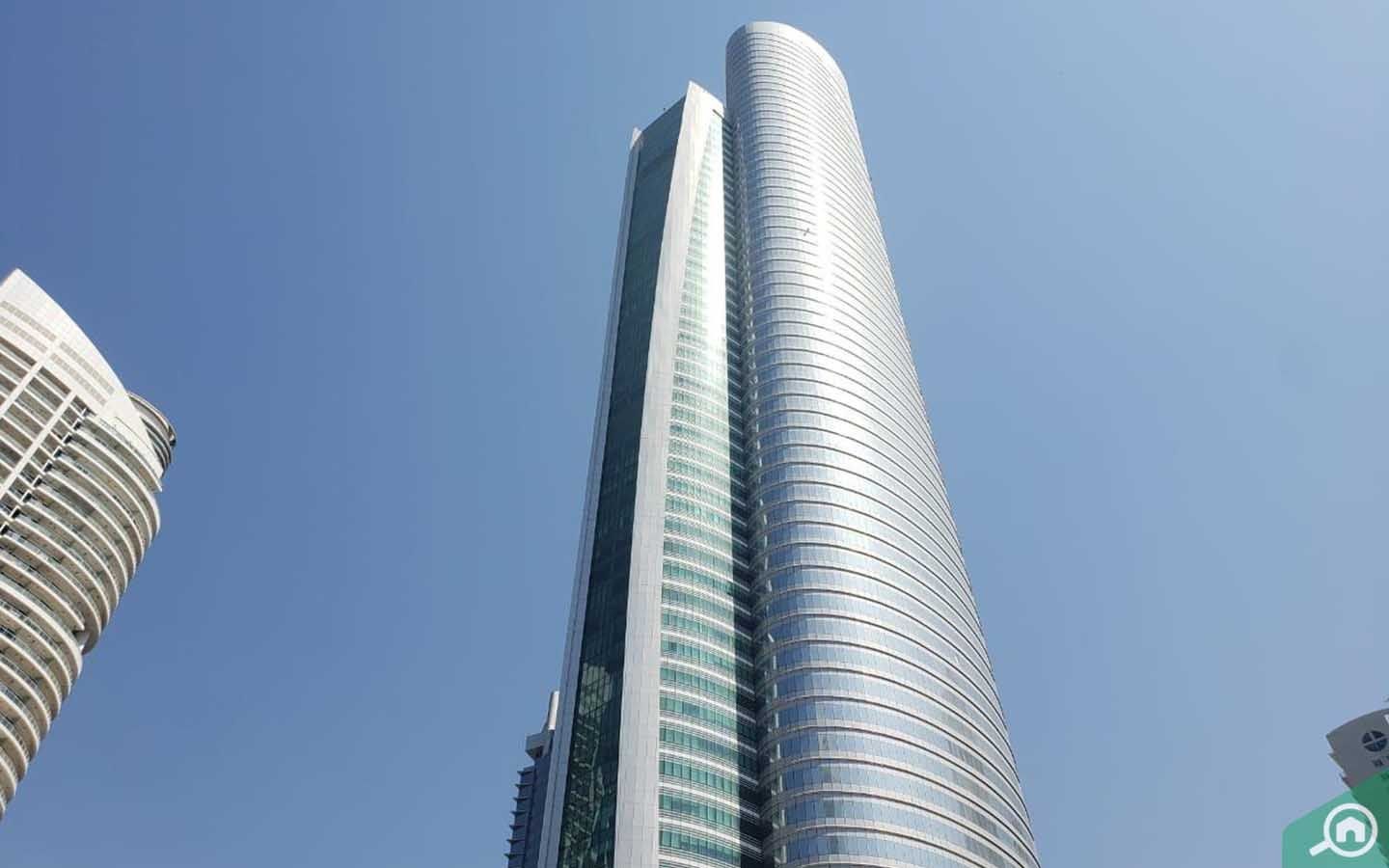
DMCC was established in 2002 as a Government of Dubai Authority, mandated to make Dubai a commodity trading gateway to the Middle East and beyond. It is the incorporating authority, the licensing authority and — unusually — the landlord, having built the districts its members occupy: Jumeirah Lakes Towers and the newer Uptown Dubai. By DMCC's own figures the zone hosts more than 26,000 companies from over 180 countries across more than 1,000 licensed activities.
Ownership is not the constraint here. A DMCC company can be wholly owned by foreign individuals or foreign companies, with no UAE national partner and no local sponsor holding a share, and DMCC states that capital and profits can be repatriated in full. No exchange control stands between the company's account and a transfer abroad: the dirham converts on demand at its fixed peg to the US dollar, and no permit is needed to send it out. Neither point is peculiar to DMCC. Every UAE free zone offers the same ownership, most mainland activities have offered it since Federal Decree-Law No. 26 of 2020, and the freedom to remit is a federal position rather than a concession made at the zone's counter — which is why which free zone benefits survived the reforms removes both from the list of reasons to pick one zone over another.
The headline carries limits of its own. Full ownership does not buy access to the UAE mainland market; that is a separate question, taken up under the mainland case further down. And the freedom to remit decides nothing about whether a particular payment actually leaves. That turns on distributable profit in approved accounts, a route out that survives the arm's length test, and a bank that can explain the transfer to its own supervisor — all set out in repatriating profit from a UAE company.
Two things it is not, both of which get assumed:
- Not a financial services regulator. Regulated banking, insurance, asset management and advisory belong in DIFC (DFSA) or ADGM (FSRA).
- Not a Designated Zone for VAT — counterintuitive for a commodities zone. See below.
The businesses it genuinely suits
DMCC was built around physical commodity trade and still centres on it: gold and precious metals, diamonds and coloured gemstones, tea, coffee, cacao and agricultural products, energy and base metals. Trade any of those and the ecosystem is a commercial asset rather than a brochure line — the density of counterparties, refiners, assayers, vault operators and brokers inside JLT is not replicated in another UAE zone.
Pearls belong on that list too, and they sit with the stones. DMCC's Dubai Diamond Exchange names traders specialising in pearls among the businesses it serves, alongside dealers in diamonds, coloured stones and jewellery — and above a minimum bead size the anti-money-laundering rules put a pearl dealer in the same supervised category as a diamond dealer, as the compliance section below sets out.
Beyond commodities it runs sector clusters — a Crypto Centre, a Gaming Centre and an AI Centre — each with its own discounted package. And one group has no commodity connection at all: established consultancies with international clients, whose founders treat the licence as a credential and want the strongest available.
Licence types and the activity list underneath them
DMCC issues four categories: Service (advisory, IT, professional expertise), Trading (import, export, distribution and sale of specified goods), Commercial (broader trading across multiple product categories under one licence) and Industrial (manufacturing and transformation of materials).
Multiple activities sit under one licence provided they share a category; mixing categories means a second licence, not a bigger one. General Trading is its own, materially more expensive licence — a separate product, not an upgrade. Settle the activity before the zone: discovering late that your zone cannot license what you actually do is the most expensive sequencing error in UAE formation.
Read that as five products rather than four: Service, Trading, Commercial and Industrial each carry several activities at once so long as those activities stay inside one category, while General Trading is bought separately rather than added on.
None of those categories is confined to commodities. DMCC's own licence guide lists textiles, consumer goods, electronics, food trading and medical equipment among the activities it licenses, beside precious metals, diamonds and energy, so a trader with no commodity connection can hold a DMCC licence. A trader whose range is wide enough to need General Trading can hold that one too, and what the wider licence does and does not buy is worked through in what a general trading licence actually permits. What such a trader cannot draw on is the reason the zone exists. Refiners, vaults and bullion counterparties are worth nothing to a company importing phone accessories, which leaves the name on the licence as the whole return on the premium — the question this page opened with.
Two limits hold whatever the goods. A product that another authority controls stays controlled after the licence is issued. Food and medical equipment are the common cases: medical equipment, for one, is approved for import and trade through a marketing authorisation from the Emirates Drug Establishment, applied for by a marketing office or medical warehouse holding an EDE licence of its own. Those approvals are a separate file, set out under product approvals. And some activities DMCC will not license at all; its own setup guidance gives gambling, explicit content production and activities harmful to the environment or public health as examples.
What setup actually involves, in the order it happens
DMCC advertises a three-stage digital process — pre-approval, portal payment and signing, then premises and e-licence. The working sequence is longer:
- Fix the activity list. Everything downstream depends on it, including whether a bank will later believe your business description.
- Submit the online pre-approval application. DMCC screens shareholders and the proposed business here, not at the end.
- Choose the legal form. A new company with individual or corporate shareholders, a subsidiary, or a branch. A Company Limited by Guarantee route exists for family offices and industry associations.
- Reserve the trade name. Names implying regulated activity or governmental association are refused.
- Settle share capital. Commonly AED 50,000 per company and AED 10,000 per shareholder, but activity-dependent and higher for some licences — confirm yours with DMCC.
- Sign and pay through the portal.
- Take premises. This fixes your visa ceiling, so it must follow a headcount decision, not precede one.
- E-licence issued. DMCC states two to three working days on a complete file, around ten overall.
- Establishment card, then immigration file, then visas.
- Bank account. The longest stage by a wide margin. Budget four to twelve weeks.
What it costs — indicative ranges, and the caveat that matters
Authority fees change and packages are promotional. The figures below come from DMCC's Schedule of Charges and packages page as at August 2026 and are indicative only. Verify each with DMCC before budgeting against it.
Published bundles include Basic Biz at AED 35,484, Jump Start at AED 43,780 with a flexi-desk, a JLT resident package at AED 29,205, and the Crypto, Gaming and AI Centre packages at AED 31,000 including VAT.
The cheapest of the four is the JLT resident package at AED 29,205 and the dearest is Jump Start at AED 43,780, with the Crypto, Gaming and AI Centre packages at AED 31,000 and Basic Biz at AED 35,484 sitting between them.
The number founders miss is not year one — it is year two. The licence fee does not shrink because you stayed small, and the desk renews alongside it. Model three years, not one.
Premises and visas: the desk sets the ceiling
DMCC requires a physical workspace in its districts. There is no genuine virtual office; what is marketed as one is a flexi-desk with lighter branding and the same recurring cost. The lease is DMCC-issued rather than an Ejari tenancy contract, and it drives your visa quota, your bank file and your renewal.
Your visa ceiling follows that lease. A flexi-desk supports a small allocation — commonly cited as up to three residence visas — while physical offices scale with floor area at a ratio of roughly one visa per nine square metres. Both figures are indicative; DMCC is the only reliable source for your own lease.
So decide headcount for the next twenty-four months before choosing premises. Founders buy the cheapest desk, then find that hiring a fourth person means renegotiating a lease, not filing a form. And if your plan depends on a licence with no premises cost attached, DMCC is not the zone.
Banking: where the DMCC name helps, and where it does not
It genuinely helps: a DMCC licence, a DMCC lease and a real address in a named tower give a compliance officer three verifiable things, and banks are measurably more comfortable with DMCC than with lesser-known zones. It does not rescue a weak application. Accounts still fail on the same causes:
- Activity mismatch. The licence says general trading; the founder describes a marketing agency. That reads as risk, and it was created at formation.
- No substance behind the address. A flexi-desk, one non-resident shareholder, no staff and a projected turnover in the millions describes a company that could not plausibly operate where the licence says it does.
- Unexplained source of funds. "Savings" is not an answer. Statements, sale documents or audited accounts are.
- Sector risk. Precious metals and virtual assets attract enhanced due diligence everywhere. Several banks decline crypto-adjacent business outright regardless of jurisdiction, and a Crypto Centre licence does not change that.
The compliance that follows the licence
Corporate tax. Under Federal Decree-Law No. 47 of 2022 a DMCC company must enrol with the Federal Tax Authority and file, whether or not tax is payable. A Qualifying Free Zone Person gets 0% on qualifying income and 9% on the rest, but only while every condition holds together: adequate substance in the zone, qualifying income, no election into the standard regime, transfer pricing compliance with documentation, and audited financial statements. The de minimis test allows non-qualifying revenue up to the lower of 5% of total revenue or AED 5 million; breach it and QFZP status goes for that tax period and the following four.
Commodity traders should read Ministerial Decision No. 229 of 2025, which replaced MD 265 of 2023 retroactively from 1 June 2023. It widened Qualifying Commodities to cover industrial chemicals, associated by-products and environmental commodities such as carbon credits, and dropped the exchange-traded requirement. Earlier positions are worth revisiting.
VAT. The threshold is AED 375,000 of taxable supplies. Critically, DMCC is not on the Designated Zone list under Cabinet Decision No. 59 of 2017 — JAFZA is. Goods held in JLT get no designated-zone treatment.
Economic substance. Cabinet Decision No. 98 of 2024 limited the ESR to financial years ending on or before 31 December 2022. There is no filing for periods beginning on or after 1 January 2023, and penalties issued for later periods are cancelled or refundable. Anyone still selling you an annual ESR notification is selling you nothing.
Beneficial ownership. Cabinet Decision No. 109 of 2023 requires records of real beneficial owners, of shareholders or partners, and of nominee directors, filed with DMCC as incorporating authority and kept current.
AML, if you touch precious metals. Dealers in precious metals and stones become Designated Non-Financial Businesses and Professions once single or linked cash transactions reach AED 55,000. Supervision sits with the Ministry of Economy and Tourism even inside a free zone: compliance officer, goAML enrolment, suspicious transaction reporting, responsible-sourcing due diligence on gold, DMCC's own guidance on top. An operating cost, not a form.
Pearls count as stones. The Ministry's current guidance for the sector includes pearls among the precious stones its rules reach once they pass a minimum bead size, loose or strung, so a pearl trader carries the same programme as a diamond trader. The same guidance leaves synthetic, treated and artificial stones outside the definition but not outside the risk: a dealer who handles them alongside natural stones is expected to apply the same risk-based approach, not to shelter behind the product's technical classification.
Virtual assets. A Crypto Centre licence is a free zone licence, nothing more. Regulated virtual asset services in Dubai outside DIFC need separate authorisation from VARA. Proprietary trading and non-custodial technology are DMCC's lane; exchange, custody and client-facing services are not.
None of that arrived at once. Each obligation above is a dated instrument, and the gaps between them explain why advice written a few years ago now reads as confidently wrong.
In order: the zone itself in 2002, the Designated Zone list DMCC is absent from in 2017, full foreign ownership on the mainland in 2020, the corporate tax law in 2022, beneficial ownership in 2023, the end of economic substance filing in 2024, and the widened Qualifying Commodities list in 2025.
Where DMCC is the wrong choice
We would rather lose the fee than place you badly.
Nothing in the list below is a defect in DMCC. Every line of it is the same zone priced twice — once for the founder whose licence gets read, and once for the founder whose licence never will.
The zone does not move between those two columns. The only variable is whether a third party ever looks — a question about your customers, not about Dubai. Seven cases where the right-hand column is yours:
You are cost-sensitive and nobody checks your jurisdiction. A solo consultant invoicing overseas clients gets no measurable benefit from the DMCC name and pays roughly double for it, annually. IFZA, Meydan or SHAMS do the same job.
You move physical goods at volume. JLT is towers. There is no warehousing, no industrial land and no port. Combined with DMCC's absence from the Designated Zone list, a genuine goods business is usually better served by JAFZA — port-adjacent, designated for VAT, and built for storage.
You are a small gold or diamond trader. The DPMS compliance load — compliance officer, goAML, responsible-sourcing due diligence, DMCC's own rules on top — is proportionally brutal at low volume, and what that supervision involves in practice is set out in precious metals dealer compliance. The zone is designed for the tier above you.
Your customers are UAE mainland businesses. A free zone licence does not permit direct mainland trade. DMCC operates a dual licensing arrangement with the Department of Economic Development, letting members obtain a DED licence for onshore service activity against a no-objection certificate — but that is a second licence with a second cost, not a workaround.
You need regulated financial services. DIFC or ADGM. DMCC cannot license it at any price.
You want speed above all. DMCC screens harder than the volume zones and the file moves slower. That rigour is exactly what the brand is worth — but if your only metric is days to licence, you will resent it.
You are buying a licence primarily as a visa vehicle. DMCC is the most expensive way to do that, and the compliance follows you regardless.
One point applies to every zone and lands hardest here: federal company law gives no general route from one UAE free zone to another, so whether a DMCC company can move zones depends on both zones' own rules. The same law now lets a company transfer from a free zone to an emirate's mainland authority, keeping its legal personality, but only where both authorities' systems allow it and both approve, and neither decision is yours. If DMCC turns out wrong and no move is available or approved, you liquidate and incorporate again — new licence, new visas, new bank account. Choosing correctly the first time is the cheapest thing on this page.
The two zones to weigh it against
JAFZA if the business is physical goods. Port access, warehousing, industrial land and Designated Zone status for VAT are structural advantages DMCC cannot match, and you give up little at the bank.
DIFC if the activity is financial. Common-law framework, an independent regulator, and the only credible answer for asset management, advisory or payments at scale.
IFZA as your cost baseline. Run the same three-year model in both. If the gap cannot be justified by a specific bank, counterparty or investor who will actually look, take the cheaper zone and spend the difference on the business.
Where the shortlist is wider than these three, work from elimination rather than from ranking: the Dubai free zones most often shortlisted sets out which of them can license what you actually intend to do, which is the question that removes most of the field.
Commodity trade, a licence somebody reads and a consultancy trading on its credential all stay at DMCC; volume goods and designated-zone stock go to JAFZA; regulated finance goes to DIFC or ADGM; a cost-sensitive founder nobody checks takes IFZA, Meydan or SHAMS; and mainland customers mean a second DED licence rather than a different zone.
Before you apply
Tell us the activity, the customers, the headcount for two years and whether physical goods are involved. We will tell you whether DMCC is worth its premium for you — and when it is not, we will name the zone that is.
Provenance
How this record is verified.
Everything above is re-checked against DMCC — Dubai Multi Commodities Centre’s own current published material and against the federal rules before any application is filed. Where the two disagree, the authority wins and we tell you.
Frequently asked questions about DMCC
Is DMCC worth roughly twice the price of a cheaper Dubai zone?
Only if somebody in your commercial life reads the jurisdiction printed on the licence. Where a bank, a commodity counterparty or an investor will look at that line, the premium buys three things a compliance officer can check: a DMCC licence, a DMCC lease and a real address in a named tower. Where nobody looks, you are paying roughly double what IFZA, Meydan or SHAMS charge, annually rather than once, for a badge that goes unread. The zone does not change between those two cases; only whether a third party ever checks.
Do goods held in Jumeirah Lakes Towers get designated-zone treatment for VAT?
No. DMCC is not on the Designated Zone list under Cabinet Decision No. 59 of 2017 — JAFZA is — which is counterintuitive for a commodities zone and matters to anyone holding stock. Goods in JLT therefore carry no designated-zone treatment, and VAT applies in the ordinary way above the AED 375,000 threshold of taxable supplies. For a genuine goods business at volume, that absence, together with no warehousing, no industrial land and no port, usually points to JAFZA instead.
How many visas does a flexi-desk support at DMCC?
A small allocation, commonly cited as up to three residence permits, while physical offices scale with floor area at a ratio of roughly one visa per nine square metres. Both figures are indicative and DMCC is the only reliable source for your own lease. The consequence is a sequencing rule: decide headcount for the next twenty-four months before choosing premises, because hiring a fourth person on a flexi-desk means renegotiating a lease rather than filing a form. There is no genuine virtual office here.
What is DMCC's dual licence, and does it let me trade on the mainland?
It is a second licence rather than a workaround. A free zone licence does not permit direct mainland trade, and DMCC operates a dual licensing arrangement with the Department of Economic Development that lets a member obtain a DED licence for onshore service activity against a no-objection certificate. That carries a second cost and a second set of obligations, and it does not convert the free zone licence into a mainland one. Where mainland customers are the business rather than an edge case, price the second licence before choosing the zone.
What does a DMCC licence cost in year two?
Close to year one, because the licence and the desk both renew and neither shrinks because the company stayed small. On DMCC's published figures as at August 2026, a Trading or Service licence runs AED 20,265 a year and General Trading AED 50,265, the establishment card AED 1,825, and a flexi-desk AED 16,000 to 19,000, with serviced desks at AED 22,000 to 35,000. The application, incorporation and articles fees fall away after year one; everything else repeats. Model three years, and verify each figure against the current Schedule of Charges.
Does a DMCC Crypto Centre licence cover regulated virtual asset services?
No. A Crypto Centre licence is a free zone licence and nothing more, so regulated virtual asset services in Dubai outside DIFC still need separate authorisation from VARA. Proprietary trading and non-custodial technology are DMCC's lane; exchange, custody and client-facing services are not. Banking is the other half of the answer: precious metals and virtual assets attract enhanced due diligence everywhere, and several banks decline crypto-adjacent business outright whatever the jurisdiction, which a Crypto Centre package does not change.
Begin with a clear conversation
Tell us what you intend to build.
A consultant will map the structure, jurisdiction, approvals and likely cost against what you actually described — not against a package.
