
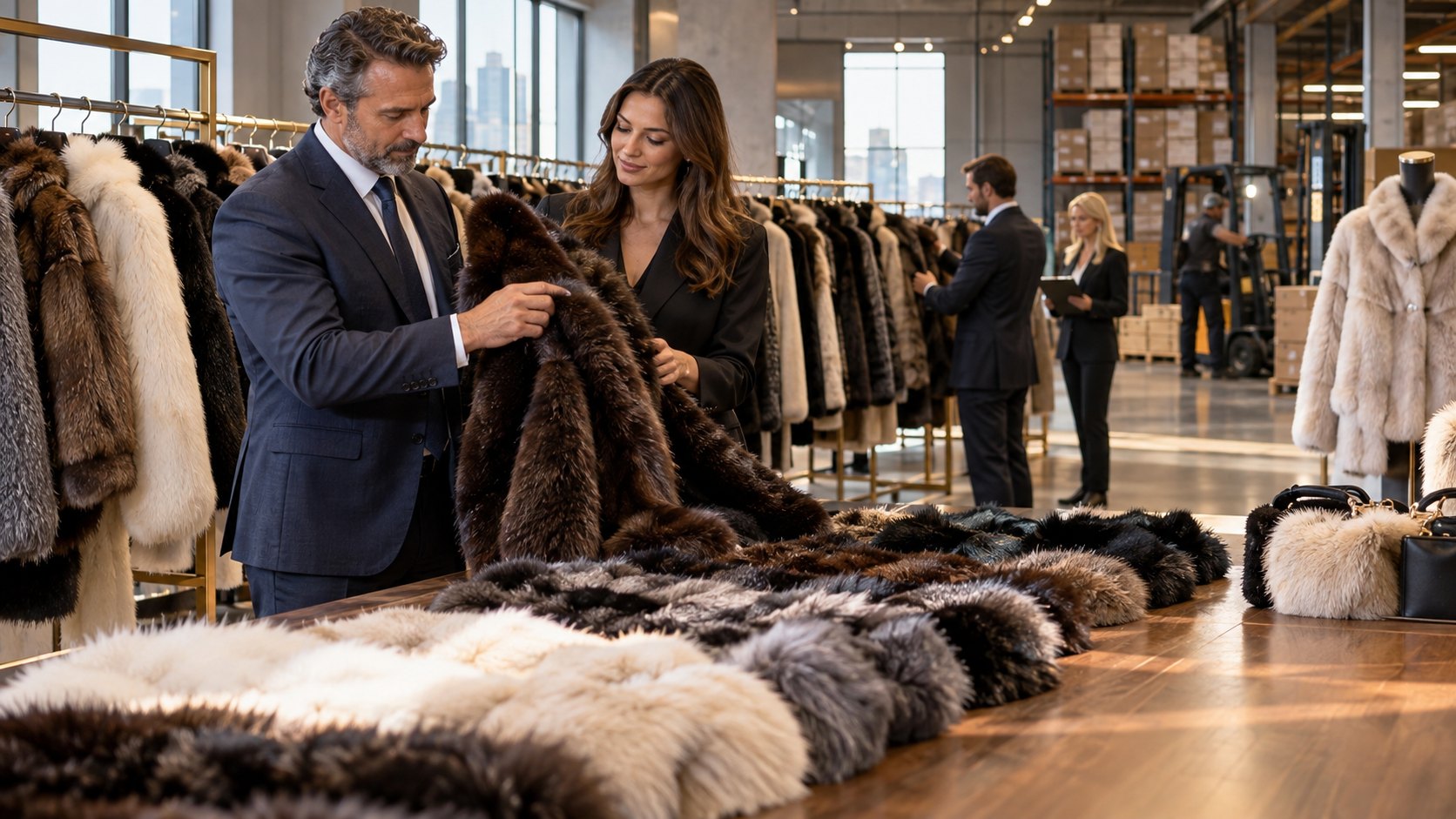
Activity CZ 147
How to Start a Fur Articles Wholesale Business in Dubai
In fur wholesale the due diligence is the product: species and provenance decide whether a parcel is saleable stock or contraband. What the line covers, who buys here, and what a pelt demands.
ConsultZone licensing desk
- Activity code
- CZ 147
- Category
- Trading
- Reviewed
- Read
- 8 min
Listen instead
58 seconds
An audio summary of this guide.
Topic summary
How to Start a Fur Articles Wholesale Business in Dubai
A fur coat crosses a border as two things at once: a garment, and an animal. Every neighbouring line in the catalogue is judged on fabric, sizing and labelling. This one is judged on which animal the skin came from, where it was taken, and whether anyone can prove it — and that question decides whether a consignment is stock, a parcel that has to go back, or a seizure.
So the due diligence is not an overhead on this trade. It is the trade. International wildlife-trade controls cover a long list of fur-bearing species, and the UAE applies them as a party to the conventions behind them.¹ Three outcomes follow from a single line on an invoice. Some species may not be moved commercially at all, whatever is offered on paper. Many may be moved only while a species permit travels with the goods, which makes the document part of the inventory rather than an attachment to it. And a substantial part of what the trade loosely calls fur — sheepskin, rabbit, and the synthetic pile that carries most of the volume in the value market — is touched by none of it. A buyer who cannot tell those three cases apart before committing money is not in a position to buy.
The market itself is real, narrow and honest about what it is. Nobody in the Gulf needs a fur coat for warmth. Demand here comes from residents and visitors who travel to cold climates and buy where the choice and the price are better; from trim and lining work, where collars, cuffs, hoods and abaya detailing consume small quantities of dressed pelt at a good margin; from interiors, where throws, cushions and hide rugs sell as furnishing rather than clothing; and from onward movement to colder markets, which is the largest part of it by weight. The buying window follows the cooler months and the travel season, so a year of sales can arrive in a few crowded weeks — and stock that misses the window is stock held for twelve months in a climate that is actively hostile to it.
Where a consignment actually ends up
Sort the goods by outcome rather than by species name and the trade resolves into three destinations. The useful thing about the sort is how much of it is decided before price is ever discussed.
six kinds of consignment, three outcomes
- A species listed as threatened with extinctionCommercial trade in the most protected species is closed, and no paperwork opens it
- Wild-taken skins offered with no origin documentWith no provenance there is nothing to check, and an undocumented skin is treated as the worst case it could be
Not tradable at all
- Farmed pelt of a controlled species, fully documentedThe permit travels with the goods, so the document and the parcel are one item
- A documented parcel bought to be moved onwardA transit movement still has to close the chain of documents at both ends
Tradable with species paperwork
- Sheepskin, rabbit and other unlisted domestic peltNothing about the species restricts the goods; they are handled as leather or textile articles
- Faux fur and pile fabricA textile, and none of the wildlife controls reach it
Ordinary consumer-goods handling
Read the concentration rather than the rows. Two thirds of the sort is settled by species and paperwork, not by commerce, which inverts the usual order of a wholesale decision: the question is not what a parcel is worth but whether it may exist as stock at all. And the failure mode is unusually harsh. In most goods trades a poor consignment is a discount. Here a wrong consignment is a total loss, because the goods cannot be re-sold, re-graded or quietly moved on, and the cost lands on the importer rather than on the supplier who shipped it.
The trader this line suits, and the one it will punish
An established clothing or accessories trader adding a category
The strongest entry is sideways. A company already moving garments or leather goods has the buyers, the freight relationships and the labelling discipline, and is adding a small, high-value category to an existing container programme rather than building a business on it. Fur will not carry a company on its own at this end of the market; it sits well on top of one that already works.
A supplier to the tailoring and trim trade
Dressed pelt sold by the piece to tailoring workshops and fashion houses is the least seasonal version of this business, because the workshop buys to a production plan rather than to a shopping season. Volumes are modest, the buyer is technically competent, and reputation compounds quickly in a small market.
An operator whose value is movement
Buying at origin and selling onward without entering the local market is where most fur tonnage actually goes. It is a documents-and-logistics business, and the margin is earned on handling accuracy rather than on retail taste.
Where this is the wrong purchase. If the intention is to dress, tan, dye or shear raw skins, this is not the activity. If the intention is a shop selling coats to walk-in customers, that is a retail line, not a wholesale one. And if the plan depends on buying cheaply from an informal supplier who cannot produce origin documents, the plan has no lawful version of itself. Say it plainly at the outset rather than after a container is paid for.
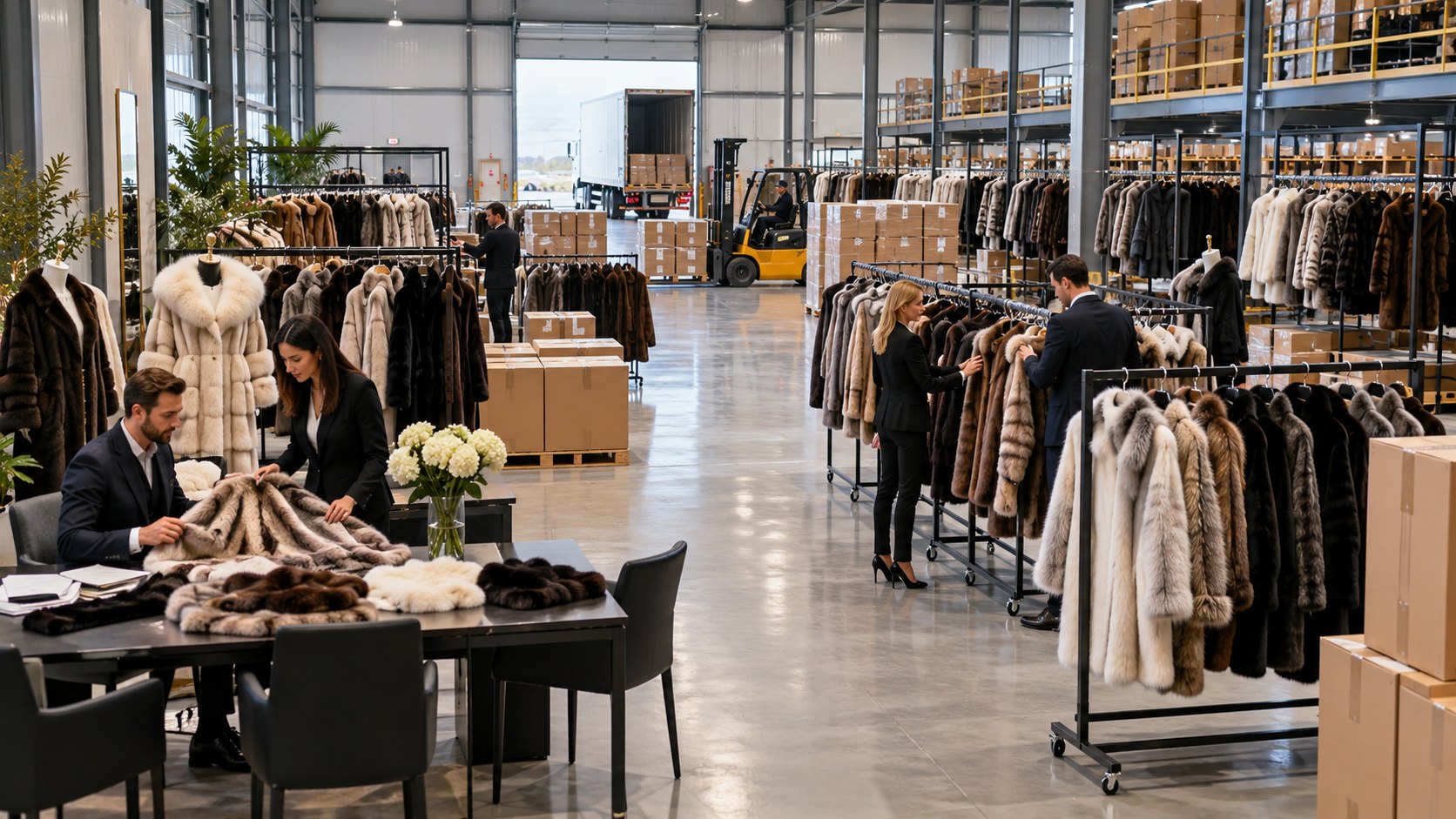
What the line permits, and the point at which it stops
The trading, not the making
The activity is buying and selling fur articles and dressed pelt in bulk, largely unchanged. Tanning, dressing, dyeing, shearing and the manufacture of garments are industrial work, carried out under an industrial licence on approved premises with effluent and chemical conditions attached, and they are a different undertaking with different capital needs.³ Cutting and sewing to order is a tailoring workshop, again separate. The practical test is the same one that separates every wholesale line from its factory: if the goods leave in the form they arrived in, this line covers them.
The documents do not transfer with ownership
A licence permits the trade. It says nothing about any particular skin. Species clearance attaches to the consignment and to the specific goods in it, so a permit obtained by a previous holder is not a permit for the next parcel, and a supplier's assurance is not a document. This is the single most expensive misunderstanding available on this page, and it is worth writing into the purchase terms rather than discovering it in a customs hall.
Consumer-facing obligations still apply
A fur article sold into the local market is also a consumer product, subject to national standards, conformity assessment and Arabic labelling requirements administered federally.³ Composition and country of origin belong on the label. Describing rabbit as something more expensive is a straightforward misdescription, and in a small market it is found out.
What a pelt demands of a warehouse
Fur is organic, and it is the only thing in the household and clothing family of activities that decays while it sits. Three forces work on it here. Heat and dry air draw moisture out of the leather backing until it stiffens and splits, which is invisible until a pelt is flexed at the point of sale. Humidity does the opposite and invites mould into the hide. And keratin-eating insects — moths and hide beetles — will find an unprotected store and work through it in the quiet season, which in this market is most of the year.
The answer is cool, stable, dark storage with real humidity control, continuous pest control, and stock that is inspected and moved rather than stacked and forgotten. That is a materially more expensive square metre than a homeware warehouse needs, and it should be in the business plan from the start rather than added after the first loss. Two further practicalities follow. High value per cubic metre makes this a security question as much as a storage one, and it changes what an insurer wants to see. And the permit file needs the same custody as the goods, because a consignment whose documents cannot be produced on demand is, in practice, a consignment that cannot be sold.
What the licence costs to hold, which species conditions attach to a particular parcel, and how a specific consignment is cleared all depend on the emirate, the premises and the goods themselves. Protected-species movement is decided federally on the facts of the consignment, and the customs treatment turns on the classification of the actual cargo.² ConsultZone confirms those conditions against the chosen jurisdiction and the real product list before anything is committed.
References
- Federal framework for wildlife trade, protected species and animal health — the control that decides whether a fur consignment may move at all. Ministry of Climate Change and Environment
- Import and export, customs codes, and restricted and prohibited goods. Dubai Customs
- National standards, conformity assessment and consumer-goods labelling, and the licensing of industrial processing. Ministry of Industry and Advanced Technology
- Federal law and the UAE's accession to international environmental conventions. UAE Government portal
Elsewhere in Trading
Activities that sit beside this one
Most licences carry more than one activity. Adding a neighbouring line at the application stage costs a fraction of amending the licence afterwards.
Begin with a clear conversation
Tell us what you intend to build.
A consultant will map the structure, jurisdiction, approvals and likely cost against what you actually described — not against a package.
