
Activity CZ 146
How to Start a Footwear Wholesale Business in Dubai
Footwear is the only apparel line where one design is a dozen purchases. What the size run does to working capital, why a last makes a brand sticky, and where safety boots invert the risk.
ConsultZone licensing desk
- Activity code
- CZ 146
- Category
- Trading
- Reviewed
- Read
- 8 min
Listen instead
43 seconds
An audio summary of this guide.
Topic summary
How to Start a Footwear Wholesale Business in Dubai
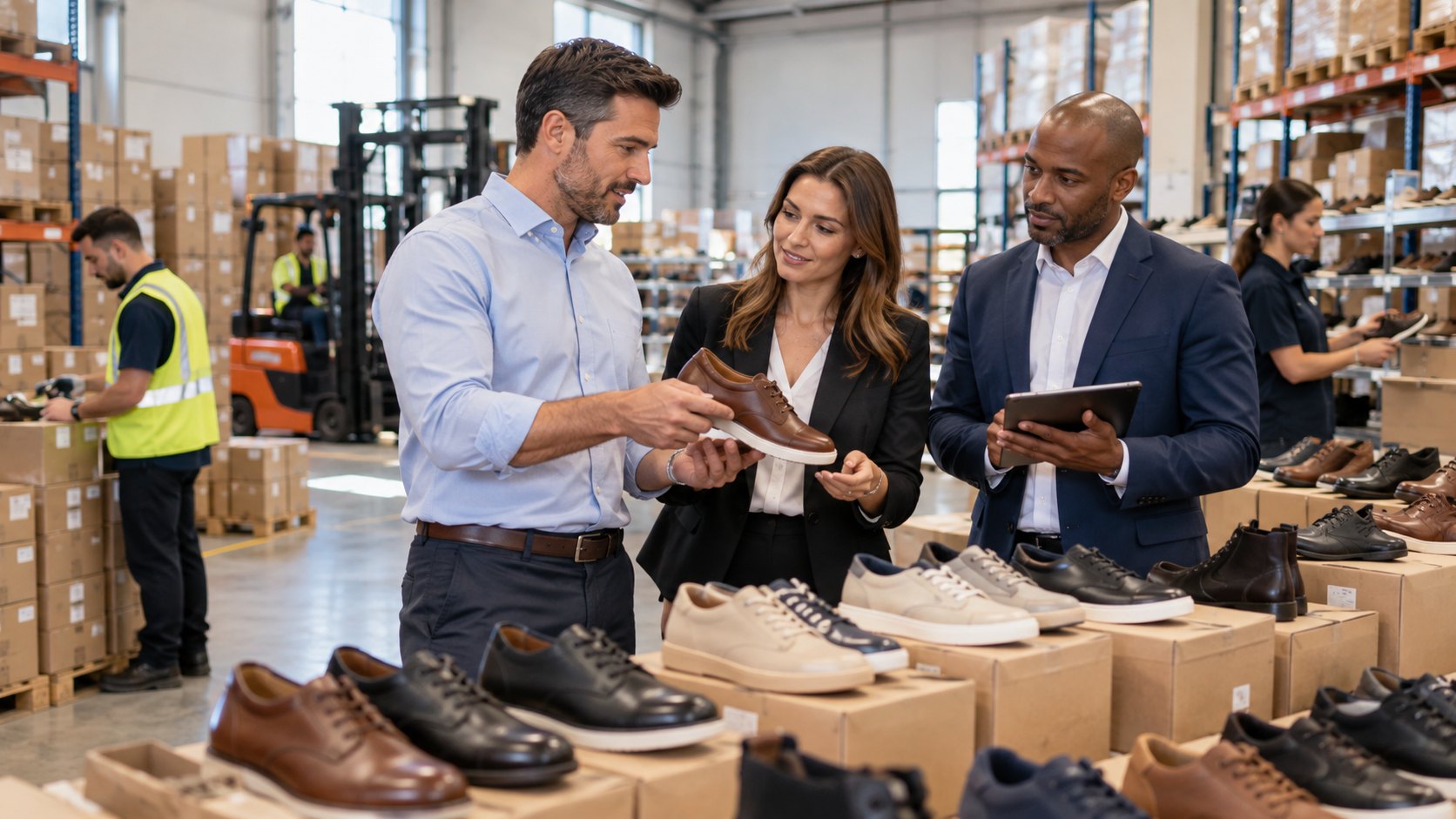
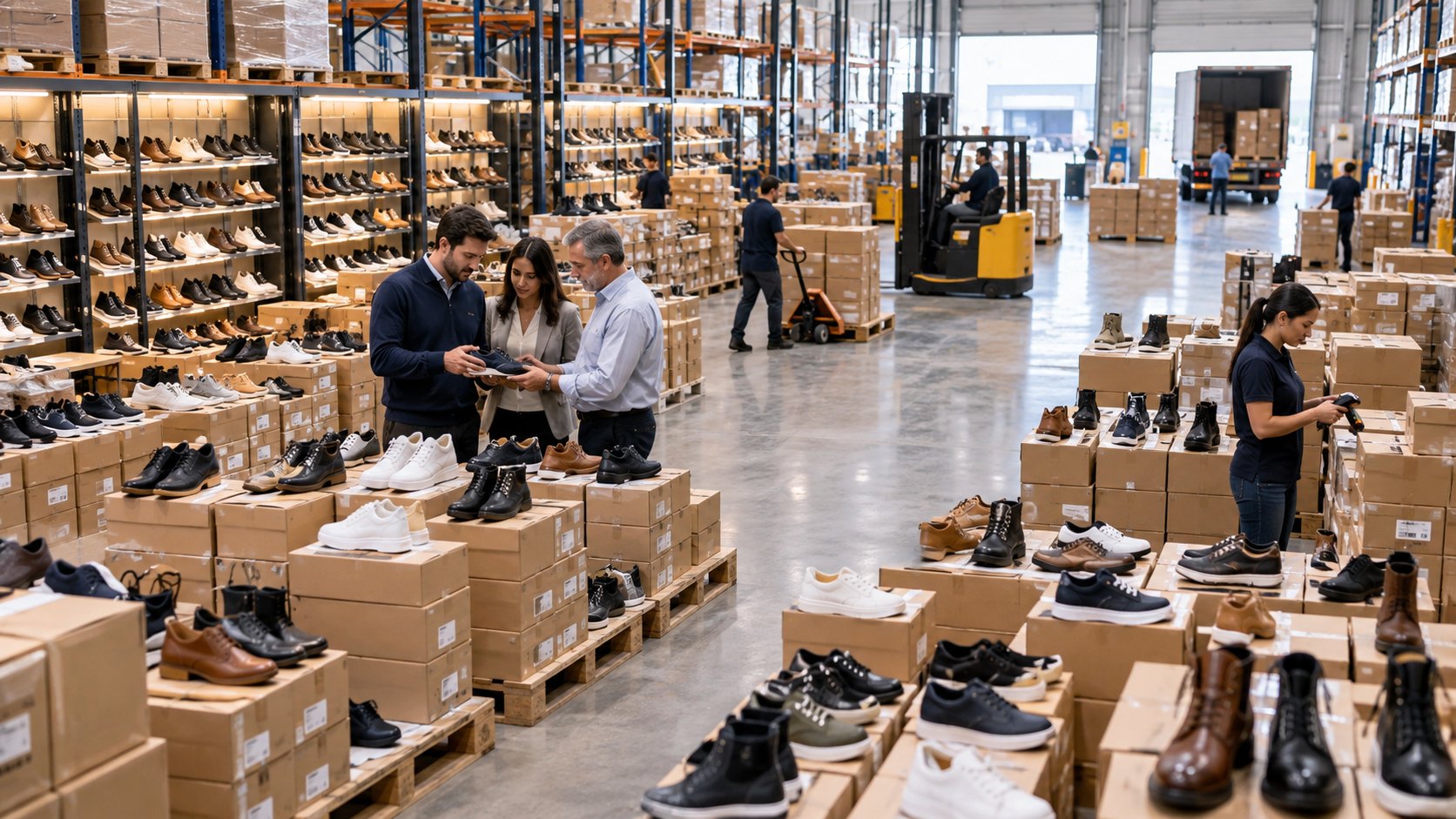
One style, in one colour, needs the whole run of adult sizes standing on the shelf before it can sell a single pair. Multiply that by colours, and again by half sizes and widths where the maker offers them, and a range that looks modest in a catalogue is a large number of boxes doing nothing. Footwear is the only apparel line where a design is a dozen purchases rather than one, and every other feature of this trade follows from that.
What comes back at the end of a season is the evidence. The sizes that clear are the common ones in the middle; what remains is the two ends of the run. A retailer buying that remainder cannot fill its own customers, so it pays a remainder price — and a broken run discounts twice, once because the season has turned and once because nobody can use what is left. The money in this line is made on sell-through of the whole run, not on the margin printed against a style.
There is a second thing that makes footwear stickier than clothing, and it is physical. A last is a maker's own shape, and sizing is not truly common between brands. A customer who takes one size in one make does not reliably take it in another, which means a retailer that has learned to fit a brand keeps buying it, and adding a new brand to a range is a real commitment rather than a catalogue entry. That cuts both ways: a wholesaler's existing brands are hard to dislodge, and its own new ones are hard to introduce.
CZ 146 — Wholesale Of Footwear
The line is the trade in finished footwear bought for resale to other businesses — shoes, sandals, boots, trainers and sports shoes, slippers, and children's footwear, in leather, textile, rubber or synthetic materials. The article arrives made, boxed and labelled, in a size, to somebody else's pattern.
Inside that one activity sit sub-trades that behave nothing alike, and confusing them is the commonest mistake made at the licensing stage.
Fashion and lifestyle footwear is the business described above: many styles, shallow, a seasonal clock, markdown as a planned cost, and a buyer paid to have an opinion. Sports footwear adds what the clothing line adds — performance claims on the box that a supplier may be asked to stand behind, and brand licensing, where the right to sell rests with the owner of the mark and unauthorised supply is an exposure rather than a bargain. Children's footwear is driven by growth rather than fashion, which makes the repeat excellent and the fit responsibility real, because a parent will hold the shop to it.
Then there is safety and occupational footwear, and it inverts almost every risk on this page. It is personal protective equipment. A buyer specifies it, purchases it to a standard, orders it in volume against a contract, and re-orders it as it wears out on a schedule nobody has to guess at. Few styles, deep sizes, no fashion clock. In exchange the goods acquire a conformity file: protective equipment carries obligations that ordinary footwear does not, the classification is settled before the order rather than at the border, and a serious buyer will ask to see the documentation before it places a second order.¹ A business that intends to supply it should say so while the activities are being chosen, because it is a different trade sharing an activity name.
The ordinary conditions sit around all of it. Footwear sold on to consumers falls inside the national standards, conformity and Arabic labelling expectations for consumer goods, with material, origin and size the details a retailer checks on delivery.¹ Footwear made from exotic skins falls under international controls on trade in protected species, and that documentation is arranged with the order rather than discovered at clearance — for any specific skin the honest answer is that it must be checked, not assumed.² Imported stock clears through the emirate's customs authority, which is where the code the company deals under comes from.³ Warehouse and sales staff need work permits and contracts, and the wage payments behind them are a continuing obligation.⁴ The unit and its racking are the municipality's ground, settled with the tenancy.⁵ Corporate tax applies as to any UAE business and the mandatory turnover threshold brings the company into the VAT system.⁶ Which of these applies, and on what terms, differs between the mainland and the free zones and between emirates, so it is confirmed for the specific case before a lease is signed.⁷
The lines a footwear file gets confused with
Clothing, which does not multiply the same way
CZ 144 covers garments, including sportswear, and a great many businesses hold both lines because the customers overlap almost completely. The difference is depth. A shirt style is a pack weighted to the middle sizes; a shoe style is the entire run before anything sells. Anyone planning to carry both should size the working capital on the footwear half and treat the clothing half as the easier problem, not the other way round.
Accessories, where one size mostly fits
CZ 145 is gloves, ties, belts and scarves, and it is this line's mirror image: no size curve, a wide range on a small capital base, and no broken runs at all. A business wanting apparel exposure without the stock arithmetic belongs there instead of here, and the two together make a coherent pairing precisely because their risks are unrelated.
The combined umbrella, and when it is the right answer
CZ 139 covers textiles, clothing and footwear together. It is the line to look at when a business genuinely intends to hold all three rather than specialise. Taking the narrow line described here is a statement that footwear is the business, not one of three departments.
Making and mending, which are not trading at all
Manufacturing footwear is a production licence. Repairing it is a service, licensed and premised as a workshop rather than a warehouse. Neither is carried by a trading line, and a wholesaler who starts re-soling returns has quietly begun operating a second activity. Handbags, luggage and leather goods are a separate trade too, however naturally they sit next to shoes in a shop.
The buyer who can actually carry this stock
The customers are shoe retailers and boutiques, department store and chain buyers, sports retailers, online sellers, market traders, uniform and safety suppliers holding industrial accounts, and other wholesalers consolidating for regional markets. What separates a viable entrant from an optimistic one is not access to product, which is abundant, but the ability to fund a full run of sizes long enough for it to sell through.
Five choices decide how such a business is run, and each of them buys something at a price. Carrying the full run on every style is what makes a retailer buy from you at all, and it is also where most of the money sits idle. Adding safety and occupational footwear brings contracted repeat volume that never goes out of style, and brings a conformity file and an auditing buyer with it. Going deep on few brands builds the fit knowledge that keeps customers, and hands the season's outcome to somebody else's design office. Selling only full original cartons removes broken runs and picking cost, and sends the small retailers — the repeat customers — elsewhere. And buying end-of-season stock cheaply wins on price and fills the shelf with the very broken runs the rest of the business exists to avoid.
five choices, each weighed against the same rule
What it givesWhat it costs
- Carrying the full size run on every styleA retailer can fill its own customers, which is why it buys from youMost of the capital sits in the sizes that sell last
- Stocking safety and occupational footwear alongside fashionContracted, specified, repeat volume that never goes out of styleA conformity file per article, and a buyer who audits it
- Going deep on a few brands rather than wide on manyFit knowledge, and a range customers learn to trustThe season rests on somebody else's design office
- Selling only full cartons in original size packsNo broken runs, and almost no picking costSmall retailers buy elsewhere, and they are the repeat trade
- Buying end-of-season stock at a discountVolume at a price no full-price importer can matchBroken runs that discount again, and racking that earns nothing
The marked row is the one that changes the shape of the business rather than tuning it. Everything else on that list is a variation on managing fashion risk; occupational footwear replaces fashion risk with documentation, and a wholesaler who can carry both has two order books whose bad years do not coincide. What either half costs to licence and hold depends on the emirate, the premises and the activity mix, and that is what ConsultZone confirms for a specific case.
References
- Ministry of Industry and Advanced Technology — national standards, conformity marks, labelling, and the classification of protective footwear as personal protective equipment. Ministry of Industry and Advanced Technology
- Ministry of Climate Change and Environment — controls on trade in footwear made from protected species. Ministry of Climate Change and Environment
- Dubai Customs — import and export of finished footwear, and the customs code the trading company deals under. Dubai Customs
- Ministry of Human Resources and Emiratisation — work permits, labour contracts and wage protection for warehouse and sales staff. Ministry of Human Resources and Emiratisation
- Dubai Municipality — premises suitability and storage conditions for a wholesale unit. Dubai Municipality
- Federal Tax Authority — VAT and corporate tax enrolment and filing. Federal Tax Authority
- UAE Government portal — the mainland and free zone licensing structure and general federal information. UAE Government portal
Elsewhere in Trading
Activities that sit beside this one
Most licences carry more than one activity. Adding a neighbouring line at the application stage costs a fraction of amending the licence afterwards.
Begin with a clear conversation
Tell us what you intend to build.
A consultant will map the structure, jurisdiction, approvals and likely cost against what you actually described — not against a package.
