

Activity CZ 58
How to Start a New and Used Vehicle Dealership in Dubai
A dealership holding new and used vehicles on one licence is making a decision about capital, not about cars. What the activity covers, who buys, and what attaches to the goods.
ConsultZone licensing desk
- Activity code
- CZ 58
- Category
- Trading
- Reviewed
- Read
- 7 min
Listen instead
41 seconds
An audio summary of this guide.
Topic summary
How to Start a New and Used Vehicle Dealership in Dubai
This is the licence line for a dealer who wants both halves of the trade: unused vehicles and used ones, wholesale and retail, in the same company. It sounds like a convenience and it is really a decision about capital.
A new vehicle is a known quantity with a thin, predictable margin. A used vehicle is an unknown quantity with a fat, uncertain one. Run together, the used side subsidises the new side's margin and the new side feeds the used side its trade-ins — which is exactly how established dealerships work everywhere. Run badly, the used stock ages on the forecourt while the cash that should have bought fresh inventory is sitting in three cars nobody wants.
The UAE is an unusually good place to attempt it. The fleet is young, turnover is fast, buyers change cars more often than in most markets, and there is a regional export demand that will clear stock a local buyer has rejected. That last point is worth more than it sounds: it is a floor under the used side of the book.
What the activity covers
The word doing the work in the name is unused rather than new. It means a vehicle that has not been in service — which is not quite the same as a vehicle bought from a manufacturer's agent.
Unused vehicles
Vehicles that have never been used, whether they came through an appointed distributor or through the parallel trade. That distinction matters commercially: parallel or independently imported stock can be cheaper and can arrive faster, and it does not carry the local agent's warranty. A buyer who does not understand that difference will discover it at the first service, so an honest dealer explains it at the point of sale.
Used vehicles
Vehicles that have been in service, bought at auction, taken in part-exchange, acquired from fleets and leasing companies, or bought directly from owners. Everything about profitability here is in the buying, not the selling.
Wholesale as well as retail
The licence permits both. Selling to other traders is lower margin, far faster, and it is how a dealer clears stock that is not moving. Most dealers use the wholesale channel as a release valve and do not talk about it.
The buyers, and the route to them
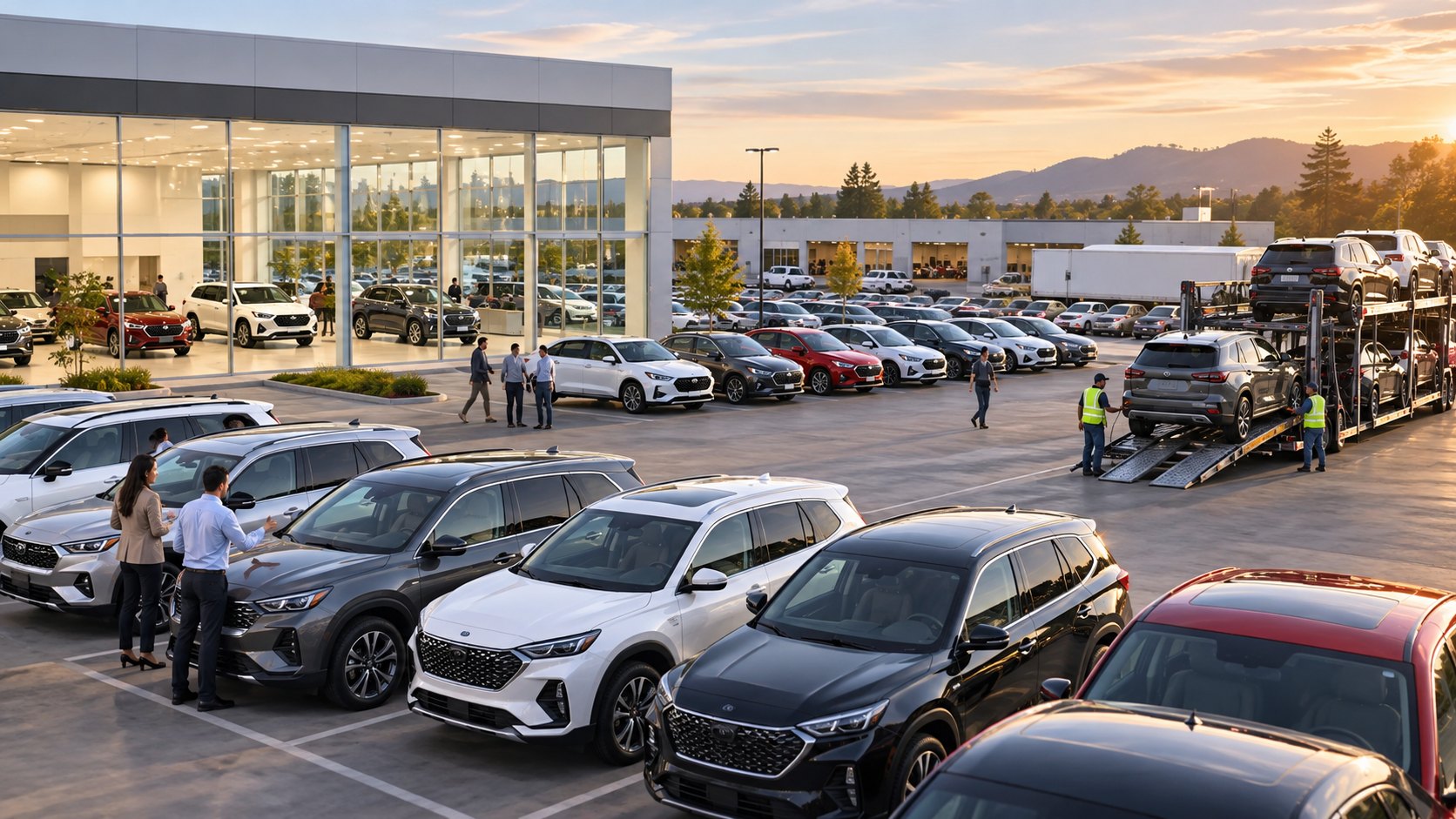
Retail buyers arrive through the forecourt and through the listing portals, and they compare on price against a market that is completely transparent to them. Fleet and corporate buyers buy in volume against a specification, negotiate hard, and pay reliably. Other traders buy stock a dealer wants gone, at a price that reflects it. Export buyers take what the local market will not, in quantity, often sight-unseen against photographs.
What it givesWhat it costs
- Unused vehicles through an appointed distributorA warranty the buyer trusts, and a clean provenance storyThe thinnest margin in the business, and stock allocated rather than chosen
- Unused vehicles through the parallel tradeBetter buying, faster availability, more choice of specificationNo local warranty, and a conversation with every buyer about why
- Used vehicles bought at auction and from fleetsThe fat margin, and stock you choose rather than receiveCapital tied in ageing inventory, and every mistake is yours
- Part-exchange taken against a retail saleStock at a price you set, and a sale you would otherwise loseVehicles you did not want, arriving at the worst moment
- Wholesale disposal to other tradersCash, immediately, and a forecourt that keeps movingMargin surrendered to somebody who will make it instead
Read the drawing as a portfolio rather than a menu. A dealership that only does the top row has no margin; one that only does the middle row has no flow; one that never uses the bottom row eventually has no cash.
Conditions that attach to the goods
Each vehicle's own record governs the sale. Ownership, any finance or lien against it, the inspection where one is required and the traffic authority's record all attach to the car rather than to the dealer. A vehicle with an unresolved encumbrance is not a vehicle you can pass clean title to, and discovering that after taking it in part-exchange is a loss.
Specification affects saleability more than it affects legality. Vehicles built for this region and vehicles built elsewhere differ in cooling, corrosion protection and equipment. Both can be traded; one is worth more here and the other is worth more somewhere else. That is a commercial fact a dealer prices in, not a rule.
Imports and exports each clear customs in their own right. A vehicle arriving has to be entered; a vehicle leaving has to be documented, and the export paperwork is often the substance of what an export buyer is paying for.
Tax follows the transaction, not the forecourt. A domestic sale and an export sale are not treated the same way, and a dealer running both sides needs the records to tell them apart. That is a bookkeeping discipline rather than a licensing one, and it is where unprepared dealers get caught.
What it costs to hold
Licence fee, premises, the stock the premises will hold and the approvals a category attracts all turn on the emirate, the jurisdiction and the activity mix. A six-car yard and a two-floor showroom hold the same words and nothing else in common. We confirm the real numbers for the specific case.
Days in stock is the number that decides whether this works
A dealership is a financing operation with cars in it. Every vehicle on the forecourt is cash that has been parked, and the return on the business is not the margin on a car — it is that margin multiplied by the number of times the same money turns over in a year. Two cars sold at a modest mark-up every quarter earn more than one sold at a fat one in nine months, and they do it carrying less risk. Most dealers who fail in this trade were not selling at bad margins. They were selling too slowly at good ones.
That makes the arrival date of each vehicle a figure worth knowing as well as the buying price. A struggling yard can tell you what every car cost and not how long it has been standing there. A working one knows the age of every unit on the lot and has decided in advance what each will be marked to when it reaches a given age — because the first asking price is always the most optimistic one, and a car priced wrongly in its first week does not sell in its sixth at the same number.
The trade and export buyers are the floor under that discipline. Moving a car sideways to another dealer or out of the country is not done for margin. It converts a vehicle that is ageing at an unknown cost into cash at a known one, and taking a planned loss on a schedule is a different thing from discovering an unplanned one later. A dealer who will not do the first eventually does the second on several cars at once.
Part-exchange is the trap inside the model. A trade-in is bought at the exact moment a retail sale is being closed, which is the worst possible moment to be making a buying decision. The temptation is to overvalue the car coming in so the car going out leaves the forecourt — which quietly moves margin from the used book into the new one and makes both sets of numbers lie about where the business earns.
Running both halves on one licence means two cash cycles drawing on one bank balance. A commitment to take unused stock and a yard of used stock compete for the same money, and the urgent one wins every time unless the split between them was settled before either became urgent.
References
- Roads and Transport Authority — vehicle records, ownership transfer and the inspection regime in Dubai. Roads and Transport Authority
- Dubai Customs — entering imported vehicles and documenting exported ones. Dubai Customs
- Federal Tax Authority — the different value added tax treatment of domestic sales and exports. Federal Tax Authority
- UAE Government portal — the commercial agency framework, which is what separates an appointed distributor from an independent trader. UAE Government portal
Elsewhere in Trading
Activities that sit beside this one
Most licences carry more than one activity. Adding a neighbouring line at the application stage costs a fraction of amending the licence afterwards.
Begin with a clear conversation
Tell us what you intend to build.
A consultant will map the structure, jurisdiction, approvals and likely cost against what you actually described — not against a package.
