
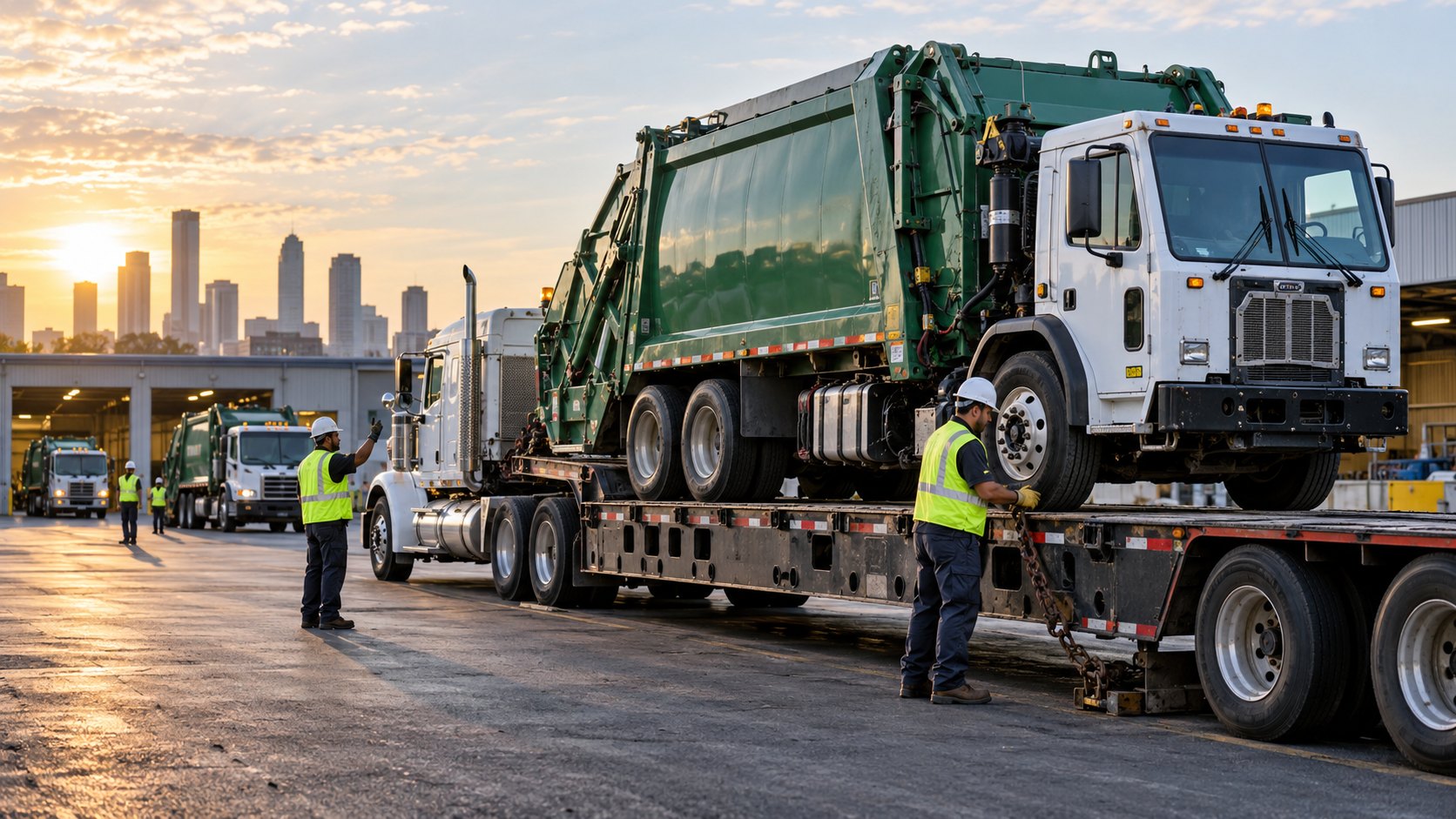
Activity CZ 51
How to Start a Garbage Truck Waste Transport Business in Dubai
Transport of Garbage Trucks is not a business in trucks. It is the collection round they drive: what the activity covers, who buys it, and where the margin in a garbage fleet actually sits.
ConsultZone licensing desk
- Activity code
- CZ 51
- Category
- Waste collection
- Reviewed
- Read
- 6 min
Listen instead
54 seconds
An audio summary of this guide.
Topic summary
How to Start a Garbage Truck Waste Transport Business in Dubai
Read the name of this activity twice, because the name is the one thing about it that misleads. Transport of Garbage Trucks does not describe a company that sells, ships or hires out refuse vehicles. It describes the service those vehicles perform: turning up where waste has accumulated, lifting it, compacting it and carrying it to a facility that is allowed to receive it. The truck is the tool. The product being sold is a round that happens on time.
That distinction is not pedantry, because it changes what the business is made of. A trader in vehicles is judged on the machine. A collection operator is judged on whether the bins were empty on Tuesday morning, and is paid for the same round week after week. One is a transaction. The other is an annuity with a diesel bill attached to it.
The economics of a refuse round are unusually legible once that is understood. Almost all of the cost is fixed the moment a truck leaves the yard with a crew on it, so profit is a question of density: how many collection points sit within a short drive of each other, how full each one is, and how far the truck then has to travel to discharge. Two contracts of the same annual value are worth entirely different amounts depending on whether their addresses are four minutes apart or forty.
The word in its name that misleads, and what the line actually covers
Under this activity a company collects and hauls municipal solid waste — the general, non-hazardous refuse produced by homes, offices, shops, restaurants, hotels, labour accommodation, schools and industrial estates. In practice that means servicing bins and skips on a schedule, running rear-loaders and compactors along a route, lifting containers off commercial sites, and delivering everything collected to a transfer station, sorting facility or landfill that is designated to take it.
It also covers the unglamorous work that keeps a contract alive: placing and swapping containers, washing them, replacing the ones that break, and reporting what was lifted. A collection contract is lost far more often over a missed bin and a dirty container than over price.
What the line does not extend to is anything the name tempts a reader toward. Selling refuse trucks, importing them, leasing them out or running a workshop for them are trading and maintenance activities and belong on different licences. Emptying septic and holding tanks is liquid waste moved by pump, which is its own activity and its own set of disposal points. Broken concrete and demolition arisings off a building site are construction and demolition waste, controlled differently because they are inert and because they are worth something. Anything chemical, clinical, flammable or otherwise hazardous falls out of this line entirely and requires the class-specific approvals that belong to hazardous waste work.
Operating a sorting plant, a material recovery facility or a landfill is also not this activity. Carrying waste to one is.
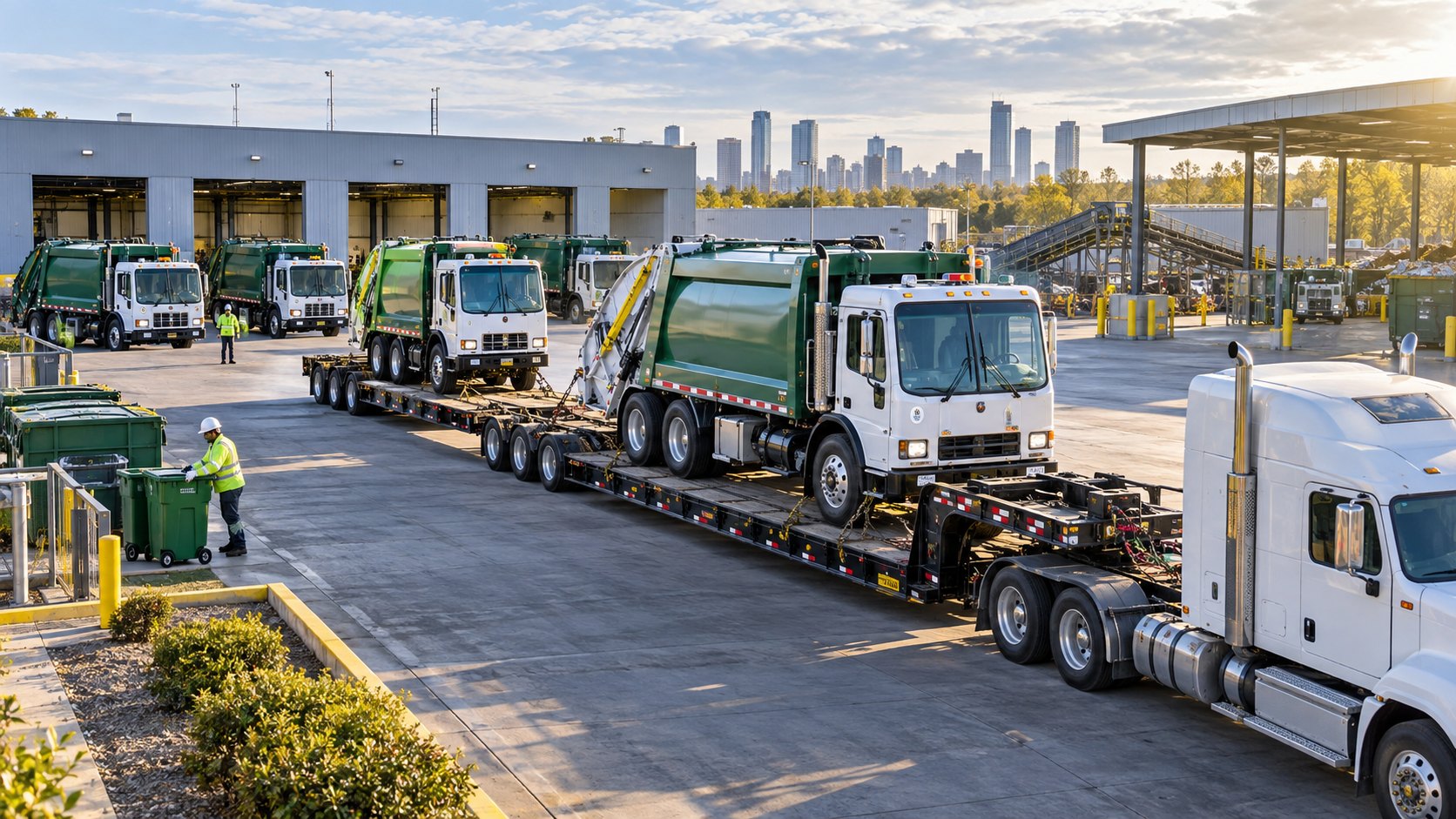
The buyers are communities and facilities, never households one door at a time
Nobody builds a refuse fleet on individual homeowners. The customers who matter are the bodies that hold responsibility for waste across many addresses at once: master community developers and owners' associations, facility management companies running mixed-use towers and business parks, mall and hotel operators, hospital and campus estates teams for their general waste, camp and accommodation operators, industrial estate managers, and municipalities themselves through tender.
Each of those reaches a decision differently, and the route matters as much as the customer. A master community signs after a procurement exercise with service levels and penalties written into it. A facility manager can move in weeks and cares most about whether you will make their reporting easier. A municipal tender is the largest volume available and the most demanding to win and to hold. A larger collector will sub-contract routes to you tomorrow, at a price that reflects who owns the customer.
four ways of filling the same truck, weighed on the same two sides
What it givesWhat it costs
- A long municipal or master-community contractPredictable tonnage and dense routes, which is the whole economicsA tender to survive, service penalties, and thin pricing per lift
- Commercial contracts with malls, hotels and facility managersBetter rates, and a decision taken in weeks rather than seasonsVolumes that move with occupancy, and a sales effort that never stops
- Spot, event and one-off clearance workCash in quickly, with no tender at allHalf-empty trucks and routes that never repeat
- Sub-contracting routes from a larger collectorSteady work with no sales team and no biddingSomebody else owns the customer and can replace you at renewal
Most fleets that survive their first few years hold a mixture rather than a single kind: a contracted base that keeps the trucks moving and pays the crews, and commercial work layered on top of it that pays for the next vehicle. Building on spot work alone is what puts a fleet back on the market.
Conditions that attach to the load, not to the company
Waste is not freight. Once it is on the vehicle, three things about it are controlled rather than commercial, and all three are why a trade licence by itself does not put a compactor on the road.
Where it is allowed to end up. Collected municipal waste goes to a facility designated to receive that kind of material, the receiving site controls what it will accept and when, and the operator who carried it remains answerable for the destination. A round is only as viable as the distance and the opening hours of the site at the end of it.
What the vehicle and the crew are permitted to do. A compactor or skip-lift is a heavy commercial vehicle and carries its own permissions, as does the driver operating it. In Dubai, vehicle and transport permits sit with the Roads and Transport Authority while the waste side sits with Dubai Municipality, and the two are separate applications with separate conditions.
How it is contained between the bin and the tip. Containers, compaction, sheeting, leachate, odour and the washing of both bins and vehicles are municipal public-health matters, and the yard a fleet returns to is inspected on those terms rather than as ordinary warehousing. Take the yard before checking what it may be used for and the tenancy becomes the problem.
The specific conditions, approvals and costs differ by emirate and by authority, and a company operating across emirate lines is operating under more than one set. Those are confirmed for the actual fleet, the actual yard and the actual routes before commitments are made to a customer — which is the part of the work ConsultZone does first, because a signed service level against an unpermitted route is the worst position in this trade.
References
- Dubai Municipality — municipal waste collection, designated disposal and transfer facilities, and public-health conditions on waste premises. Dubai Municipality
- Roads and Transport Authority — heavy commercial vehicle and transport permits for collection fleets operating in Dubai. Roads and Transport Authority
- Sharjah Government — municipal licensing and waste matters for operators working across emirate lines. Sharjah Government
- UAE Government portal — federal environment and waste policy, and the framework each emirate licenses within. UAE Government portal
Elsewhere in Waste collection
Activities that sit beside this one
Most licences carry more than one activity. Adding a neighbouring line at the application stage costs a fraction of amending the licence afterwards.
Begin with a clear conversation
Tell us what you intend to build.
A consultant will map the structure, jurisdiction, approvals and likely cost against what you actually described — not against a package.
