
Activity CZ 52
How to Start a Construction and Demolition Waste Business in Dubai
Crushed concrete is the one stream in this family with resale value, which makes construction and demolition waste a materials business as much as a haulage one. What the activity covers, and where it stops.
ConsultZone licensing desk
- Activity code
- CZ 52
- Category
- Waste collection
- Reviewed
- Read
- 7 min
Listen instead
46 seconds
An audio summary of this guide.
Topic summary
How to Start a Construction and Demolition Waste Business in Dubai
Broken concrete is worth something. That single fact separates this activity from every other waste line a UAE operator can hold, and anyone who plans the business as pure haulage has misread it before buying the first tipper.
The material is the reason. Demolition and excavation produce inert arisings — concrete, block, brick, tiles, kerbs, asphalt planings, sand, soil and hardcore — and inert material can be crushed, graded and sold back into the industry that produced it as sub-base, fill and aggregate. In a market that builds continuously and has to import or quarry much of its stone, a clean load of concrete leaving a demolition site is not a disposal cost. It is feedstock moving in the wrong direction until somebody puts a crusher at the end of it.
That gives the trade two revenue sides instead of one. A collection and transport operator is paid by the site to take the material away, and can be paid again by whoever wants the graded product. Almost every other waste stream in the UAE pays once, on the way out. The whole strategic question in C&D work is how far along that second side you intend to go.
CZ 52 — Construction and Demolition Waste Collection and Transportation Services
What the fleet does, and what the fleet is
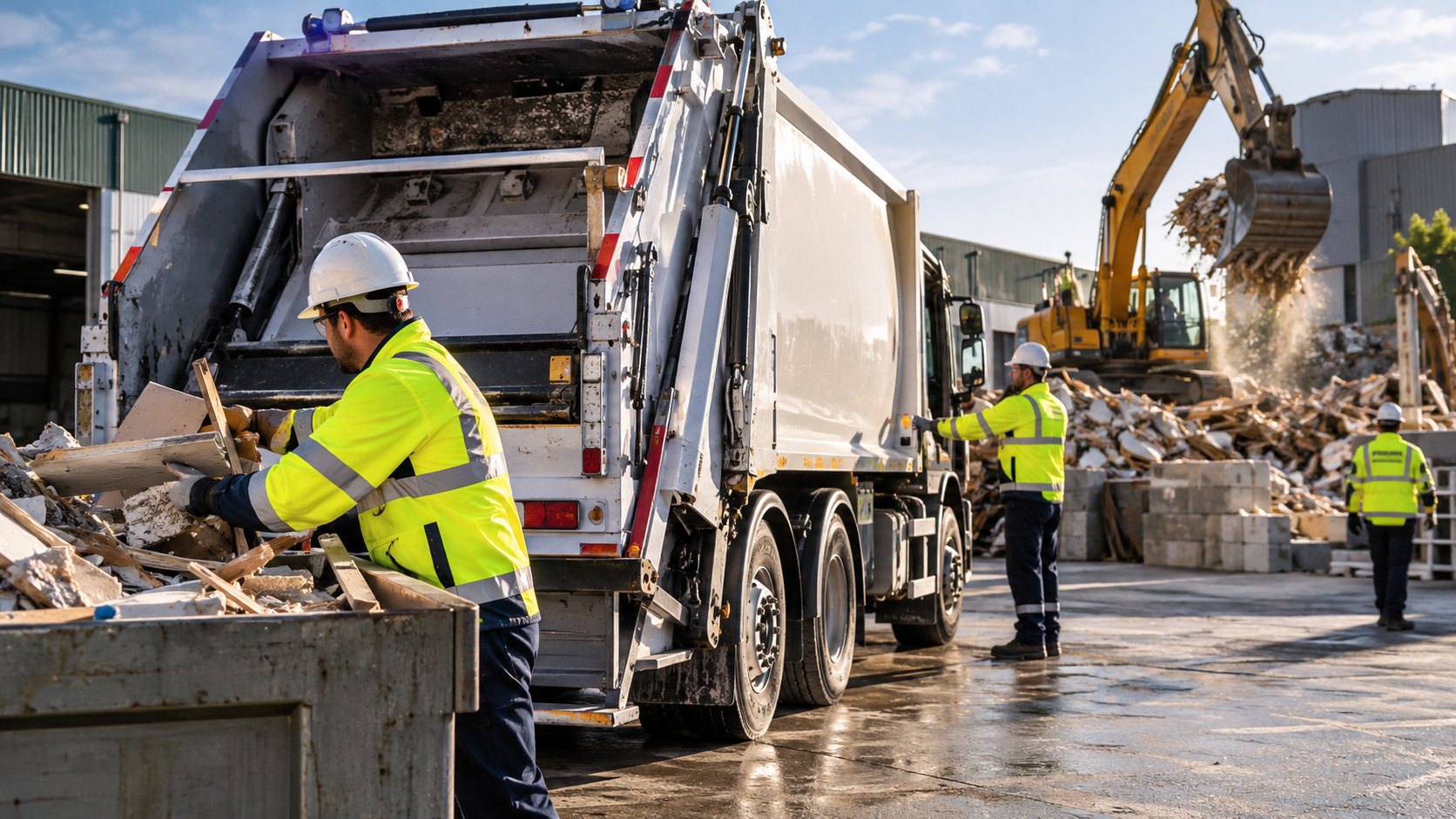
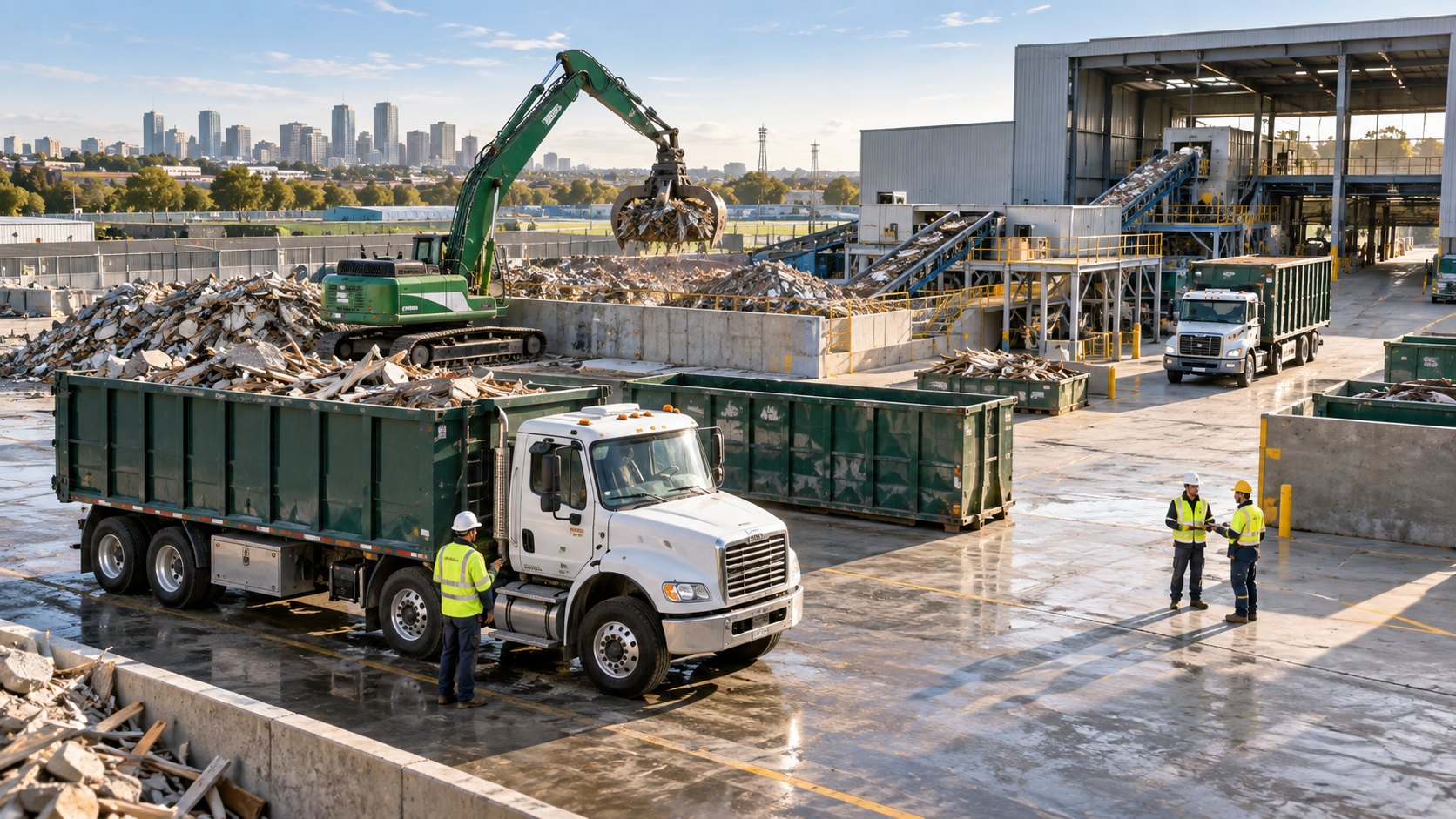
The activity covers collecting construction, excavation and demolition arisings from a site and carrying them to a facility that is allowed to take them. In practice that means placing skips and roll-on containers on live sites and swapping them when they fill, running tippers and grab lorries off demolition and earthworks, hauling excavated spoil away from basements and infrastructure works, and clearing sites down to a level the next contractor can work on.
The equipment list is not the one a refuse operator buys. Skips and hook-lift containers rather than compactors, tippers and trailer tippers rather than rear-loaders, occasionally a grab arm, and a yard able to hold empty containers and take the weight of a loaded axle. Compaction is pointless here because the material is already dense; what matters instead is payload, turnaround at the gate and how quickly a container can be exchanged without stopping the excavator that is filling it.
The load-out rate is the thing customers actually buy. On an active demolition, the machine breaking the structure can only work while there is somewhere to put the rubble, so a contractor whose containers arrive late is not an inconvenience — they have stopped the site. Reliability of exchange, not price per load, is what wins repeat work from demolition contractors.
Segregation at source is where the value is won or lost
Everything above depends on the loads being clean, and cleanliness is decided on the site rather than at the plant. A container of concrete and block with nothing else in it is a saleable input. The same container with timber shuttering, plastic sheeting, packaging, gypsum board and a few insulation offcuts thrown in on top is contaminated, cannot be crushed as it stands, and becomes an ordinary disposal cost with a haulage bill attached.
This is why serious operators place separate containers, brief the site team and refuse mixed loads rather than accept them quietly. It looks like inflexibility and it is actually the margin.
five streams off one site, three destinations
- Clean concrete, block and brick rubbleIt has resale value as aggregate, so it is the stream that pays twice
- Excavated sand, soil and hardcoreInert and gradeable, and reusable as fill on the next project
A crushing and recycling plant
- Rubble mixed with timber, plastic and packagingContamination turns a saleable load into a disposal cost
- Gypsum board, insulation and finishing wasteNot inert, and not accepted by a crusher
A municipal landfill or sorting facility
- Asbestos sheeting, tank sludge or contaminated soilIt leaves this activity entirely and needs class-specific approval
A licensed hazardous waste facility
Read the third destination carefully, because it is the boundary of this licence rather than a part of it. The moment a load stops being inert and becomes hazardous, it is somebody else's permit, somebody else's crew and somebody else's disposal outlet — and a tipper driver who takes it anyway has created a liability the collection contract never priced.
Where each of those loads may lawfully be discharged, and under what conditions, is set by the municipality and the environmental authority in the emirate concerned, and the wording differs between emirates. Those are confirmed against the actual sites, the actual material and the actual destinations before a rate is quoted.
Most of what looks like this line is licensed somewhere else
Demolition itself. Breaking a structure down is contracting work, with its own classification, its own approvals and its own insurance. Carrying away what the demolition produces is this activity. Plenty of companies hold both, deliberately, and they hold them as two licensed activities rather than one.
Operating the crusher. Running a fixed crushing and screening plant, and selling graded aggregate out of the gate, is processing and production rather than collection and transport. If the plan is to own both halves of the value chain, the plant is a second activity and usually a second site with its own environmental conditions.
Scrap metal. Rebar, structural steel and copper stripped out of a demolition are a trading commodity with their own buyers, their own pricing and their own licence line. They come off the same site and they do not travel on the same permission.
Contaminated land. Soil remediation, tank cleaning and the removal of asbestos or hydrocarbon-affected ground are hazardous waste work, and the fact that the material is technically soil does not move it into this activity.
Municipal refuse. Bins, compactors and a weekly round of household and commercial waste are the garbage collection and transport line. Different vehicles, different customers, different destination facilities.
Liquid waste. Anything pumped out of a chamber — septic tanks, wash-out water, slurry from a piling rig — is tankered liquid waste and is controlled by where it may be discharged rather than by whether it can be crushed.
Who this line actually suits
The operators who make the most of it are the ones who already own half of it. A plant and haulage business with tippers and low-loaders on the road is adding a load type rather than a business. A demolition contractor who currently pays a third party to remove arisings is closing a loop and capturing a cost. An aggregate, quarrying or ready-mix business is working backwards up its own supply chain toward a raw material that arrives by lorry and asks to be crushed. A developer with a continuous pipeline is turning a line item on every project into a subsidiary that bills the projects.
The harder version is the one with none of those. A fleet bought to serve a market it has no relationship with is exposed to the thing that makes this trade genuinely difficult: demand is lumpy and tied to project pipelines, so a fleet sized for a busy quarter has trucks standing in a slow one, and the fixed cost of a standing truck does not care why it is standing. The usual answer is a mixture of contracted site work and spot clearance, plus enough flexibility in the fleet that a tipper can earn on general muckaway when demolition slows.
Where this is the wrong purchase. If the intention is to buy and sell recycled aggregate without moving any of it, that is a materials trading activity and this licence is heavier than the plan needs. If the intention is to demolish rather than to clear, the contracting licence comes first and this one follows it.
References
- Dubai Municipality — construction and demolition waste, designated disposal and recycling facilities, and conditions on waste premises and yards. Dubai Municipality
- Environment Agency Abu Dhabi — environmental permits for waste transport, treatment and disposal in Abu Dhabi. Environment Agency Abu Dhabi
- Roads and Transport Authority — heavy vehicle and transport permits for tippers, skip carriers and low-loaders in Dubai. Roads and Transport Authority
- UAE Government portal — federal environment and waste policy, and the framework the emirates license and permit within. UAE Government portal
Elsewhere in Waste collection
Activities that sit beside this one
Most licences carry more than one activity. Adding a neighbouring line at the application stage costs a fraction of amending the licence afterwards.
Begin with a clear conversation
Tell us what you intend to build.
A consultant will map the structure, jurisdiction, approvals and likely cost against what you actually described — not against a package.
