
Activity CZ 13
How to Start a Publication and Security Printing Business in Dubai
One licence line covers printed matter that is a product and printed matter that is an instrument. Publication printing is licensed then approved on content; security printing is awarded, not bought.
ConsultZone licensing desk
- Activity code
- CZ 13
- Category
- Manufacturing
- Reviewed
- Read
- 7 min
Listen instead
47 seconds
An audio summary of this guide.
Topic summary
How to Start a Publication and Security Printing Business in Dubai
A poster and a cheque can come off the same press. Only one of them is a product a firm may decide to make.
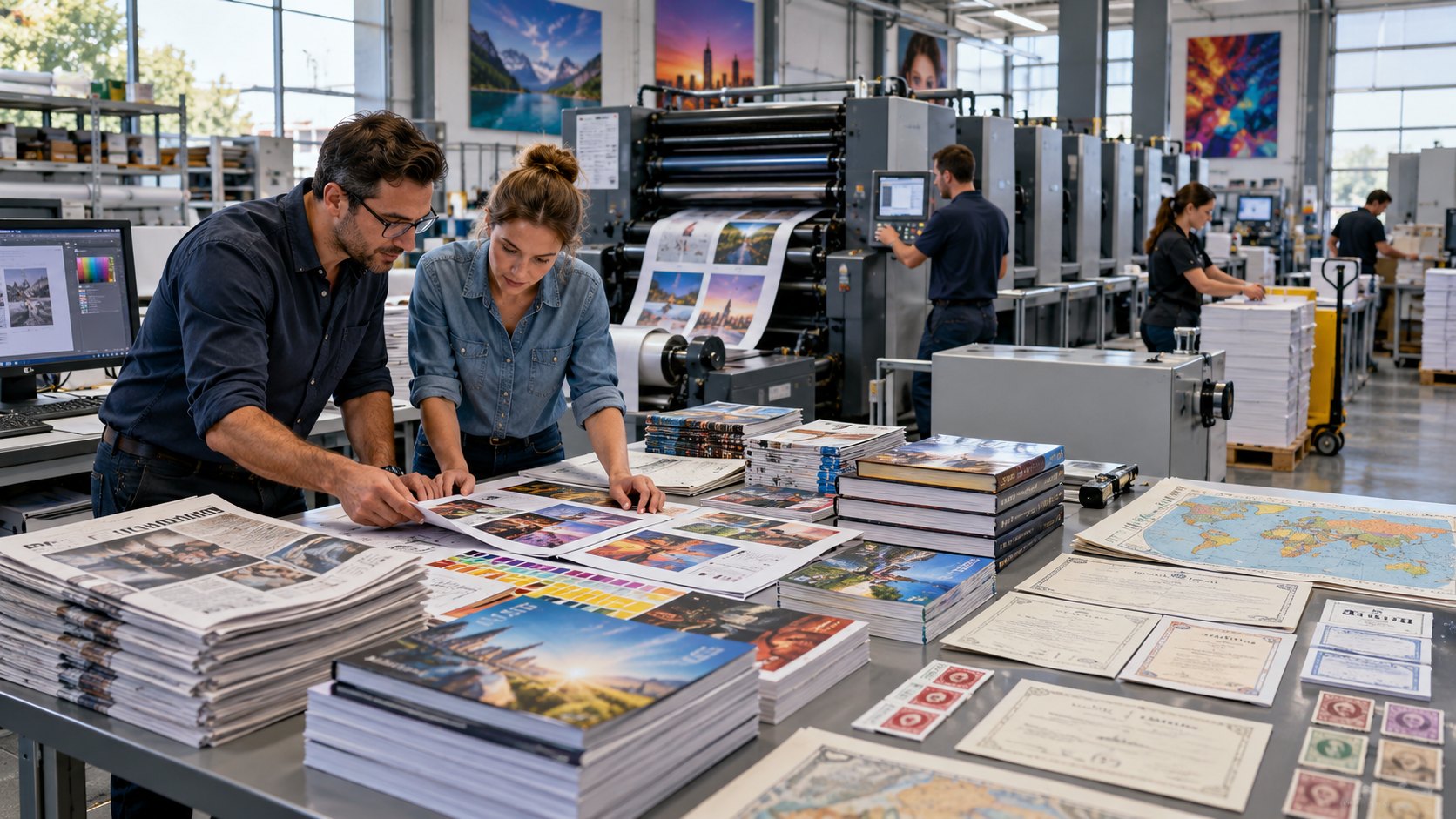
This is the longest activity name in the client's catalogue and the most misread, because the sentence runs two businesses together without a break. As worded, it reaches from newspapers, magazines and other periodicals, through books and brochures, music and music manuscripts, maps, atlases, posters, advertising catalogues, prospectuses and other printed advertising, and then — in the same breath — postage stamps, taxation stamps, documents of title, cheques and other security papers. Read straight through it looks like one very wide printing licence. It is not. The second half of that list does not open to a firm because it holds the first half.
CZ 13 — Publication and security printing
The workable way to read the line is as three bands, separated not by what the press does but by who answers for what is on the paper.
Jobbing print, where the content is the customer's
Posters, advertising catalogues, prospectuses and other printed advertising. The client supplies the file, owns the claims in it and answers for them. The plant's obligation is fidelity to the file and the date it promised. Commercially this is the most crowded band on the line and the easiest to enter, which are the same fact stated twice.
Publications, where the content is approved as well as printed
Newspapers, magazines and other periodicals; books and brochures; music and music manuscripts; maps and atlases issued under a title. A publication is issued to the public, and printed publications carry a media-content permission granted on what is printed — separately from the trade licence that permits the press to run. The press is licensed; the page is approved. Which body grants that permission, and on what conditions, depends on the emirate and is confirmed case by case. It is not something a printing licence includes.
In practice the permission usually sits with the publisher rather than with the printer, and the live risk for a plant is accepting a title from a publisher who does not hold one. The commercial attraction of this band is the opposite of the jobbing band's: runs are long, schedules are fixed months ahead, and a title that prints every week is the closest thing this trade has to an annuity.
Security papers, where the paper itself carries a value
Cheques, documents of title, postage stamps and taxation stamps. These are instruments rather than stationery, and the difference has nothing to do with print quality.
A cheque is a claim on a bank customer's money. It carries a payer, an account and machine-readable features, and the institution whose name is on it answers for every blank one in existence. So cheque stock is not sold to whoever orders it — it is produced for the bank, on the bank's instruction, under the controls its own supervisor imposes on it. A document of title, whether a share certificate, a bill of lading or a warehouse warrant, is evidence that somebody owns something; printing one for a party not entitled to issue it is not a printing job at all. Postage stamps are issued by the postal operator, and taxation stamps belong to a tax scheme run by the tax authority. In both cases the printer is appointed to the issuer's work.
Entry to that band therefore has nothing to do with buying an activity. It runs on appointment, after vetting of the plant, the paper and materials chain, the numbering and secure-destruction controls, and the people who touch the work. Reconciling every sheet to a number, spoilage included, is as much the deliverable as the printing is — and none of it is included in a licence class.
six classes of printed matter on one licence line, three different answers
- Posters, advertising catalogues and other printed advertisingJobbing print: the customer owns the content and answers for it
- Prospectuses printed to a client's specificationThe document is the client's; the plant supplies only the printing
Trade licence alone
- Newspapers, magazines and other periodicalsA periodical is published matter, so a permission attaches to what it says
- Books, brochures, music and music manuscriptsIssued to the public under a title, which is publishing rather than jobbing print
- Maps and atlases issued under a titleA published work, whatever its subject
Trade licence plus media-content approval
- Cheques, documents of title, postage and taxation stampsThe body that issues the instrument appoints and vets whoever prints it
Awarded by the issuer, not bought with a licence
Where this is the wrong activity to buy. A firm that acquires this line in order to print cheques has bought a printing licence and nothing more. If the plan is security work, the sequence runs the other way round: the appointment, the plant and the controls come first, and the licence is the administrative step that follows them.
Four neighbouring lines, and the boundary with each
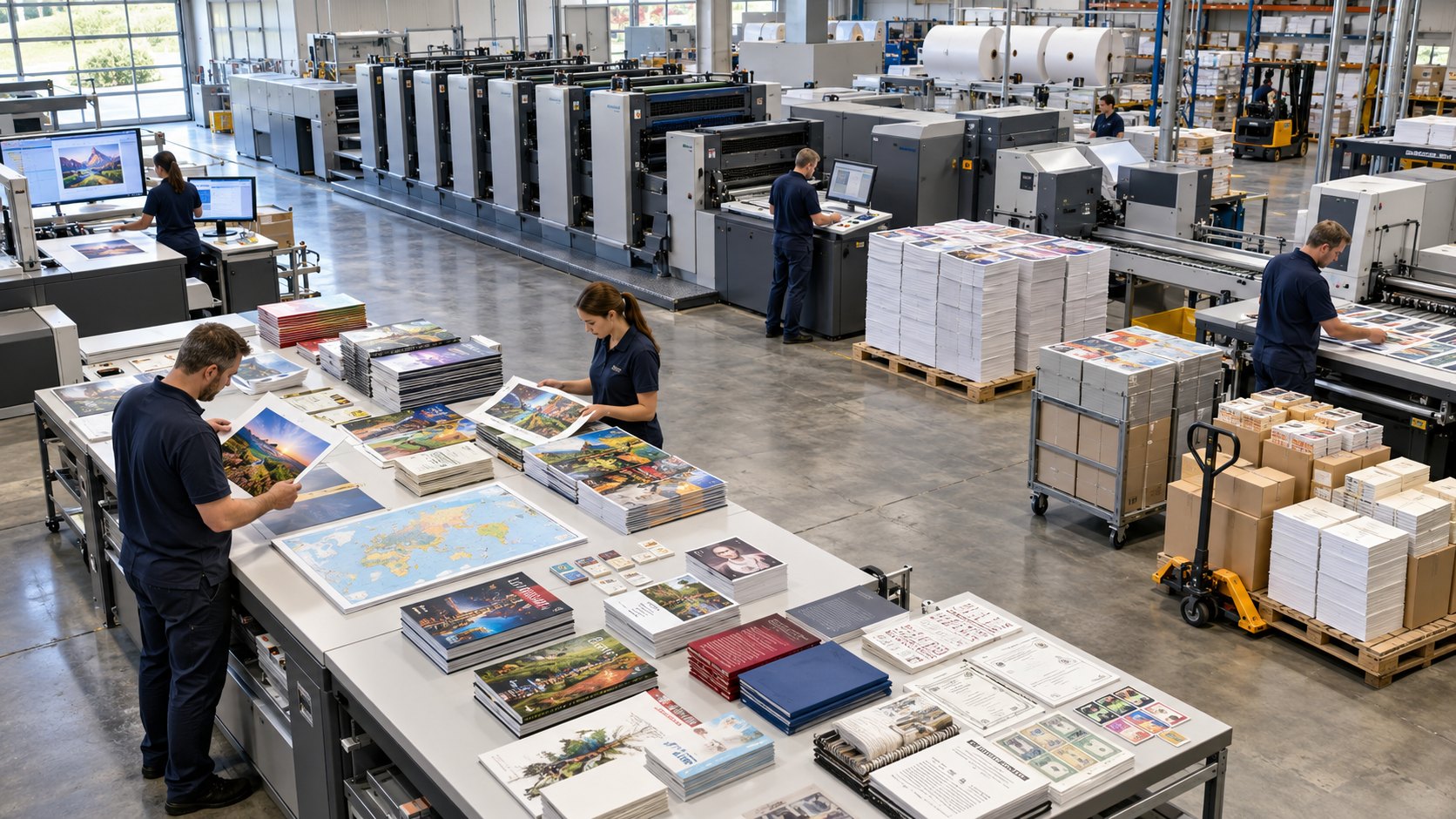
All three printing lines in this part of the catalogue cover the act of printing. What separates them is scope on one side and content on the other.
CZ 11, printing and the service activities related to it, is the combined plant — press plus pre-press plus finishing. If the live question is whether a firm may fold, bind and die-cut in its own building, that is the line to read, and it says nothing at all about publications.
CZ 12, printing, is the press narrowly: impressions sold to a specification. A firm whose product is machine time should hold that line, because this one adds obligations it will never use.
CZ 14, printing directly onto textiles, plastic, glass, metal, wood and ceramics, is kept apart in the catalogue for a reason. Printing on a substrate that is already an object is a different process with different equipment, and a paper-printing line does not reach it.
Publishing is not printing at all. Commissioning the work, owning it and issuing it to the public is the publisher's activity. A publisher who buys a press holds both lines; a printer who prints somebody else's weekly holds one.
Who this line is actually written for
Printers whose customers are publishers
Newspaper houses, magazine publishers, and book and education publishers. The work is long-run and scheduled, the content permission is usually the customer's to hold, and the plant is selling capacity and reliability. This is the band where the line earns its keep.
Publishers who want their own press
A title printing enough to fill a machine, whose owner would rather control the schedule than buy it. Holding this activity alongside a publishing one is what makes that lawful, and the printing half is the smaller part of the problem.
Firms already inside the security chain
A specialist relocating, a group that already prints instruments for an institution elsewhere, or a plant carrying an existing appointment. For anybody else the honest answer is that security printing is not an entry-level market, and treating it as one spends the capital before the first order arrives.
Premises decide more here than on the neighbouring lines. Publication work needs floor space, controlled paper storage and a finishing line; security work adds physical security, controlled access and audited destruction on top of that. Both are industrial premises questions rather than office ones, which is consistent with the manufacturing classification the activity carries in the client's own catalogue. What each authority requires differs between emirates, and we confirm it against the specific plant and the specific band of work before anything is committed.
References
- UAE Government portal — federal government information on media and publishing permissions, and on the federal instruments behind them. UAE Government portal
- Ministry of Industry and Advanced Technology — industrial licensing and national standards, which reach a plant classified as manufacturing. Ministry of Industry and Advanced Technology
- Dubai Municipality — premises suitability and waste conditions for a printing plant in Dubai. Dubai Municipality
- Dubai Customs — import and export of printed matter, and the restricted and prohibited goods lists. Dubai Customs
- Federal Tax Authority — excise tax, the regime a taxation stamp scheme belongs to, and corporate tax enrolment. Federal Tax Authority
Elsewhere in Manufacturing
Activities that sit beside this one
Most licences carry more than one activity. Adding a neighbouring line at the application stage costs a fraction of amending the licence afterwards.
Begin with a clear conversation
Tell us what you intend to build.
A consultant will map the structure, jurisdiction, approvals and likely cost against what you actually described — not against a package.
