
Activity CZ 328
How to Start a Picnics and Camping Organizing Business in Dubai
A camping operator has no premises and no venue manager. The site is land somebody else owns, the season is set by the weather, and the nearest help is an hour away. What the line covers and who runs it.
ConsultZone licensing desk
- Activity code
- CZ 328
- Category
- Arts, Events & Entertainment
- Reviewed
- Read
- 8 min
Topic summary
How to Start a Picnics and Camping Organizing Business in Dubai
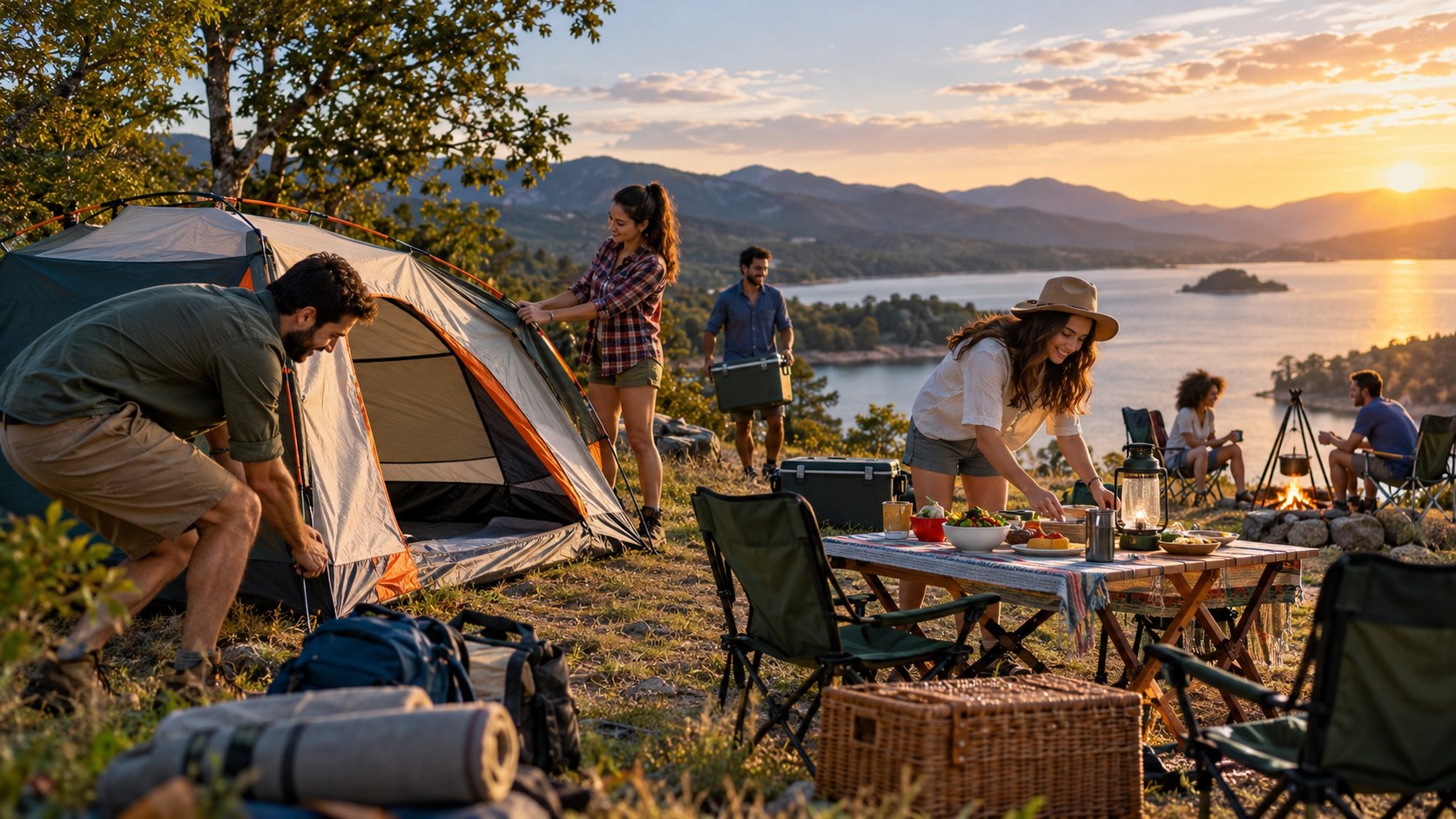
A stretch of gravel between two dunes. A wadi pool at the end of a graded track. A beach reached by a turning nobody signposts, or a farm an hour outside the city. The first thing to understand about every one of those places is that it belongs to somebody. Desert, mountain, coast and open ground are not vacant merely because nobody is standing on them: land is held by a municipality, by an emirate, by a protected area under environmental management, or by a private owner with a gate and an opinion. None of those parties supplies a duty manager, a capacity notice or a licence pinned to a wall for an operator to work to. A site that looked ideal in a photograph can turn out to be a refusal, and finding that out after a school has paid a deposit is the characteristic failure on this line.
The second fact is the calendar, and it is unusually severe. Outdoor work here is earned in the cooler half of the year. For the rest of it the heat removes the product, which means a full year's revenue has to come out of a compressed season while tents, cool boxes, generators, vehicles and furniture sit in storage being paid for. Operators who last have either built something that earns in the hot months — indoor team days, school programmes in conditioned space, equipment hire to other people — or they have deliberately kept the asset base small enough that an idle warehouse does not matter.
The third decides how the business is actually run. Guests on this line are taken away from help. There is no mains power, no water, no plumbing and no reception desk; there is whatever came on the vehicle. Everything consumed is carried in, everything left is carried out, and a person who falls badly is a long way from a road. That is not a reason to avoid the trade — it is the trade — but it makes competence, ratios, communications and real first-aid capability the product rather than its paperwork.
CZ 328 — Picnics & Camping Organizing
The line covers arranging and running outdoor outings and stays: day picnics and barbecues, desert and dune trips, wadi and mountain days, beach outings, overnight and multi-night camps, glamping set-ups with beds and furniture, stargazing and dawn trips, school and youth camps, scout-style programmes, corporate team days held outdoors, and family gatherings catered and staged on open ground.
The site is somebody's land, and there is nothing on it
What an operator sells is access plus arrangement: the place, the way of getting there, the shade and seating, the food, the activity and the person who knows what to do when the weather turns. None of that is attached to a premises licence, because there are no premises. Permission to use a particular area is a conversation with whoever holds it, and the terms differ by emirate, by whether the land is public or private, and above all by whether the area is under environmental protection — where the answer may be no, in full, regardless of how carefully the trip is designed.
The season decides the shape of the balance sheet
A business whose selling window is part of the year cannot carry year-round fixed cost on trip income alone. The two honest responses are to own less and hire more, which protects cash and reduces margin, or to own the equipment and find a second use for it out of season. Which of those an operator chooses is visible in everything else about the company: hired kit means a smaller team and thinner trips; owned kit means a store, maintenance, a loading crew and a reason to be busy in July.
seven gates, and the licence is only one of them
The emirate's economic department
- The trade licence carrying the activityFirst, and it settles less here than on any other line in this family
The landowner, or the emirate's municipality where the ground is public
- Permission to use a particular stretch of landBefore a site is photographed or sold, never after
The environment authority in the emirate concerned
- Whether the area may be entered and camped in at allEarly, because a protected area is a refusal rather than a condition
The municipality, through the licensed kitchen it came from
- Food cooked or served on siteEvery trip, and it is the commonest shortcut taken
The emirate's civil defence authority
- Open flame, gas cylinders and fuel on an open siteWith the site, and it rules some ground out entirely
The emirate's transport authority
- Carrying guests to the site in your own vehiclesThe moment you buy a vehicle instead of hiring a coach
Your insurer, against your guides' qualifications and your ratios
- Cover for an injury an hour from a roadBefore the first paying guest, not after an incident
The marked row is the argument of this page. Three different parties can hold the ground an operator wants, the answer is specific to that area rather than to the company, and there is no central list to consult. An operator who builds a season's programme around sites it has not confirmed has built a brochure rather than a business.
The lines next to this one, and the one most operators actually need
Inbound Tour Operator (CZ 280). The closest and the most frequently confused. A desert camp sold through a wholesaler abroad to visitors who have never been here is a tour product: foreign money, long lead times, trade payment terms. Organising an outing for a UAE family, a Dubai school or a local company's staff is this line. The distinction is the customer, not the camp — and this is the boundary most operators eventually cross, because the moment a company sells an overnight with transfers and accommodation to a visitor, it is selling travel and should hold the line that covers it.
Events Organizing & Managing (CZ 248). If the open site is really a venue for an occasion — a crowd, a stage, a programme, a guest list — the work has become event management on difficult ground. The trades overlap genuinely, and the test is whether the outdoors is the point of the day or merely the location of it.
Parties & Entertainments Services (CZ 320). Supplying the furniture of a picnic — shade, seating, a barbecue, décor, an entertainer — into an occasion where the host chose the place and carries the day is that line rather than this. Here the operator chooses the site and owns the trip.
Recreational Services (CZ 343). Operating a fixed site that people pay to enter is a premises business with premises conditions. This trade's defining characteristic is that it holds no site at all.
Transport and catering. Carrying passengers in the company's own vehicles is a permitted transport activity in its own right, with vehicle standards and driver permits behind it, and food comes out of a licensed kitchen under hygiene control. Many operators subcontract both for exactly that reason.
Who ends up running trips, and what each one gets wrong
The guide who went independent knows the terrain better than anyone and prices like a hobbyist. The gap is almost always cover and documentation: real experience, no written risk assessment, and an insurance position that has never been tested.
The adventure and 4×4 outfit owns vehicles, which means it is running two businesses — trips and a fleet, with depreciation, maintenance and driver permits attached to the second. It tends to underestimate how much of its margin the fleet eats in a short season.
The school and youth camp specialist has the best revenue in the family: contracted, repeating annually, planned a term ahead. It also has the heaviest obligation, because the guests are other people's children and supervision ratios, staff vetting and a credible medical plan are the entire product rather than a condition of it.
The corporate team-day supplier sells to a human resources or learning function, invoices on terms and gets paid without chasing. The common error is designing for the organiser's enthusiasm rather than for the least willing participant in the group.
The glamping and experience operator has the highest capital per guest: beds, furnishings, lighting and bathrooms that have to be transported, set, struck and then stored for months. It is the shape most exposed to a short season and the one that most needs a second use for its stock.
The profile that should pause is the operator whose plan treats the land as free and available. Which activity wording covers trips on ground the company does not hold, and what the conditions are in a given emirate, depend on the authority and on the sites actually intended — ConsultZone confirms those before a season is sold.
References
- Ministry of Climate Change and Environment — environment and protected natural areas, which is what decides whether an area may be used for an outdoor trip at all. Ministry of Climate Change and Environment
- Environment Agency Abu Dhabi — environmental permits and protected areas in Abu Dhabi. Environment Agency Abu Dhabi
- Dubai Municipality — public ground, waste and food control in Dubai, including catering taken out to a site. Dubai Municipality
- Dubai Civil Defence — fire safety approvals, which is where open flame, gas cylinders and fuel on an open site belong. Dubai Civil Defence
- Roads and Transport Authority — vehicle and passenger transport permits in Dubai, for operators carrying guests themselves. Roads and Transport Authority
- Ministry of Human Resources and Emiratisation — work permits and labour contracts for guides and seasonal crews. Ministry of Human Resources and Emiratisation
Elsewhere in Arts, Events & Entertainment
Activities that sit beside this one
Most licences carry more than one activity. Adding a neighbouring line at the application stage costs a fraction of amending the licence afterwards.
Begin with a clear conversation
Tell us what you intend to build.
A consultant will map the structure, jurisdiction, approvals and likely cost against what you actually described — not against a package.
