
Activity CZ 327
How to Start a Petrochemicals Trading Business in Dubai
Nobody buys a sample of a petrochemical. Petrochemicals trading starts at a container or a tank, which makes it a trade financed by banking paper rather than by cash in the account.
ConsultZone licensing desk
- Activity code
- CZ 327
- Category
- Trading
- Reviewed
- Read
- 6 min
Topic summary
How to Start a Petrochemicals Trading Business in Dubai
Nobody buys a sample of a petrochemical. The smallest parcel anybody will quote is a twenty-foot container of bagged resin or an isotank of liquid, and the ordinary unit of conversation is several of them at once. That minimum lot is the defining feature of Petrochemicals Trading and it decides almost everything else: who can enter the business, how it is financed, and why a trader with a good customer and no banking facility cannot execute an order he has already won.
Because the ticket is large and the counterparties are often in different countries, this trade runs on documents rather than on cash. A letter of credit, a collection against documents, a tank receipt or a bill of lading is the instrument that makes a parcel move, and a trader's real capacity is the size of the facility his bank will open rather than the balance in his account. That is an unusual position for a wholesale business and it is the first thing a new entrant tends to underestimate.
The commercial case
Three things make the economics of this line work, and one makes it dangerous.
Price is set in public and in monthly rhythm. Polymer and base chemical prices are published and move on announced contract levels, feedstock costs and plant outages. Both sides of a negotiation know roughly where the market is, so the margin is a spread on a known number rather than a markup on an unknown one — the same discipline that governs a metal trade, with a slower clock.
The region is long on supply and short on consumption. The Gulf produces polymer and base chemicals at a scale its own converters cannot absorb, which means a trading house sitting here is naturally placed between producers nearby and converters elsewhere. The flow is outward and the geography is the advantage.
Small lots are a service with a price. A converter in a smaller market cannot buy a vessel parcel and does not want to. A trader who breaks bulk — buying large, storing, and selling in container lots with local credit terms — is paid for exactly that, and it is the most durable margin in the business.
The dangerous part is the gap between pricing and delivery. A parcel bought at one month's contract price and sold at the next month's is a position, and a trader who is long resin in a falling market loses on goods he has already paid for. The houses that survive match purchase and sale or hedge the gap; the ones that do not are trading on a view.
| Bagged polymer resin | Bulk liquid chemical | Fuel and gas products | |
|---|---|---|---|
| How a parcel is quoted | Per tonne, in container lots | Per tonne, in tank or flexitank lots | Per litre or per tonne, under its own regime |
| Where it rests between buyer and seller | Dry warehouse, on pallets | A licensed tank terminal | A dedicated fuel installation |
| What controls the goods | Material documentation and conformity | Flammable and hazardous storage approval | A controlled-goods regime of its own |
| Whether this activity line reaches it | Yes | Yes, with the right premises | No, it is a separate licence |
The last row is the one that saves money. Petrochemicals and fuels are produced by the same industry and are not the same trade. Motor fuel, diesel, aviation fuel, bunkers and liquefied petroleum gas sit under a controlled regime of their own, with licensing, premises and handling conditions that a general petrochemicals activity does not reach. A trader who intends to deal in fuel needs that line specifically, and discovering the distinction after the licence is cut means starting that part of the file again.
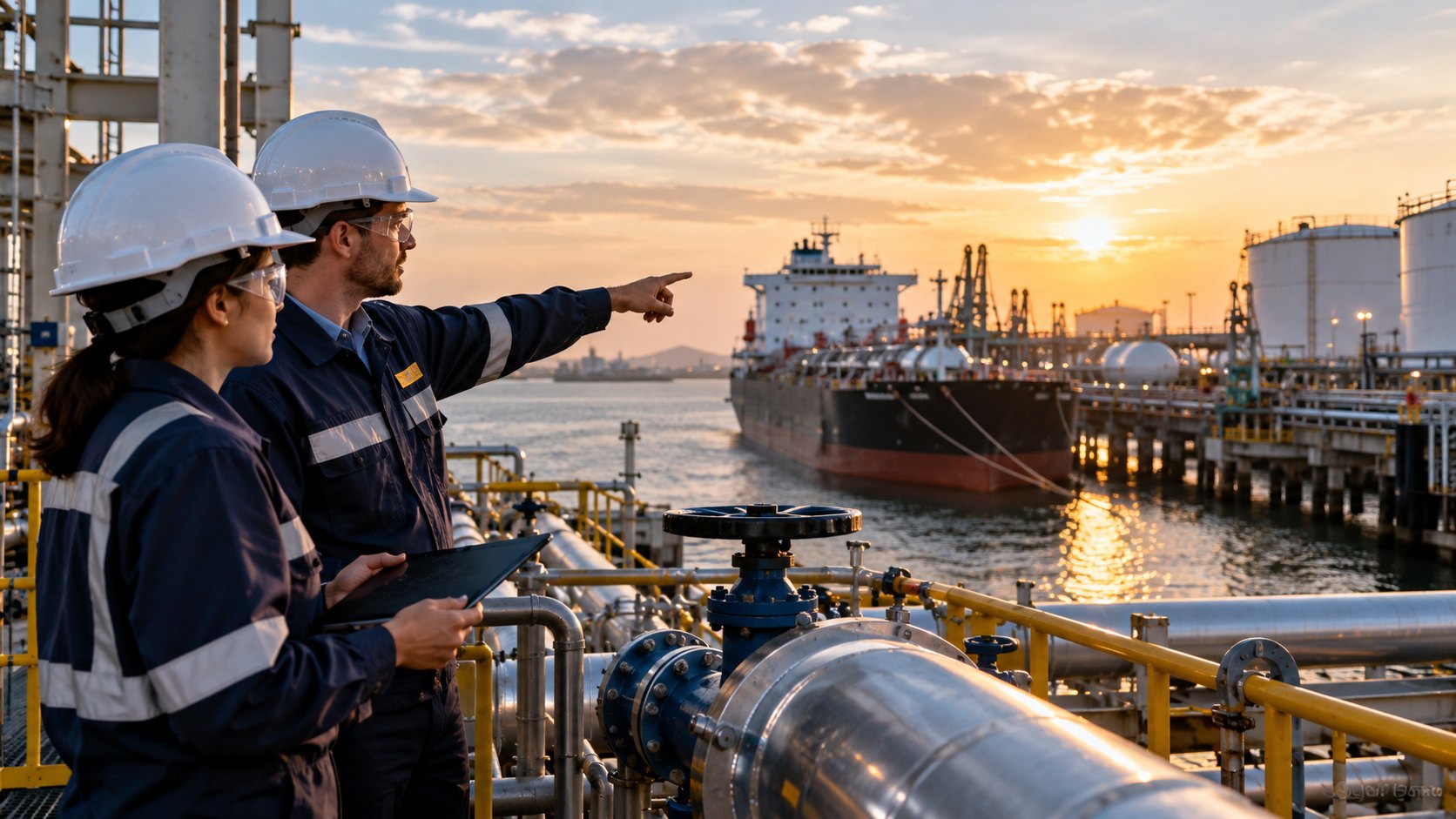
CZ 327 — Petrochemicals Trading
What the activity does cover is the downstream output of the petrochemical industry sold on in commercial quantities, and it is worth naming the groups because they behave differently in the warehouse.
Polymers in solid form — polyethylene in its grades, polypropylene, polystyrene, PVC resin, PET, engineering resins such as ABS and polycarbonate. These arrive in bags on pallets or in bulk bags, they are dry and stable, and a conventional warehouse holds them. This is the largest part of the trade by volume and the easiest to begin with.
Base and intermediate chemicals — methanol, benzene, styrene, mono-ethylene glycol, aromatics and the building blocks a converter or formulator buys by the tank. These are liquids, frequently flammable or hazardous, and they need terminal storage rather than a warehouse.
Solvents and industrial chemicals — acetone, toluene, xylene, alcohols and the thinners and cleaning agents built from them. Sold in drums as well as in bulk, and the drum trade is a genuine small-parcel business in its own right.
Additives and compounds — masterbatch, plasticisers, stabilisers and fillers, bought in smaller quantities and often alongside the resin they go into.
Three things are outside the line. Making the material — cracking, polymerising or refining — is manufacturing. Blending or compounding chemicals into a new product is also manufacturing, and it catches traders who assume that mixing is an extension of selling. And retail supply of fuel to the public is neither.
Approvals and conditions that attach to it
The pattern in this trade is that the licence is the smaller half of the file and the premises are the larger one.
If the business is dry polymer sold from a warehouse, the conditions are the ordinary ones: suitable premises, clean storage, material documentation that a converter's quality function will ask for, and a customs code so containers clear in the company's own name. Many polymer houses hold no storage at all and work on direct shipments from producer to converter, in which case an office and a banking facility are the operation.
The moment liquids enter the picture the conditions change in kind rather than in degree. Flammable and hazardous materials in bulk or in drums are a fire-safety and storage question with its own approvals, separate from the trade licence and decided on the specific site and the specific products. Most traders solve it by renting capacity at an existing licensed terminal rather than by building anything, which is both cheaper and faster, and it moves the approval burden to a party that already holds it.
Imported goods bring a third layer. Chemicals are among the categories most likely to be restricted or conditioned on entry, and the condition attaches to the substance rather than to the trader — a product file cleared once is cleared, and a new grade is a new conversation. Hazardous classification also governs how a parcel may be transported inland, which is a road-permit question and not a licensing one.
None of that can be quoted as a figure in advance, and anybody who offers one is guessing. What the licence costs to hold, which terminal or warehouse arrangement a given product mix requires, and which of the intended grades are conditioned on entry all depend on the emirate, the premises and the exact product list. ConsultZone establishes those against the real trading plan, and in this line the sequence matters: the banking facility and the storage arrangement should be understood before the activity mix is fixed, not after.
References
- Dubai Civil Defence — fire safety and hazardous or flammable storage approvals, which is the condition that attaches to liquid chemicals rather than to the licence. Dubai Civil Defence
- Dubai Customs — import and export procedure, customs codes, and restricted or prohibited goods on entry for chemical consignments. Dubai Customs
- Ministry of Industry and Advanced Technology — national standards and conformity marks, the framework that material documentation in this trade is written against. Ministry of Industry and Advanced Technology
- Roads and Transport Authority — transport permits for moving classified and hazardous parcels inland in Dubai. Roads and Transport Authority
Elsewhere in Trading
Activities that sit beside this one
Most licences carry more than one activity. Adding a neighbouring line at the application stage costs a fraction of amending the licence afterwards.
Begin with a clear conversation
Tell us what you intend to build.
A consultant will map the structure, jurisdiction, approvals and likely cost against what you actually described — not against a package.
