
Activity CZ 93
How to Start a Motorcycle Repair Workshop in Dubai
A motorcycle workshop earns differently from a car garage for one physical reason: the machines are small, so a bay holds several. Fleet customers then make the work scheduled rather than occasional.
ConsultZone licensing desk
- Activity code
- CZ 93
- Category
- Trading
- Reviewed
- Read
- 7 min
Listen instead
40 seconds
An audio summary of this guide.
Topic summary
How to Start a Motorcycle Repair Workshop in Dubai
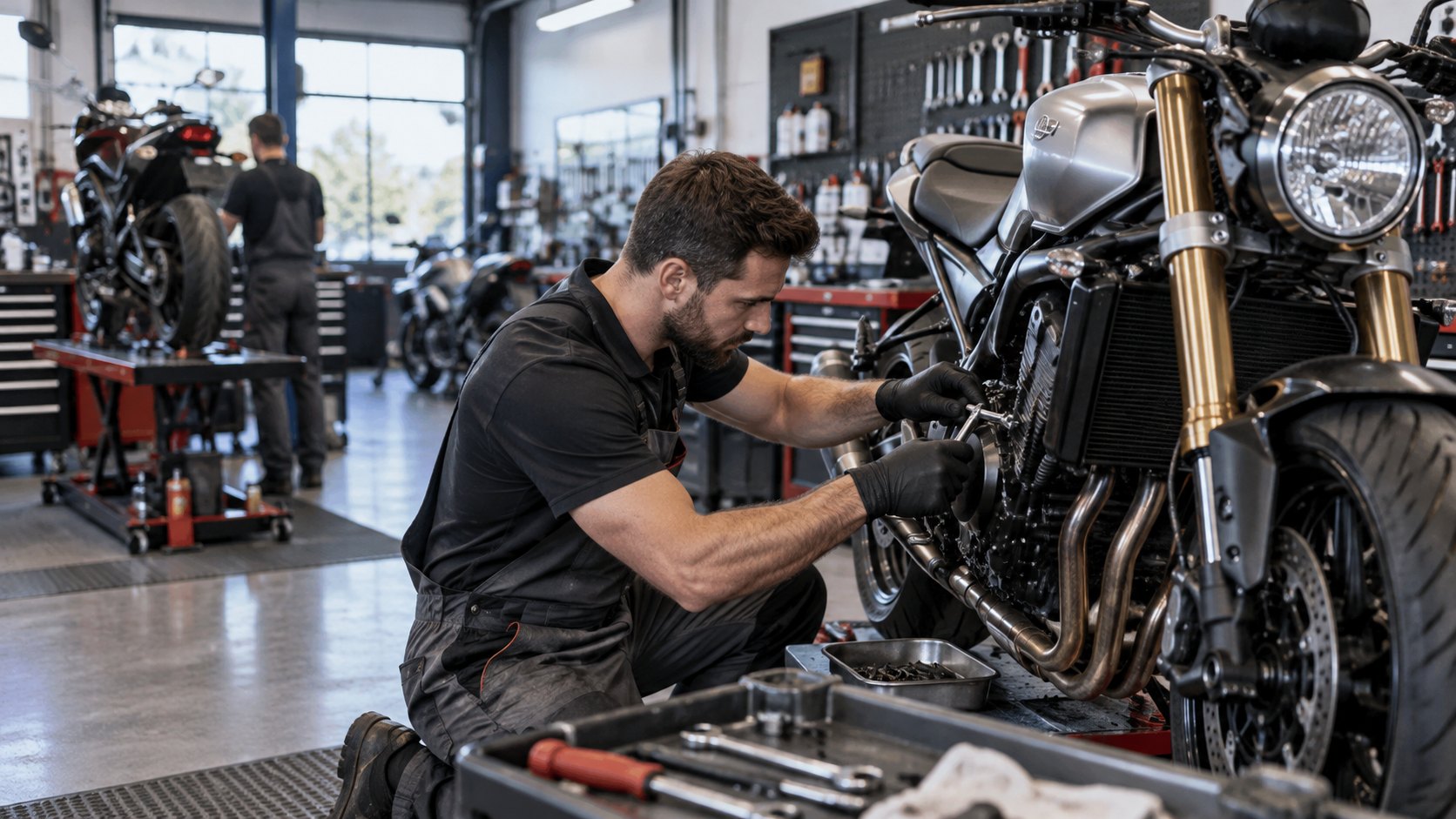
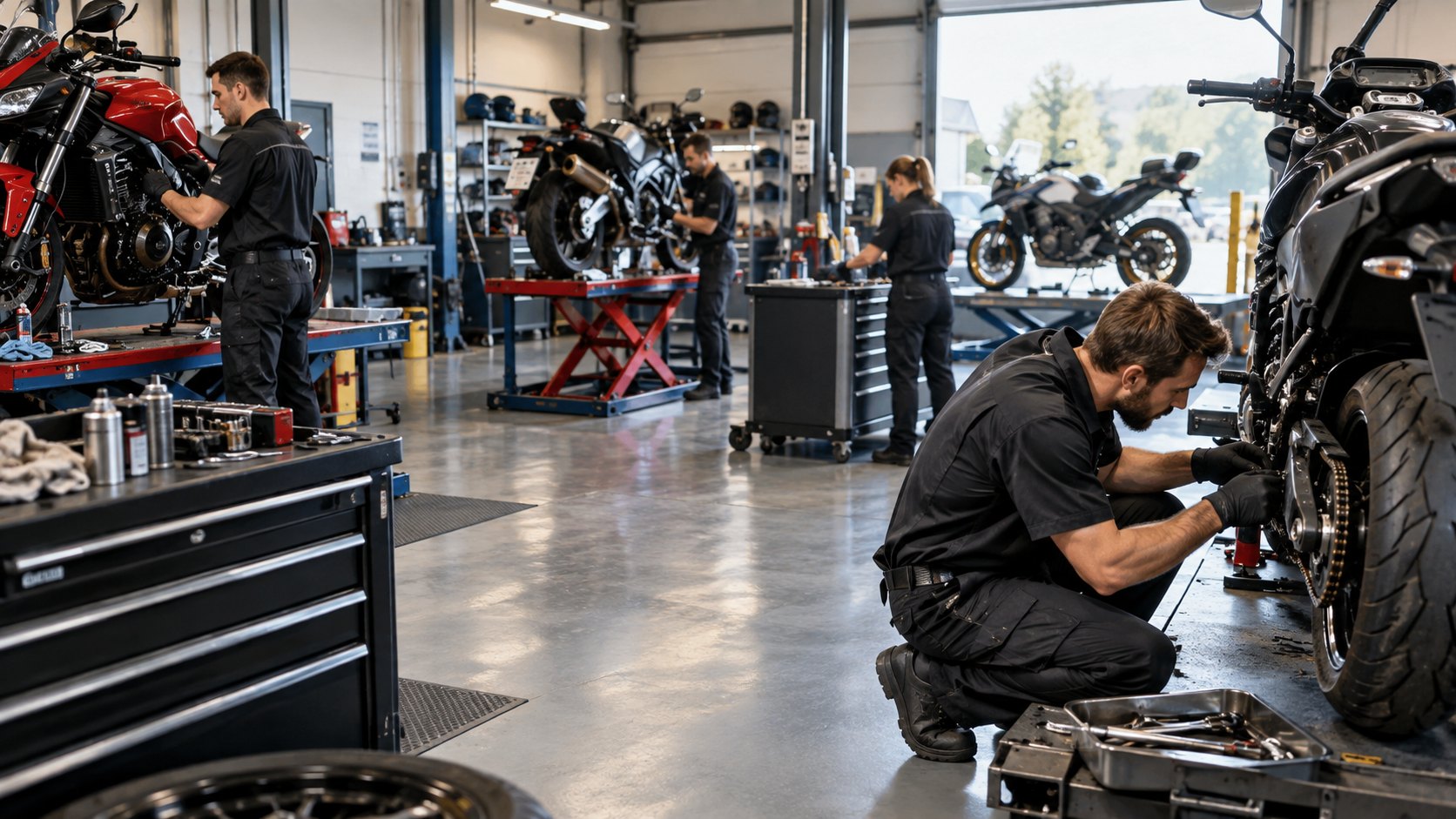
Put four motorcycles in the floor space one car needs and you have described the entire commercial difference between this activity and a car garage. A car workshop's income is capped by its bays, because a car sits in a bay from the moment it arrives until the moment it leaves. A motorcycle workshop's income is capped by hands and by parts. The same unit that would hold three cars holds a dozen machines, several of them on stands waiting for a part while a mechanic works on another — and that one fact changes the shape of the business, the rent per unit of revenue, and how badly a slow parts supplier hurts.
The second difference is the customer, and it is larger. A car garage mostly waits for things to go wrong. A motorcycle workshop in this country can build a book of work that is scheduled rather than occasional, because a substantial share of the two-wheeled fleet here is commercial. Courier and food-delivery operators run machines hard, on long daily distances, in heat that punishes chains, filters, tyres and batteries, and they replace consumables on a cycle rather than on a failure. That work is foreseeable, repeatable and unglamorous, and it is what turns a workshop from a trade into a business.
It also changes what the customer is buying. A delivery operator with a machine on your stand is not buying craftsmanship. He is buying the machine back, today, because a rider who is not riding is not earning. The leisure owner on the next stand wants the opposite: the careful job, the correct part, the finish. Running both in one shop is normal and profitable, provided the workshop knows which conversation it is having.
What the work actually consists of
Three families of work sit under this line, and a shop usually enters through one of them.
Scheduled servicing. Oil and filter, chain and sprockets, brake pads and fluid, plugs, air filter, tyres, battery, coolant, cables and adjustments. Dull, high-frequency, predictable, and the only part of the trade you can forecast. In this climate the intervals bite harder than the manual suggests — dust loads air filters, heat ages fluids and rubber, and stop-start delivery use is heavier duty than the mileage implies.
Repair after something has failed. Electrical faults, charging systems, fuelling, clutches, forks and shocks, wheels and bearings, crash damage. Higher value per job, much harder to plan, and dependent entirely on whether the part exists in the country this week.
Preparation and inspection work. Getting a machine ready to be sold, handed over, or put in front of whoever inspects vehicles in that emirate. Dealers and traders generate a steady flow of it, and it is the easiest commercial relationship for a new workshop to open because the trader has the volume and no interest in doing the work himself.
A workshop that claims all three on day one is usually claiming a scope it cannot staff. The path that works is one family done properly, then the second bought with the cash the first generates.
Every enquiry that arrives, whichever family it belongs to, runs through the same short sequence before it becomes work somebody will pay for — and the sequence turns on one question.
- Read the machine: capacity, age, and whether the parts can still be sourced
- Read the owner: one rider, or a fleet with a delivery round standing still
- Is the customer losing money while the machine is on your stand
- YesUptime is the product. Quote a turnaround, hold the common consumables, and price a loan machine into the job
- NoFinish is the product. Quote the careful job, and expect the work to be authorised in pieces
- Price the labour honestly and the part at what it actually costs you to source
- Book the next interval before the machine leaves the floor
- A job that pays twice — now, and at the interval you booked
The last step is the whole argument. A workshop that hands a machine back without an appointment has sold one job. A workshop that books the next service before the customer leaves has sold a relationship, and on a fleet contract it has sold a schedule. Everything else in this trade is downstream of that habit.
Who this line is for
Mechanics setting up on their own
The most frequent founder, and the one whose first mistake is nearly always the same: pricing labour at what feels fair to him rather than at what the shop costs to open each morning. The technical part is not the risk here.
Fleet operators bringing servicing in-house
A courier or delivery business that has worked out what it pays outside contractors, and that has enough machines to justify its own workshop. This founder has the demand already and needs the licence, the premises and the staffing — the reverse of everybody else's problem. Whether it is cheaper in-house depends entirely on fleet size, and that arithmetic is worth doing before the lease.
Dealers adding a workshop behind the showroom
The natural pairing. Sales and repair are two separate lines in this catalogue and most real dealerships hold both, because a buyer's second question is about servicing. The combined sale, maintenance and repair activity sitting three rows earlier in the catalogue is the alternative route to the same place.
Specialists
One marque, or one discipline — suspension, tyres and wheels, electrics, performance work, restoration. A narrow shop with a genuine reputation gets sent work by generalist workshops instead of competing with them, and it is the one version of this business that can charge properly.
Where it sits between the mainland and a free zone
The answer is clearer on this activity than on most, because the work is physical and it happens where the machine is. A motorcycle is brought to a workshop by a rider who lives here or by an operator licensed here, which means the customer is on the mainland and so, in practice, is the work.
A free zone licence gives a company and premises inside that zone's boundary. Whether the activity may then be performed outside it is a question the zone answers in its own terms, and the answer differs between zones — so a workshop intending to serve retail riders and mainland fleets takes the mainland route as a matter of course. The exceptions are real but narrow: a shop whose customers genuinely sit inside one zone's own industrial estate, and a business whose actual product is machines or components rebuilt for export rather than repair for local owners.
What it costs to hold
There is no figure that can be quoted from the activity name. The licence, the premises and its fit-out, the number of technicians and their permits, the waste and fire-safety conditions the unit attracts, and the emirate all move the total, and a two-man shop in a workshop district and a fleet facility with a parts store are not comparable. Three conditions do apply to almost every version of it, and they are worth knowing before signing a lease: a workshop unit in an area zoned for it, an arrangement for used oil, filters and batteries that the municipality accepts, and a fire-safety position that satisfies the civil defence body in that emirate. We confirm all of it against the actual unit and the actual headcount before anything is filed.
References
- Ministry of Human Resources and Emiratisation — work permits, labour contracts and wage protection for workshop technicians. Ministry of Human Resources and Emiratisation
- Dubai Municipality — premises suitability and the disposal route for used oil, filters and batteries in Dubai. Dubai Municipality
- Dubai Civil Defence — fire-safety approval for a unit holding fuel, solvents and batteries. Dubai Civil Defence
- Roads and Transport Authority — vehicle records and transport permits in Dubai, which govern the machines a workshop hands back. Roads and Transport Authority
Elsewhere in Trading
Activities that sit beside this one
Most licences carry more than one activity. Adding a neighbouring line at the application stage costs a fraction of amending the licence afterwards.
Begin with a clear conversation
Tell us what you intend to build.
A consultant will map the structure, jurisdiction, approvals and likely cost against what you actually described — not against a package.
