
Activity CZ 45
How to Start a Plant Machinery Installation Contracting Business in Dubai
Installing machinery inside a working plant is a project business, not a product one. The shutdown window, the permit regime and the payment chain are what set this line apart.
ConsultZone licensing desk
- Activity code
- CZ 45
- Category
- Manufacturing
- Reviewed
- Read
- 8 min
Listen instead
43 seconds
An audio summary of this guide.
Topic summary
How to Start a Plant Machinery Installation Contracting Business in Dubai
The most expensive item on a plant installation job is neither the machine nor the crew. It is the hour. A cement works, an aluminium smelter, a desalination train, a paper mill or a food factory earns while it runs and earns nothing while it is stopped, so a machine change inside one is scheduled into a window the operator has already costed to the shift. Everything about this activity comes out of that single fact — the planning, the manning, the pricing, the paperwork, and the reason a plant will pay a premium for a contractor who has done it before.
It is worth saying plainly at the top that this line has a sibling, because the two names are almost the same words. General installation of industrial machinery and equipment describes a machine delivered to premises, commissioned and handed over, with the site effectively yours for the days the work takes. This line describes something else: a scope of work inside somebody else's operating asset, alongside other trades, to a programme you did not write, under the operator's safety regime, usually as a subcontractor within a larger capital project. The verbs are shared. The business is not. One is a product-and-commissioning company; the other is a contracting company that happens to install machines.
What this line covers, and why it is not the general installation licence
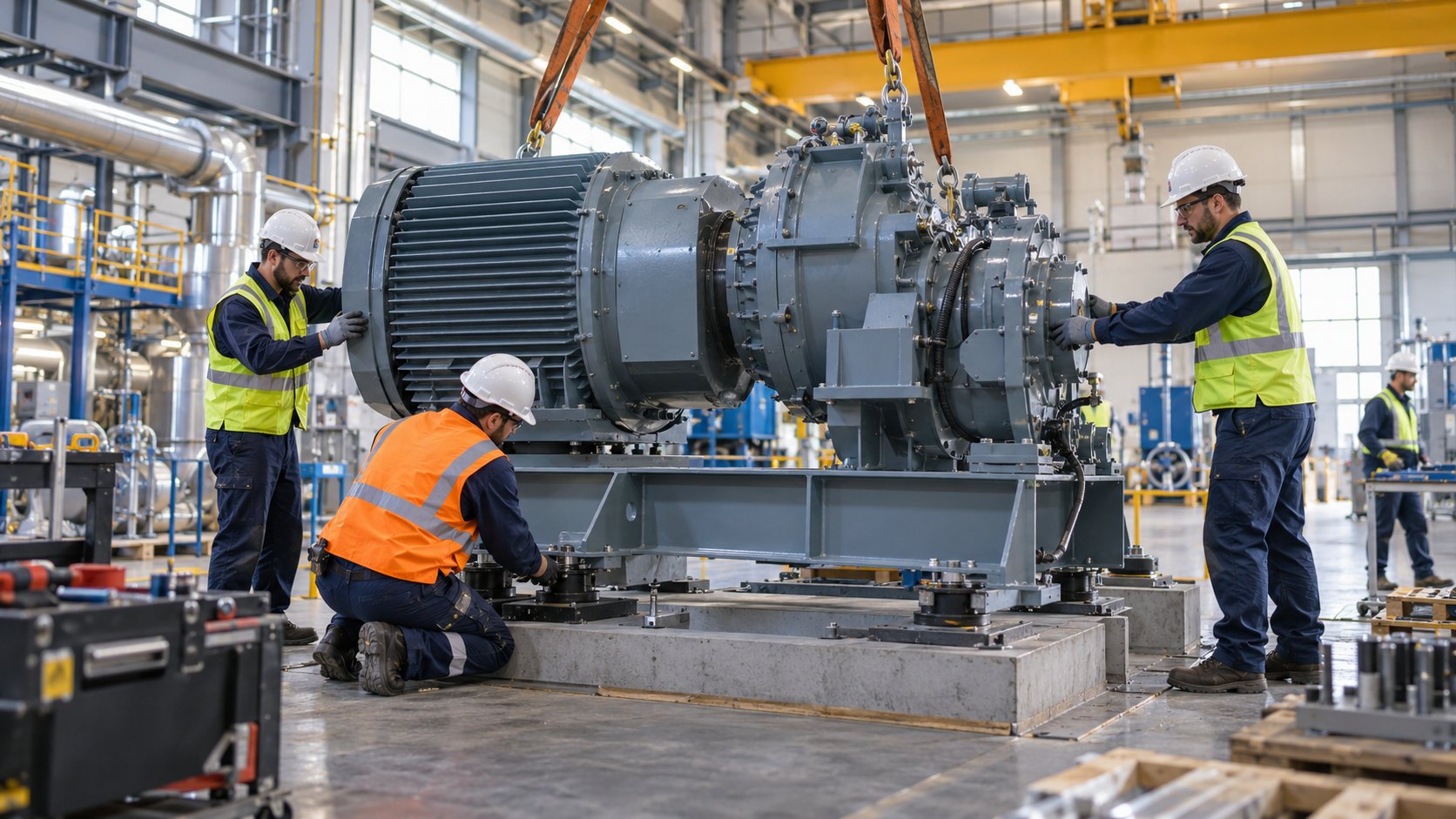
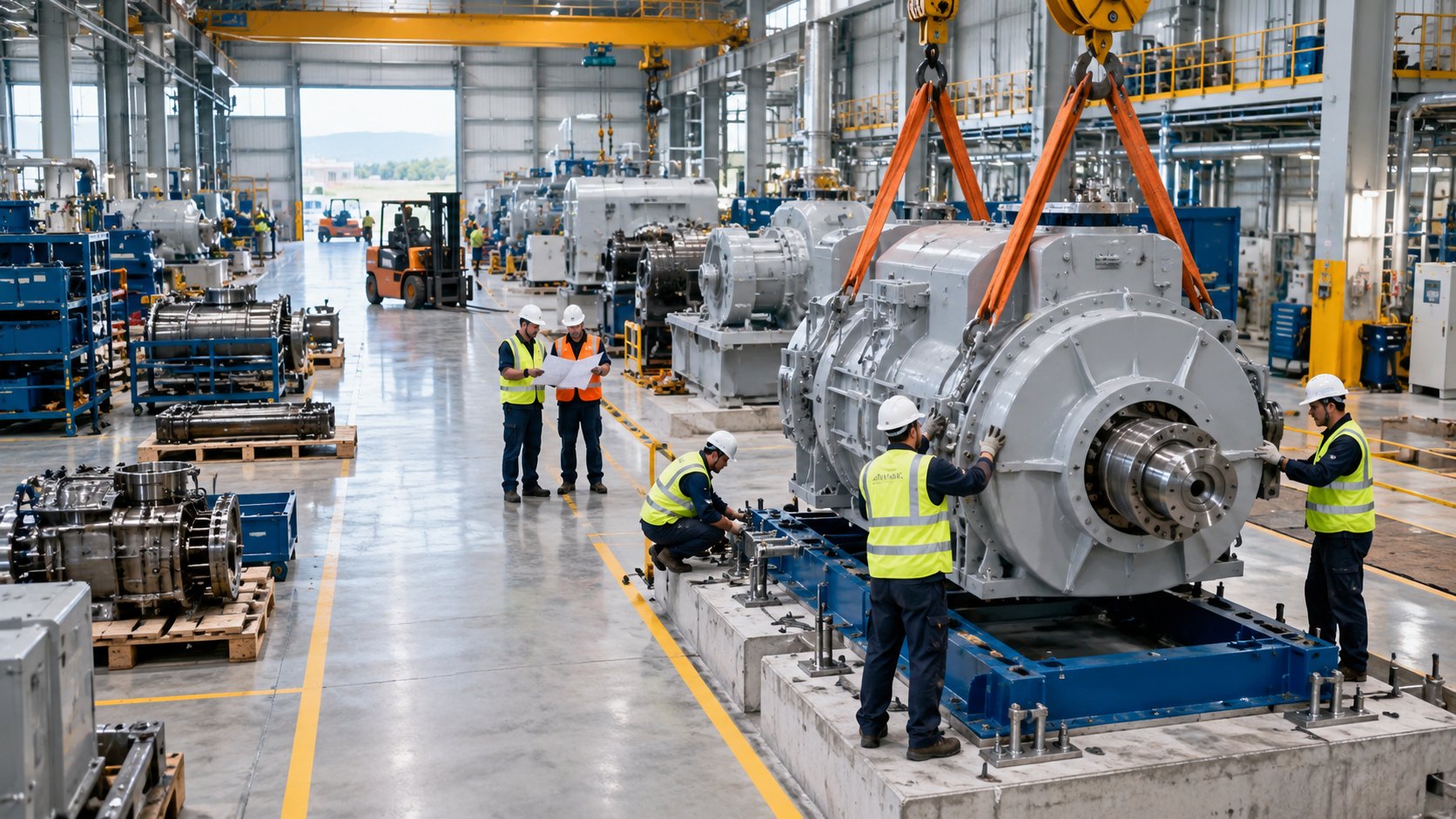
The physical scope is mechanical work on plant items: receiving and laying down equipment on a congested site, rigging and heavy lifting in constrained spaces, setting and grouting baseplates, shaft and drive alignment, connecting pipework and ductwork, erecting mills, crushers, conveyors, pumps, compressors, fans, presses and process vessels, then mechanical completion and support to the commissioning team.
What the verbs conceal is how little of a plant job is spent turning a spanner. Before a tool is lifted, a contractor on a live asset has to produce and get accepted:
- method statements and risk assessments written to the operator's own format, not to yours
- permits for each activity — hot work, confined space, work at height, excavation, and the isolation and lock-off of every energy source the machine touches
- a lifting plan signed by a competent appointed person, with ground bearing, crane position and exclusion zones on it
- competency evidence for riggers, slingers, welders and supervisors, plus site inductions, gate passes and medicals for every man on the pass list
- an interface schedule saying what civil, electrical, instrumentation and insulation trades owe you and when
None of that is optional and none of it is billable on its own. It is the entry fee, and a contractor who has not built it once has to build it under time pressure on the first job.
The second thing that separates this line is what happens at the end. On a general installation you hand over a machine. Here you hand back an asset. Demobilisation, reinstatement, clean-down and the handover pack — test records, alignment sheets, weld records, as-built marked drawings — are what release the last money, and they are the part most often left half-finished while the crew is already needed somewhere else.
The buyer is a contractor before it is a plant
The engineering function inside the plant writes the specification and decides whether your work is any good. It is usually not the party that signs your contract. On a capital project the main engineering and construction contractor buys the mechanical installation package, and on a shutdown the operator's own procurement team does — often from a shortlist that closed months earlier.
That makes the route to the buyer prequalification rather than selling. A new company reaches the shortlist by being named on somebody else's job first: sub-subcontracting a discrete scope, supplying supervision and crew to a contractor who is short of both, or taking the small awkward package nobody else wanted at the tail of a shutdown. What that buys is not the margin. It is a reference, a safety record with no incidents on it, and a named person inside the plant who will answer the phone. Those three things are the asset this business actually accumulates, and they are worth more than any equipment on the balance sheet.
The customer base in the UAE is concentrated and legible: metals and aluminium, cement and building materials, petrochemical and fertiliser plants, glass, plastics and packaging, power and water production, and large food and beverage manufacturing. Each of those sectors runs to its own maintenance calendar, which is the useful part — a contractor who learns three plants' shutdown seasons can fill a year without ever bidding a competitive tender.
Two routes into the work sit side by side, and most contractors eventually run both. They reward and cost different things.
What it givesWhat it costs
- Subcontracting to the main project contractorA pipeline you do not have to sell for, and one invoice addressRetention held down a chain, and no say in a programme that decides your cost
- Contracting directly to the plant operatorA better rate, payment on your own certificate, and work that renews at every shutdownPrequalification that takes longer than the job, and full programme risk in your own name
- Carrying a permanent rigging and alignment crewThe ability to mobilise in days when a shutdown date moves, which it usually doesA wage bill that keeps running through the gaps between projects
- Hiring the crew job by jobCost that stops the day the job stopsA bench of strangers inside a permit regime, and nobody who has read this plant before
- Taking the mechanical scope onlyA narrow boundary you can quote and defendStanding idle on other trades, then carrying the blame for their delay
- Taking mechanical, electrical and commissioning togetherOne responsible party, a larger award, and the commissioning feeCompetence you must genuinely hold in three disciplines at once
Read the middle two rows together, because they are the decision that sinks new entrants. A permanent crew is what wins repeat shutdown work and it is also the cost that does not pause. The contractors who survive their second year are usually the ones who kept a small core of supervisors and specialists on the payroll and flexed everything else around them.
The conditions attach to the site, not to the equipment
This is the structural difference between the two installation lines, and it decides how the business is set up. On a general installation the conditions follow the machine — what it contains, what it is plugged into, where it sits. Here they follow the place. The operator's own permit-to-work system governs what may be done and when; the emirate's safety and environmental authorities govern hot work, hazardous substances, waste streams and anything that leaves the site; and the body that issues fire and flammable-storage conditions has a view on work done near stored fuel, gas or solvent whether or not the machine you are installing has anything to do with it.
Three practical consequences are worth planning for. Insurance and third-party liability cover has to be in place at the levels the client's contract demands before mobilisation, and those levels are set by the client rather than by the licence. Manpower is the binding constraint, because a shutdown needs a burst of skilled people for a short period and the permits for those people are not instant — which is why the labour authority matters more to this business than the licensing authority does.¹ And premises for the company itself are modest: a yard for rigging gear, tooling and a workshop, with storage for the plant items you take delivery of before the window opens.
What any of that costs to satisfy, and exactly which approvals attach in a given emirate, depends on the plant, the client and the jurisdiction. Those are confirmed against the specific project rather than estimated, because a number quoted from the wrong emirate is worse than no number at all.
Where this is the wrong purchase. If the intended work is a machine delivered to a customer's premises, set, connected and handed over, the general machinery and equipment installation line is the correct one and is materially simpler to run. If the intention is a standing maintenance contract — planned servicing, spares and callout across a plant's asset base — that is maintenance contracting rather than installation, and it is worth having the wording confirmed before the first framework agreement is signed.
References
- Ministry of Human Resources and Emiratisation — work permits, labour contracts and wage protection for the site crew a shutdown requires. Ministry of Human Resources and Emiratisation
- Ministry of Industry and Advanced Technology — industrial activity licensing, national standards and conformity requirements for plant placed on the UAE market. Ministry of Industry and Advanced Technology
- Dubai Civil Defence — hot work, flammable and hazardous storage conditions on industrial premises. Dubai Civil Defence
- Environment Agency Abu Dhabi — environmental permitting for industrial sites and waste streams in Abu Dhabi. Environment Agency Abu Dhabi
- UAE Government portal — federal labour and occupational safety framework, and general government information. UAE Government portal
Elsewhere in Manufacturing
Activities that sit beside this one
Most licences carry more than one activity. Adding a neighbouring line at the application stage costs a fraction of amending the licence afterwards.
Begin with a clear conversation
Tell us what you intend to build.
A consultant will map the structure, jurisdiction, approvals and likely cost against what you actually described — not against a package.
