
Activity CZ 44
How to Start an Industrial Machinery Installation Business in Dubai
Machinery installation is sold on a handover signature, not on hours. What the activity covers, which gates are genuinely yours, and where the industrial line stops being installation.
ConsultZone licensing desk
- Activity code
- CZ 44
- Category
- Manufacturing
- Reviewed
- Read
- 8 min
Listen instead
50 seconds
An audio summary of this guide.
Topic summary
How to Start an Industrial Machinery Installation Business in Dubai
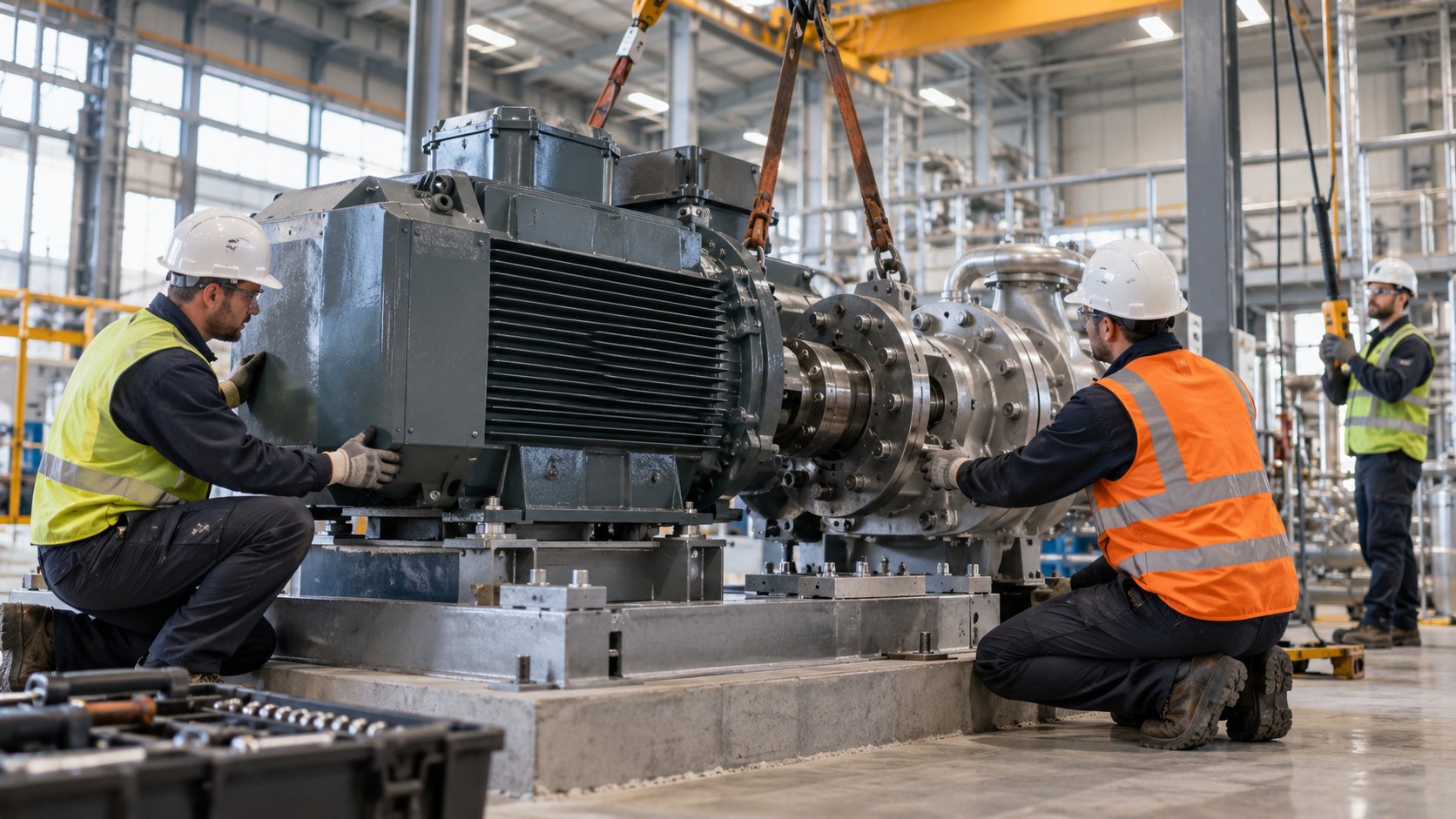
Nothing a factory buys arrives working. A bottling line, a bakery oven, a laundry tunnel, an injection moulder, a chiller, a four-colour press — each of them reaches the country in crates, with a manual and nobody attached to it. This activity is the trade of the people who turn up afterwards: who get the machine off the truck, through the door, onto a level base, anchored to tolerance, connected to power and air and drain, run up to the figures in its own manual, and signed for. The signature is what is being sold. Everything before it is cost.
That is worth fixing in mind before a licence is applied for, because the economics of this line are unusual. There is almost no stock — a van, a toolkit, lifting and skating gear, alignment instruments, and a crew who can read a drawing. Money goes into people and into mobilising them, not into goods on a shelf. The cash cycle turns on a single event, acceptance, and a machine that runs beautifully but has not been formally accepted is not revenue yet. A machine accepted against criteria nobody wrote down is worse: it is an argument scheduled for the first breakdown.
Margin follows the same shape. Whoever sold the machine keeps the equipment margin, and that is usually the manufacturer or its UAE agent. The installer is paid for competence and for speed, which means the profit on a job is decided in the survey rather than on site — by whether the access route was measured, whether the floor was checked, whether the services were where the drawing said they were. The work that earns best in this line is the work nobody quotes at the outset: the second machine beside the first, the relocation when a tenant moves, the retrofit of a guard or a feeder, the line somebody else installed that has never run at rate.
Who is this for?
Agents already selling the machine
A distributor bringing equipment into the UAE is asked who fits it in the same conversation as the price. Answering with somebody else's name gives away the margin and the customer relationship at once. Bringing installation inside the business closes that gap and turns a one-off sale into a site the agent keeps returning to.
Engineers and technicians leaving an employer
The most common founder on this line. A service engineer with ten years on one class of machine holds the two assets that decide this business — tolerance knowledge, and the customers' phone numbers — and carries almost none of the capital burden that makes neighbouring industrial activities hard to enter.
Overseas installers following their own product
Specialists whose machines already sit in UAE factories, flying a crew in for every job and losing weeks to permissions each time. A local licence and a resident crew change the response time from a month to a morning, which is frequently the entire commercial argument for incorporating here.
Contractors widening what they are allowed to quote
Electrical and mechanical contractors already working inside industrial premises who turn down machine-setting work because the wording on their licence does not reach it. That is a licence problem rather than a capability one, and it is the cheapest of the four routes in.
CZ 44 — Installation Of Industrial Machinery And Equipment
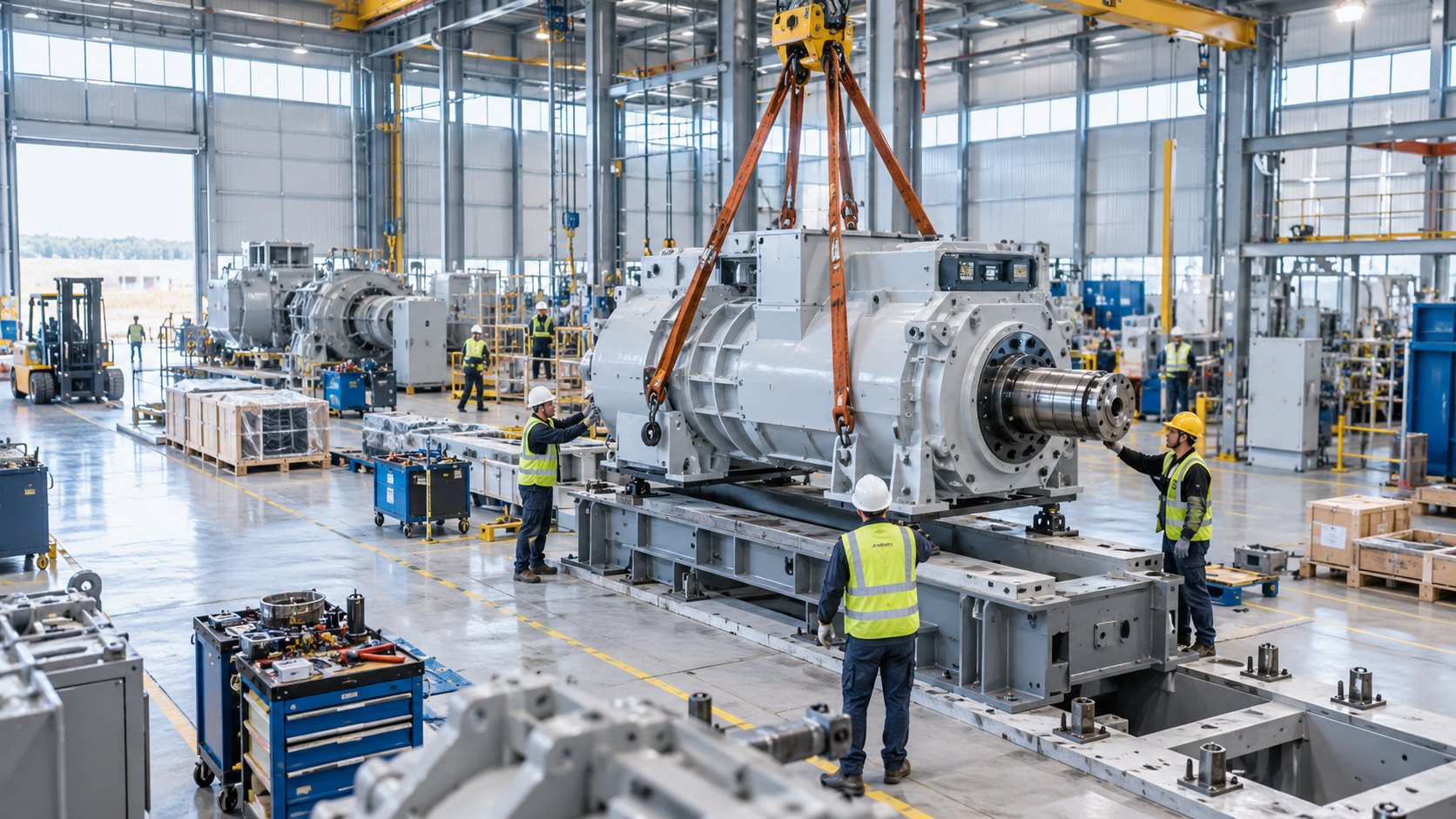
Under this line you take machinery and equipment somebody else built, put it where it is going to work, and make it work there. The verbs are the activity: receive, rig, position, level, anchor, align, connect, set to specification, test, hand over, and show the operators how to run it.
What makes this the general line rather than the plant one is the setting. The machine may be going into a factory, but it may equally be going into a commercial kitchen, a laundry, a printing works, a vehicle workshop, a cold store, a bottling shed or a warehouse being fitted with conveyors. The customer may be a manufacturer or may be a hotel group. There is one machine, or a handful of them, and the site is effectively yours for the days the job takes. Installing inside a running industrial plant is a different business with its own activity line and its own page.
A job is four things, and only one of them is lifting
The survey comes first: access, door widths, floor loading, headroom, the turning circle at the corner of a corridor, and where power, compressed air, water and drainage actually terminate. Installations fail on the route far more often than on the machine.
Then the setting — lifting, skating, plinth, packing, levelling and anchoring to the manufacturer's tolerance, which on a press or a moulding machine is measured in fractions of a millimetre across a bed.
Then the connection into the building's services, which is where two trades meet and where responsibility has to be written down before either of them starts.
Then commissioning and handover: running the machine to its own published figures with the customer's engineer watching, recording what it did, and training the people who will operate it. This is the part new entrants under-price, and it is the part the customer remembers a year later.
The gates are not where people expect them
A reader planning this business usually assumes the licensing authority is the hard part and the site is a formality. It is the other way round. The licence is obtained once, and getting its wording right is the whole of that task. What recurs is the crew and the building: whether the people on site hold permits for the work they are actually doing, and whether anything the job touches in the customer's premises needs the municipality's view before a drill goes into a floor.
The emirate's economic department
- The trade licence, and the exact activity wording carried on itFirst, and every gate below assumes it
- Widening that wording when the work outgrows what it namesBefore quoting anything the licence does not cover
The Ministry of Human Resources and Emiratisation
- Skilled-trade permits for the people who do the installingBefore the first crew mobilises, not at the first job
- Contract terms and wage protection for a site crewContinuously, and audited rather than approved once
The municipality
- Coring, cutting or forming a base inside the customer's buildingWith the site survey, because that is building work
Civil Defence
- Fire conditions where the installed plant holds fuel, gas or solventBefore the machine is energised, not after
The shape of that drawing is the useful part. Two gates sit with the incorporating authority and are settled before trading begins; two sit with the body that looks after workers and recur on every job; the last two belong to whoever looks after the building and to whatever the machine contains. The precise conditions, and the cost of meeting them, differ by emirate and by premises, and they are confirmed case by case rather than read off a table.
What the licence does not cover
The word installation does a great deal of work on this line, and most classification trouble comes from reading it too widely.
Manufacturing the machine is outside it. Fabricating, assembling or producing equipment for sale is an industrial activity with its own licence and its own premises conditions, and the conformity requirements that attach to equipment placed on the UAE market sit with the industry ministry rather than with the installer.¹ Selling the machine is outside it too: supplying equipment with delivery is a trade, and an installer who begins importing and reselling units needs that wording added rather than assumed.
Work on the building rather than on the machine falls outside. Forming a concrete plinth, cutting a structural slab, altering a wall or extending the building's own distribution boards are construction and building-services activities. An installer who needs those things done routinely subcontracts them, and it is the subcontractor's licence that is being relied on — which is only safe if somebody has actually read it.
Hiring out cranes or lifting equipment with an operator is a plant-hire service, not an installation. Configuring the control logic that tells a machine what to do, on a platform the installer never fitted, belongs with process control and instrumentation. And a standing maintenance agreement — a fixed annual fee for planned servicing across a customer's fleet — reads as a different commercial activity from installing something once; whether it can shelter under this wording or wants its own line is a question for the licensing authority in the emirate chosen, and it is worth asking before the first contract is signed rather than after the first invoice is queried.
Where this is the wrong purchase. If the plan is to work inside operating industrial plants — to a shutdown window, under an operator's permit-to-work regime, alongside other trades on a capital project — the sibling activity for plant installation describes that business and this one does not. If the plan is to sell machinery and arrange fitting through others, a trading line is cheaper to hold and more honest about what the company does.
Anti-money-laundering supervision does not reach this activity: it is not one of the designated non-financial businesses and professions the UAE regime covers. Corporate tax does reach it, as it reaches any UAE business, and enrolment and filing with the Federal Tax Authority are the taxable person's own obligation whatever rate ends up applying.
References
- Ministry of Industry and Advanced Technology — industrial activity licensing, national standards and the conformity marks that apply to machinery placed on the UAE market. Ministry of Industry and Advanced Technology
- Ministry of Human Resources and Emiratisation — work permits, labour contracts and wage protection for an installation crew. Ministry of Human Resources and Emiratisation
- Dubai Municipality — premises suitability and public health conditions where a machine is fitted into an existing building. Dubai Municipality
- Dubai Civil Defence — fire safety conditions attaching to installed plant that holds fuel, gas or solvent. Dubai Civil Defence
- Federal Tax Authority — corporate tax enrolment and filing obligations for a UAE taxable person. Federal Tax Authority
Elsewhere in Manufacturing
Activities that sit beside this one
Most licences carry more than one activity. Adding a neighbouring line at the application stage costs a fraction of amending the licence afterwards.
Begin with a clear conversation
Tell us what you intend to build.
A consultant will map the structure, jurisdiction, approvals and likely cost against what you actually described — not against a package.
