
Operating site
Umm Al Quwain Free Trade Zone — UAQ FTZ
UAQ FTZ is a customs-controlled free zone on both the FTA's designated list, with industrial land from 2,500 square metres and a licence issued in a working day.
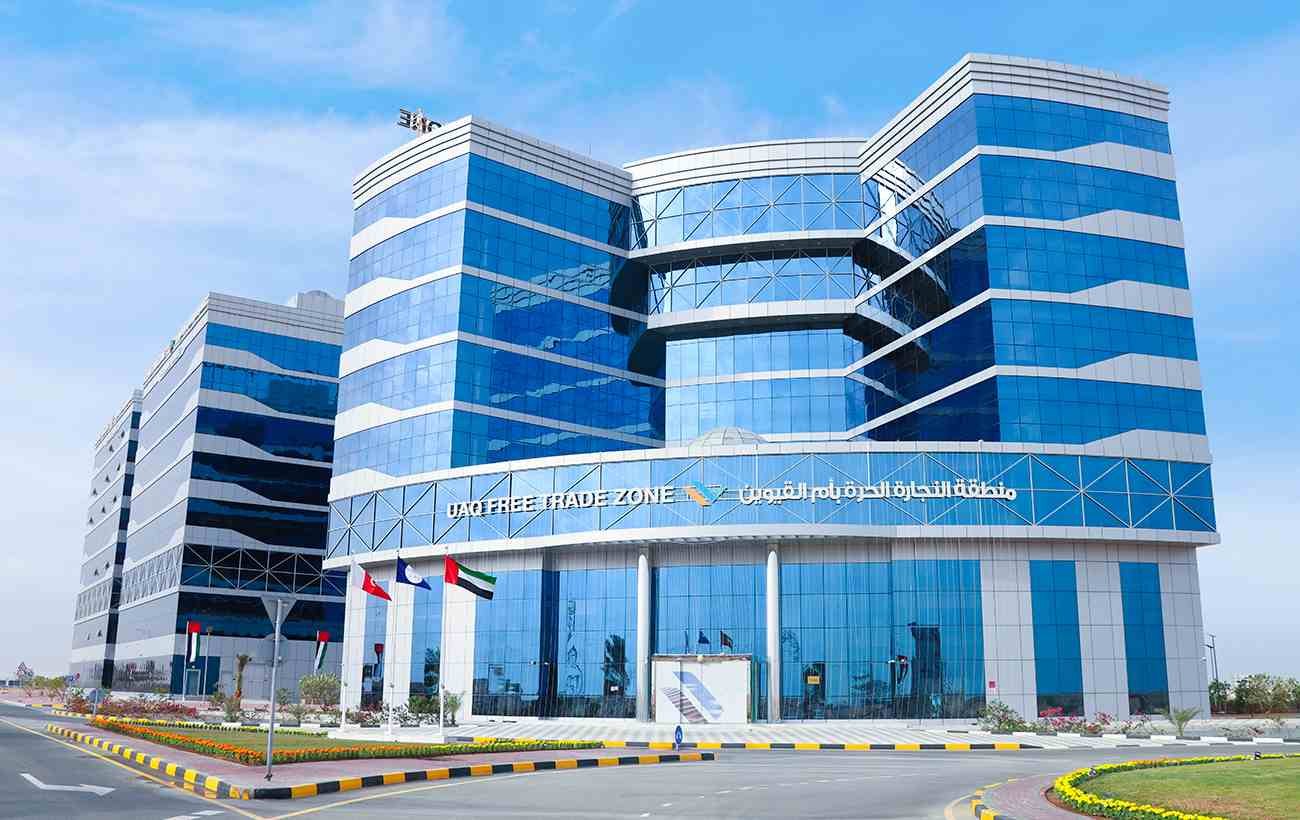
The site
Umm Al Quwain Free Trade Zone — UAQ FTZ is a site before it is a licence.
Premises, visa allocation and customs standing decide whether the operation actually works at this address. They lead the record where we hold them, because they are what you are buying; the licence is the paperwork that follows them.
- What you can occupy Co-working desks, offices from 9 sqm, warehouses from 100 sqm, and industrial land from 2,500 sqm on leases to 25 years
- Customs and VAT standing Free zone — Designated Zone for VAT, at both of its sites
The record
The standing facts behind the site.
These are the standing facts we hold, restated against the authority before any application is filed. Where the authority’s own sheet and this page disagree, the authority wins and this page changes.
- Emirate
- Umm Al Quwain
- Known for
- Industrial land and warehousing at the lowest published rents in the country, and a licence in one working day
- Visa allocation
- Confirmed against the authority for your package.
Packages, fees and visa allocations are set by the authority and revised annually. Nothing on this page is a quotation — we confirm the current position in writing before you commit to anything.
In detail
Umm Al Quwain Free Trade Zone is usually sold on one number, and that number is the least reliable thing about it.
The zone's own pages carry two prices for the same setup. A licence with one investor visa, Emirates ID, medical, insurance and a co-working desk is AED 12,500 on one page and AED 2,266 a month on another. Twelve months of the second is AED 27,192. The freelance permit does the same: AED 9,999 including the visa, against AED 1,818 a month — and AED 1,892 a month on the zone's own blog. Nothing on the site reconciles any of it.
That is not a reason to avoid UAQ FTZ. It is the reason to get one written quote naming the term before paying anything. What sits underneath is narrower than the marketing suggests and genuinely strong: customs-controlled land and sheds at the lowest published rents in the country, on both of the Federal Tax Authority's designated entries. If your business has pallets in it, read on. If not, skip to the limitations.
What UAQ FTZ is, and who runs it
The zone dates from 1987, created as Ahmed Bin Rashid Port and Free Zone — one of the oldest in the country, a fact it mentions far less often than its prices. It is administered by the Umm Al Quwain Free Trade Zone Authority, a government licensing body rather than a financial regulator. That distinction matters later.
It runs across two separate sites, and the split is the thing to understand first.
The port site, at Ahmed Bin Rashid Port. The operating contract went to Hutchison Ports in 2017, trading as Hutchison Ports UAQ: four berths, an 845-metre quay and a 23-hectare yard, handling containers, general cargo, Ro-Ro and break-bulk with reach stackers and harbour cranes. Inside the free zone area sit 118,000 square metres of land reserved for light industrial development and 13,000 square metres of warehouse space. Goods transiting, held in bond or manufactured there are exempt from duties, and nothing restricts moving capital or profits out of the country.
The road site, on Sheikh Mohammed Bin Zayed Road (E311) — the inland artery connecting Umm Al Quwain to Sharjah, Dubai and Abu Dhabi. The zone puts Dubai International Airport 30 minutes away by road and Dubai itself at 45 kilometres. Treat that the way you would treat any UAE drive time: a measurement taken at a good hour.
Both sites are on the Federal Tax Authority's Designated Zones schedule, named individually — Umm Al Quwain Free Trade Zone in Ahmed Bin Rashid Port and Umm Al Quwain Free Trade Zone on Sheikh Mohammed Bin Zayed Road. Designated status treats the area as outside the UAE for VAT on the movement of goods, and it is granted because the area is genuinely fenced and controlled rather than because somebody asked for it.
One honest caveat on that, because it is the kind of thing a page like this should not smooth over. The schedule we can read is the edition amended to Cabinet Decision No. 81 of 2021. UAQ FTZ's own site describes itself as designated under a later Cabinet Decision No. 54 of 2023 without saying what that decision does, and no consolidated list after 2021 is published. The status is almost certainly intact at both sites — but it is a thing to confirm in writing rather than inherit from a website.
The zone states more than 11,000 licensed businesses from over 150 nationalities — its own figure, not an audited one. Its stated growth is in sheds: 350,000 square feet of warehousing under development, with 65,000 square feet of commercial space planned, alongside new labour and staff accommodation.
Who it genuinely suits
- Light manufacturing and assembly, where floor area, power and land rent decide the business case and nobody visits the premises.
- Warehousing and regional distribution with real stock, particularly goods that sit in bond and leave without entering the UAE market.
- Industrial operators who need land rather than a unit, on a lease long enough to justify building on it.
- Operations with substantial blue-collar headcount, because accommodation is on site and priced per bed.
- Solo consultants and freelancers who want a compliant licence and a residence visa cheaply, and who have read the banking section below.
The sectors the zone names itself are food and beverages, building and construction materials, textiles, medical, chemicals, automobiles, oil-related, technology and electronics. The common thread is physical goods. Move away from that and the argument thins quickly.
Licence types, and what each permits
The Authority issues four: a commercial licence for buying and selling goods, an industrial licence for manufacturing and processing, a service or consultancy licence for professional work, and a freelance permit for an individual practising in their own name.
The activity count is where this zone is unusually generous and unusually worth checking. The AED 12,500 package covers up to 10 activities; the monthly page advertises more than 1,500 activities across major sectors. Both carry the same qualifier, in the Authority's own words — everything is subject to eligibility, documentation, activity classification and UAQFTZ approval. Classification is the operative word. A list of 1,500 activities is not a promise that your three will sit on one licence together.
Entity types are the free zone establishment with a single shareholder, the free zone company with several, and a branch of an existing UAE or foreign company. The AED 12,500 package names up to 5 shareholders, and 50 where applicable.
On minimum share capital, this page states no figure, deliberately. The Authority publishes none on its public pages, and the figures circulating in the market contradict each other outright — some agents say there is no minimum at all, others quote AED 300,000 in shares of AED 1,000. Those cannot both be true, and neither is sourced to the Authority. Ask for it in writing with your quote; a confident number without that source is one agent quoting another.
What setup involves, in the order it happens
- Activity list first, mapped against what you expect to sell in three years, then checked against classification before anything is paid for.
- Entity type, following from shareholder structure and whether a parent is involved.
- Trade name approval.
- Premises selection — the gating step. The unit determines your visa allocation, and for an industrial licence whether you can be licensed at all.
- Application and documents. Corporate shareholders need attested constitutional documents and a board resolution; a branch needs the parent's papers legalised.
- External approvals where the activity needs them. Industrial work is where weeks appear.
- Payment and licence issue. The Authority advertises one working day, credible for a desk-based licence — that is the counter, not fit-out, customs codes or visas.
- Establishment card and immigration file, then entry permit, medical, Emirates ID and stamping. Umm Al Quwain is handled by the ICP, not GDRFA Dubai — a different portal and a different rhythm from the one Dubai-based founders expect.
- Customs client code, which is what makes designated status usable rather than decorative.
- Bank account, then enrolment with the Federal Tax Authority.
A consultancy on a desk runs in a week or two. For a warehouse or a plot, add fit-out, approvals, gate passes and customs onboarding, and judge go-live in months.
What it costs
Read this section more carefully than you would read most.
What the Authority publishes annually. AED 12,500 for a licence with one investor visa, Emirates ID, medical fitness test, basic insurance, a co-working space with a lease agreement and bank-account assistance, renewing at the same figure. AED 9,999 for the freelance permit, with the residence visa, medical test, Emirates ID and insurance included, covering two related activities.
What the Authority also publishes monthly. AED 2,266 a month for what reads as the same business package, and AED 1,818 a month for the same freelance permit, carrying the same list of inclusions as the AED 9,999 version — with AED 1,892 a month on the zone's own blog.
Those are not two ways of paying one price. Annualised, the monthly figures come to roughly AED 27,192 and AED 21,816 against annual prices of AED 12,500 and AED 9,999 — about 2.2 times in both cases, which is too consistent to be a typo and too large to ignore. The page quoting AED 12,500 says only "flexible payment options available — ask our team about instalment plans" and gives no figure at all. Nothing published explains the gap: it may be financing cost, a different term, a different scope, or a superseded campaign still live on the site.
The arithmetic is the point, because the monthly number is the one most people meet first. On the business package the difference over a single year is AED 14,692 — more than the annual package costs; on the freelance permit it is AED 11,817. Renew on the same basis and the gap compounds every year, against the figure that looked cheapest at the start.
So the practical instruction is short. Get one quote, in writing, that states the total for twelve months, the renewal figure, and what happens in year two. Compare that against other zones' annual figures and nothing else. A monthly headline cannot be ranked against an annual package, which is also why this page makes no claim about UAQ FTZ being the cheapest licence in the country — that is a comparison no authority publishes, and no honest adviser can make it from a monthly figure.
Where the real advantage sits. Not in the licence, where the low-cost zones are all within a few thousand dirhams of each other. It is in land, sheds and labour: industrial plots from 2,500 square metres at published rent from AED 18 per square metre per year, warehouse units from 100 square metres, and labour accommodation at AED 400 per person per month for a furnished bed in a six-bed room. Those are the numbers that separate this zone from a Dubai one, and they only matter if you need them.
Routinely outside any package: attestation of foreign documents, external approvals, activity amendments, additional visas, refundable guarantees, warehouse fit-out, and any upgrade. The Authority says so itself — changes to a package or new services may attract separate charges.
And one genuine cost that founders arriving from Dubai miss: employee health insurance. Under MOHRE's Basic Health Insurance Scheme, employers in Umm Al Quwain, Sharjah, Ajman, Fujairah and Ras Al Khaimah have had to buy the policy since 1 January 2025 as a prerequisite for issuing or renewing a residence permit — AED 320 per year per person on a two-year policy, with pre-existing conditions covered and no waiting period. Cheap, mandatory, and not in anybody's package price.
Premises, visas, and why the unit is the decision
The ladder runs co-working desk, then independent offices from 9 square metres upwards, then warehouse units from 100 square metres with a minimum 7.2-metre eave height and 15 to 36 kilowatts of power, upgradable, then industrial land from 2,500 square metres on leases of up to 25 years, renewable, with road, power, water and telecommunications infrastructure already in place. Labour accommodation sits alongside, priced per bed.
Two of those numbers deserve attention. A 100-square-metre warehouse is small — smaller than the entry unit at most industrial zones, which makes this a realistic first shed rather than a commitment. And 2,500 square metres is a low entry point for land, half of Hamriyah's minimum, on a term long enough to build on.
Read that ladder as four different companies rather than four rents. The unit you sign sits upstream of your visa allocation, of what a bank can verify about you, and of whether the cost advantage that brought you here reaches your accounts.
On visas the Authority is thin, and it is worth saying so plainly. Against its office product it publishes "6+ visas available"; against warehouses, land and co-working it publishes nothing at all, beyond the single investor visa bundled into the AED 12,500 package. Allocation follows premises here as it does everywhere, and the schedule is not public — so count headcount eighteen months out and get the allocation written into the quote against the specific unit. The sequencing error we see most is signing premises and discovering the quota afterwards, which costs more to undo than leasing correctly at the start.
Banking: who says yes, and why files fail
This is where a cheap licence gets expensive, and it is the most important section on this page for anyone buying the entry package.
A warehouse or an industrial plot here banks reasonably. A lease, a customs client code, inventory and staff give a compliance officer things to verify.
A co-working desk in Umm Al Quwain is a hard file. Not impossible — but the combination that shows up is the one banks are most alert to: the cheapest licence in a northern emirate, a shared desk, a shareholder living somewhere else, and a business plan describing international trade. Every element is legitimate. Together they describe nothing a bank can confirm, and the account is declined without a reason being given.
Files fail predictably:
- The desk against the projection. A one-visa co-working package with stated turnover in the millions. The premises contradict the plan, and the file dies on that alone.
- Geography as a question. A company licensed in Umm Al Quwain whose only director lives and works in Dubai invites the question of where it actually operates. Good answer if you leased space here; none if you did not.
- Activity breadth working against you. Ten loosely related activities read as undecided, not flexible — the hidden cost of a generous activity count.
- Thin source-of-funds evidence, common where capital arrives from a related offshore entity.
None of this is fixed at the bank. It is fixed at formation, by choosing premises and activities that describe a real operation — our banking advisory page sets out the mechanics. The zone offers bank-account assistance in its packages, and that means an introduction, not an outcome.
The compliance that starts the day the licence is issued
Corporate tax. Federal Decree-Law No. 47 of 2022 applies and a UAQ FTZ company is not exempt: 0% to AED 375,000 of taxable income, 9% above it. A Qualifying Free Zone Person takes 0% on qualifying income, and this zone is well placed for it, because under Ministerial Decision No. 229 of 2025 manufacturing, processing of goods, logistics services and distribution of goods in or from a Designated Zone all qualify. Designated status is load-bearing here, not decorative, which is why the caveat above about the current schedule is worth closing.
The conditions are cumulative: adequate substance, qualifying income, arm's length related-party dealings, transfer pricing documentation, audited financial statements, and non-qualifying revenue below the lower of 5% of revenue or AED 5,000,000. Two points are misrepresented constantly. A Qualifying Free Zone Person does not also get the AED 375,000 band — non-qualifying income is taxed at 9% from the first dirham. And breaching any condition removes the status for that period and the four following ones.
Small Business Relief (Ministerial Decision No. 73 of 2023) lets a resident business with revenue at or below AED 3 million elect to be treated as having no taxable income, for periods ending on or before 31 December 2029 — extended from 31 December 2026 by Ministerial Decision No. 131 of 2026. It is closed to Qualifying Free Zone Persons. For most companies buying the entry package here, that election beats a 0% rate bought with an annual audit, and the arithmetic is worth doing before anybody sells you the audit. Enrol with the Federal Tax Authority either way; returns fall due nine months after year end.
VAT is mandatory above AED 375,000 of taxable supplies. Designated Zone treatment covers goods, not services — a distinction that trips people constantly — and goods moving into the mainland are an import, with duty and VAT at entry.
Audited accounts. The Authority publishes no renewal condition requiring them, and agents commonly say none is filed. Rely on neither: a Qualifying Free Zone Person needs audited statements regardless, and the zone's own position should be confirmed in writing.
Beneficial ownership records are required under Cabinet Decision No. 109 of 2023, filed with the zone as incorporating authority and updated on any change.
AML. Federal Decree-Law No. 10 of 2025 replaced the 2018 law with effect from 14 October 2025. If the activity makes you a Designated Non-Financial Business or Profession — dealers in precious metals and stones, among others — then goAML enrolment, a compliance officer and reporting to the Financial Intelligence Unit are obligations, and businesses have been suspended for missing them.
Economic substance is no longer a live filing. Cabinet Decision No. 98 of 2024 ended the regime for financial years ending after 31 December 2022, though exposure for 2019 to 2022 survives. Anyone billing you for one today is billing you for nothing.
Employment falls under Federal Decree-Law No. 33 of 2021 — no separate free zone code.
Where UAQ FTZ is the wrong choice
We would rather lose the engagement than place a client here badly.
Your address is doing commercial work for you. Enterprise procurement teams, institutional investors and regulated counterparties read a licensing jurisdiction as a signal. Umm Al Quwain is the second-smallest emirate, around 720 square kilometres and about one per cent of the country, with an economy historically built on fishing, farming and the port. A perfectly respectable place to manufacture; a weak letterhead for selling enterprise software to a bank, and no consultant can argue you out of that.
You are buying the monthly price because it looks small. It annualises to roughly twice the annual package. If cash flow genuinely requires instalments, fine — but price the year, not the month.
You want a licence and no premises, and you want a bank account. Read the banking section again. The cheap desk is the most common reason a client of ours ends up with a licence they cannot bank, and the cost of that failure dwarfs the saving.
You need deep-water capability or large container volumes. Ahmed Bin Rashid Port is a four-berth facility with an 845-metre quay serving feeder and general cargo. Rig fabrication, shipbuilding, offshore services and deep-draft shipping belong at Hamriyah, with its 14-metre port, or at Jafza. Confirm the declared depth with the operator before planning around a vessel.
Air freight is your primary mode. Umm Al Quwain has no commercial airport of its own. Everything flies through Sharjah or Dubai, and every air waybill carries a road leg at both ends. If your cargo moves on an AWB, SAIF Zone sits inside a working cargo airport, a structural advantage this zone cannot answer.
Your activity is regulated financial services, insurance or virtual assets. The Authority is a licensing body, not a financial regulator. These belong in DIFC, ADGM or under VARA, and no free zone licence substitutes.
You need to sell into the UAE mainland directly. A free zone licence authorises operating inside the zone. Selling into the mainland means a distributor, an agent or a branch, with customs duty and VAT at entry — and mainland income is generally non-qualifying for the free zone tax rate anyway. If domestic sales are the business, price a mainland company properly before choosing on licence cost.
Your growth depends on senior specialist hires. Candidates with options want a Dubai commute, a Dubai school run, or a package that erases your saving. The advantage is real for production teams and much thinner above them.
You want an easy exit. Land and warehouse leases carry terms, notice periods and restoration obligations, and fit-out is sunk. Federal company law gives no general route from one UAE free zone to another: whether a company can move depends on both zones' own rules, and where they do not provide for it, leaving means a new entity, new visas and a new account.
How it compares to its two closest alternatives
Ajman Free Zone is the nearest comparison — another low-cost northern zone on the designated schedule, closer to Sharjah and Dubai, with a longer-established name and a deeper local supplier base. UAQ FTZ answers on land: a 2,500-square-metre entry plot on a 25-year lease at AED 18 per square metre, and sheds from 100 square metres. Choose Ajman if the address and the commute matter more; choose UAQ FTZ if the plot does.
SAIF Zone costs more and buys a different thing: a customs-controlled estate wrapped around a working cargo airport, with published visa allocations per unit and a bank branch inside the zone. It wins outright on air freight, on banking reception, and on knowing your quota before you sign. UAQ FTZ wins on land rent, on the entry price of a shed, and on lease length. One caveat if you are weighing them: Sharjah prohibits alcohol entirely, which rules SAIF Zone out for anything touching hospitality, and Umm Al Quwain does not.
If neither fits, Hamriyah beats both on sea freight at scale, RAKEZ is strong on industrial land with more infrastructure around it, and Jafza beats everything on container volume at a multiple of the cost. Tell us what moves through your business — pallets, containers, air waybills, or nothing physical at all — and we will tell you which of these permits it and what the year actually costs.
Compare the zones honestly · Free zone company formation · Banking advisory · Mainland company formation
Provenance
How this record is verified.
Everything above is re-checked against Umm Al Quwain Free Trade Zone — UAQ FTZ’s own current published material and against the federal rules before any application is filed. Where the two disagree, the authority wins and we tell you.
Frequently asked questions
Is Umm Al Quwain Free Trade Zone a Designated Zone for VAT?
Yes, and at both of its sites, which the Federal Tax Authority's schedule names individually. Designated status treats the area as outside the UAE for VAT on the movement of goods, and it is granted because the area is genuinely fenced and customs-controlled. Two limits matter: it covers goods and not services, and goods moving into the mainland are an import, with duty and VAT at entry. One caveat on currency of information — the schedule we can read is the edition amended to Cabinet Decision No. 81 of 2021, while the zone's own site cites a later Cabinet Decision No. 54 of 2023 without stating what it does. Confirm the current position in writing before structuring around it.
Why does UAQ FTZ show two different prices for the same package?
Because it publishes both an annual figure and a monthly one, and nothing on the site reconciles them. The business package is AED 12,500 a year on one page and AED 2,266 a month on another, which is AED 27,192 over twelve months. The freelance permit is AED 9,999 including the visa against AED 1,818 a month, with AED 1,892 a month on the zone's own blog. In both cases the monthly route annualises to roughly 2.2 times the annual price — a difference of AED 14,692 and AED 11,817 over a single year. It may reflect financing, a different term or a different scope; none of that is published. Ask for one written quote stating the twelve-month total, the renewal figure and year two.
How much share capital does a UAQ FTZ company need?
We do not state a figure, because the Authority does not publish one on its public pages and the numbers circulating in the market contradict each other — some agents say there is no minimum, others quote AED 300,000 in shares of AED 1,000 each. Those cannot both be right, and neither traces to the Authority. Ask for the requirement in writing alongside your quote. Anyone offering a confident number without that source is repeating another agent.
What does industrial land at UAQ FTZ cost, and how small can a plot be?
Plots start at 2,500 square metres with no fixed maximum, on leases of up to 25 years, renewable, with road, power, water and telecommunications infrastructure already in place. The Authority publishes annual rent from as low as AED 18 per square metre per year, and otherwise says rent depends on plot size and is quoted to requirement. The 2,500-square-metre entry point is half Hamriyah's minimum, which is the practical argument for this zone: it is one of the cheapest places in the country to take a buildable plot on a term long enough to justify building on it.
How many visas does a UAQ FTZ licence carry?
The Authority publishes very little on this. Against its office product it states six or more visas available; against warehouses, land and co-working desks it publishes no schedule at all, beyond the single investor visa included in the AED 12,500 package and in the freelance permit. Allocation follows the premises, as it does in every free zone, so get the number written into your quote against the specific unit you are taking. Note also that Umm Al Quwain residence files go through the ICP rather than GDRFA Dubai, which is a different portal and a different pace from the one Dubai-based founders expect.
Can I open a bank account with the cheapest UAQ FTZ package?
Sometimes, and it is the hardest version of this question in the UAE. A warehouse or an industrial plot banks reasonably here, because a lease, a customs client code, inventory and staff give a compliance officer something to verify. A co-working desk is a hard file: the cheapest licence in a northern emirate, a shared desk, a shareholder resident elsewhere and a plan describing international trade is precisely the pattern banks screen for, and a declined application rarely comes with a reason. The packages include bank-account assistance, which means an introduction rather than an outcome. If banking is critical, decide premises with that in mind at formation.
Does UAQ FTZ let me trade in the UAE mainland?
Not directly. A free zone licence authorises operating inside the zone. Selling into the mainland is done through a distributor, a commercial agent or a mainland branch, and goods crossing in are an import carrying customs duty and VAT at entry. Mainland income is also generally non-qualifying for the free zone corporate tax rate, so the structure costs you twice if domestic sales are the real business. Where the UAE market is the market, price a mainland company properly rather than choosing on licence cost alone.
Begin with a clear conversation
Tell us what you intend to build.
A consultant will map the structure, jurisdiction, approvals and likely cost against what you actually described — not against a package.
