

Activity CZ 100
How to Setup a Permanent Industrial Exhibition Business in Dubai
An industrial exhibition that stands all year sells floor space, footfall and a selling environment. The goods on the floor stay somebody else's, and that single fact shapes the whole licence.
ConsultZone licensing desk
- Activity code
- CZ 100
- Category
- Trading
- Reviewed
- Read
- 7 min
Listen instead
48 seconds
An audio summary of this guide.
Topic summary
How to Setup a Permanent Industrial Exhibition Business in Dubai
A trade fair opens on a Monday and is gone by Thursday. A permanent industrial exhibition is the same idea with the clock removed: a hall where manufacturers of pumps, compressors, generators, machine tools, valves, cables, building systems and fitting-out plant keep a standing display that a buyer can walk into in March or in October without waiting for a date in the calendar.
The reason the format works in this market is the buyer's own timetable. A contractor pricing a fit-out, a factory replacing a line, a facilities manager specifying chillers — none of them can schedule the moment they need to see the machine. They need it the week the tender lands. An exhibition that is always open converts that week into a visit, and a visit into a specification.
The money is in floor let by the year, not in the machines standing on it
The commercial case is a property case wearing industrial clothes, and it reads far better once that is admitted. Your revenue is rent for space and the services that make space usable — power to a stand, compressed air, lifting, lighting, mezzanine storage, a meeting room the exhibitor does not have to build, a receptionist who knows which stand does what, and the address itself. None of that depends on a single machine being sold.
What the exhibitor buys is cheaper than the alternative and more permanent than the alternative. A fair costs a build, a crew, freight in and freight out, and yields three days. A showroom of their own costs a lease, a licence and staff to sit in it. Your hall sits between the two: their product in front of buyers for twelve months, with the building, the footfall and the overheads shared with forty other exhibitors.
Which means the asset you are actually building is traffic. An exhibition with no visitors is a warehouse charging showroom rent, and exhibitors work that out inside one renewal cycle. The money that looks like marketing — buyer events, trade mailings, sector open days, relationships with contractors' procurement desks — is not marketing here. It is the product.
one hall, three arrangements, five rows
| Judged on | Space only | Space and commission | Buying to sell |
|---|---|---|---|
| Who owns the goods standing on the floor | The exhibitor | The exhibitor | You |
| What you invoice for | Space and services | Space, plus a share of what sells | The sale itself |
| Capital tied up in unsold machinery | None | None | All of it |
| Whether a selling activity is needed on the licence | No | Confirm before signing | Yes |
| Who carries a machine nobody wanted | The exhibitor | The exhibitor | You |
The left-hand arrangement is the one this activity name describes, and it is deliberately the dullest of the three. Renting space to somebody who owns the risk is a business with a floor under it. The right-hand column is a different company with a different licence and a different balance sheet, and the middle column is where operators quietly end up without meaning to.
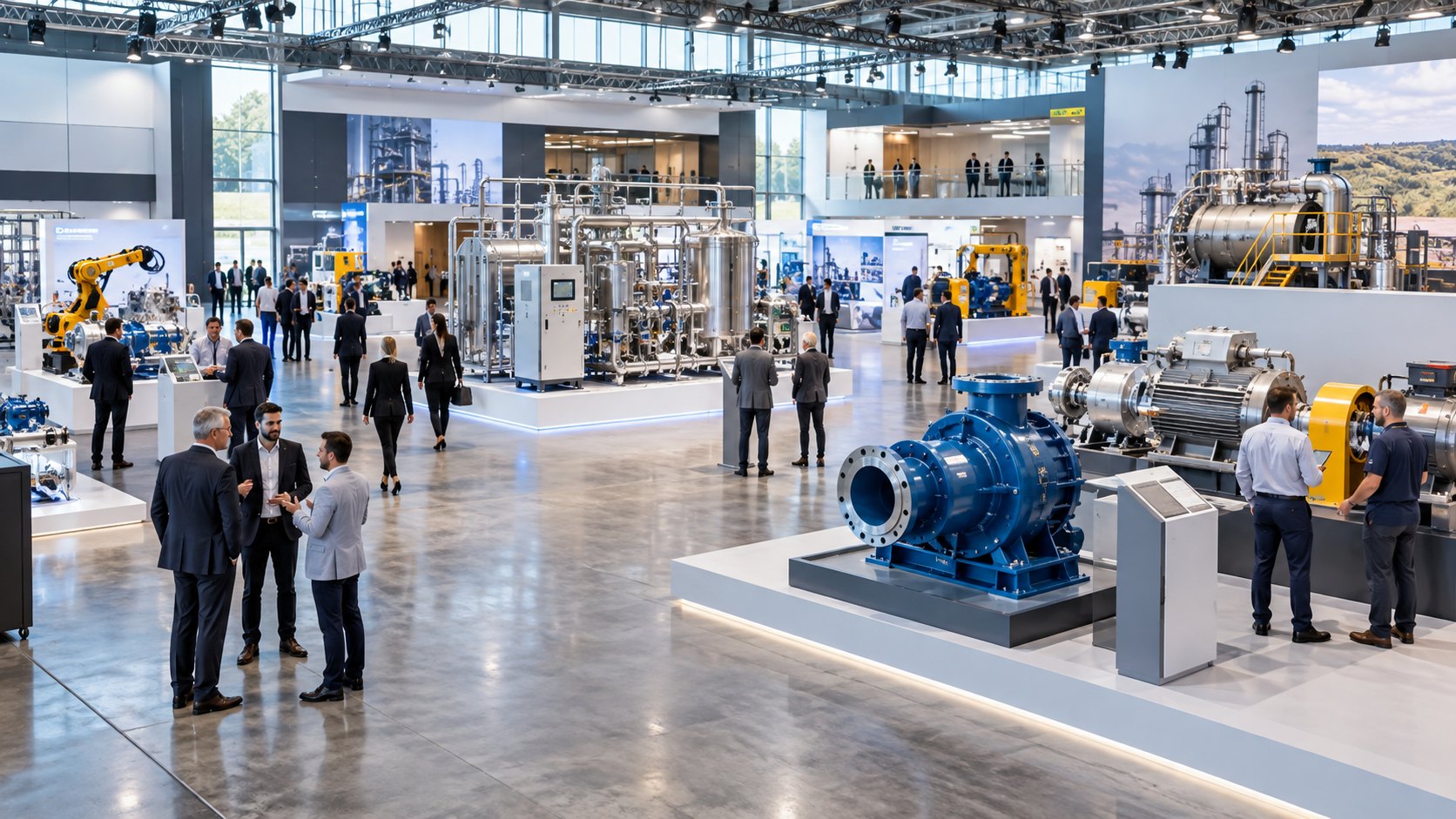
CZ 100 — Permanent Industrial Exhibition
Under this line you operate the premises and the environment: you take the building, divide it into stands, fit it out, connect it, market it, staff its front desk, run its events and let the space to exhibitors who bring their own products. You can display goods belonging to others and you can help a visitor find the right exhibitor. What you are selling is the platform.
Displaying is not selling, and the difference is the whole page
A machine standing on your floor with a maker's name on it belongs to that maker. Showing it to a buyer is display. Taking the order, invoicing it, collecting for it or taking a cut of it is commerce in that machine, and commerce is a different activity from exhibition. If the plan is to earn on transactions rather than on space — a commission on each unit sold, or buying plant and reselling it at a margin — then a trading activity has to sit on the licence beside this one, and that has to be settled with the licensing authority before the first exhibitor contract is signed rather than after a buyer has asked for a quotation.
The same boundary appears in the paperwork the exhibitor needs. Goods brought into the country to stand on a floor and then leave again are not in the same position as goods imported to be sold, and which of those two your hall is doing is a question the customs authority answers by reference to the arrangement, not to the building. Get the arrangement written down first.
What sits outside this line
Running a three-day trade fair is event management, not a permanent exhibition. Holding another party's stock for a fee is warehousing. Selling on the owner's behalf under an appointment is agency or commission work, each with its own activity. Assembling, modifying or servicing the machines on display is industrial work and needs its own basis. And a hall that is really a wholesale yard with a reception desk is a wholesale business — the authority reads the operation, not the signage.
The conditions follow the goods on the floor, not the floor plan
Nothing about a permanent industrial exhibition is generic, because industrial goods bring their own controls with them and a hall inherits every one of them from its tenants.
Fire and safety is the first of these and the most consequential. Large machinery, fuel in demonstration units, gas cylinders, batteries, paints, solvents and stored packaging all change what the civil defence authority requires of a building — detection, suppression, separation distances, escape routes and how much of anything flammable may be held at once. A stand plan that looks fine on paper can be refused because two exhibitors put the wrong pair of products next to each other.
Then the premises itself: a hall open to visiting buyers is a place of public access, so its suitability, sanitation, waste handling, signage and the way it manages people on site fall to the municipality in the emirate concerned. Loading and unloading plant of any size brings access, parking and heavy-vehicle movement into the same conversation.
Individual product families carry their own gates that are nothing to do with you and everything to do with what you allow through the door. Electrical and mechanical equipment sold into the UAE market is subject to national standards and conformity requirements. Radio-carrying equipment needs type approval before it may be offered. Equipment for regulated sectors — anything for aviation, medical, food-contact or fuel handling — answers to the body that governs that sector. A display is not a sale, but an exhibitor who intends to sell from your floor needs the goods to be admissible, and an exhibition that fills up with inadmissible product has a commercial problem long before it has a legal one.
Where the company itself sits — mainland or free zone — is settled by the same physical logic. This activity needs a large, serviced, accessible hall with power and height, and it needs visiting UAE buyers to be able to walk into it and place business. Find the building that works, then let the building narrow the list of jurisdictions, rather than choosing a jurisdiction and hunting for a hall inside it.
The exact activity wording, the approvals attached to it, the conditions each emirate puts on a public hall of this kind and what the licence costs to hold all depend on the emirate, the building and the mix of exhibitors. Those are confirmed with the licensing authority for the specific case, and any figure offered before the building is chosen is not an estimate.
References
- National standards, conformity assessment and industrial licensing policy for equipment offered in the UAE market. Ministry of Industry and Advanced Technology
- Fire safety, suppression and the storage of flammable and hazardous items inside a public hall. Dubai Civil Defence
- Premises suitability, public access, sanitation and waste conditions for exhibition premises in Dubai. Dubai Municipality
- Treatment of goods brought in for display as against goods imported for sale, and restricted product categories. Dubai Customs
Elsewhere in Trading
Activities that sit beside this one
Most licences carry more than one activity. Adding a neighbouring line at the application stage costs a fraction of amending the licence afterwards.
Begin with a clear conversation
Tell us what you intend to build.
A consultant will map the structure, jurisdiction, approvals and likely cost against what you actually described — not against a package.
