
Activity CZ 321
How to Start a Parties and Events Filming Business in Dubai
A wedding cannot be reshot. Everything about how an events filming business operates follows from that one fact, and most of the labour is in the edit rather than on the night.
ConsultZone licensing desk
- Activity code
- CZ 321
- Category
- Photography & Filming
- Reviewed
- Read
- 8 min
Topic summary
How to Start a Parties and Events Filming Business in Dubai
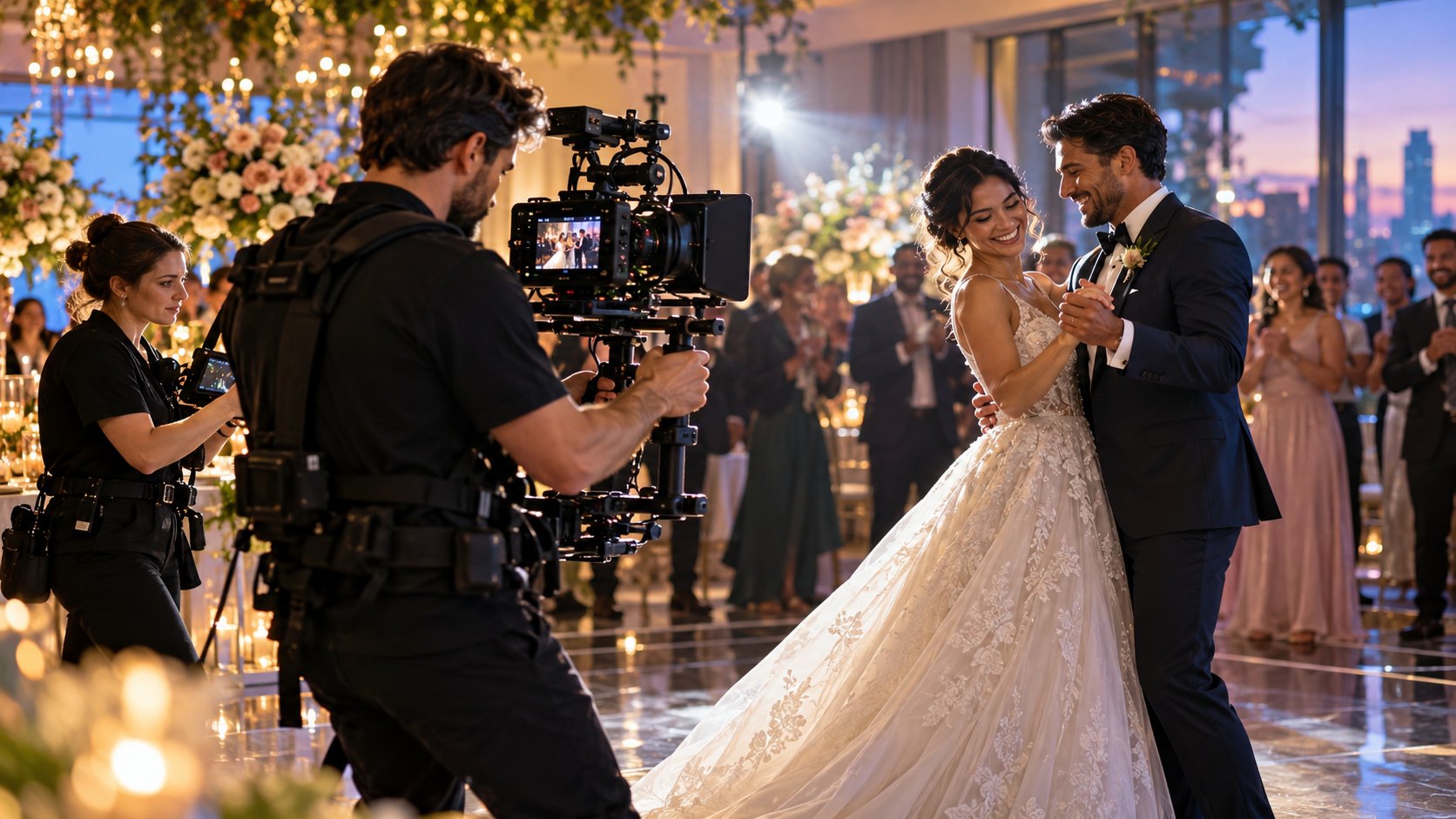
Every other kind of commercial filming can be done again. A product can go back on the table, a building will still be there next Tuesday, an advertisement can be reshot with the same actors on a second day. A wedding cannot. Neither can a graduation, a milestone birthday, or the chairman's speech at an annual conference. The event happens once, in front of people who will remember it for the rest of their lives, and a flat battery, a corrupted card or a camera pointed the wrong way at the wrong moment is not a reshoot. It is a refund and a story that follows the business around a city where this trade runs almost entirely on recommendation.
Everything operationally distinctive about this line follows from that. Two cameras where one would do. Dual card recording. Spare batteries nobody expects to need. Audio captured twice, from the lectern and from a recorder on the speaker, because a single radio microphone failing silently is the commonest way a corporate film is lost. None of that is perfectionism; it is the cost of a product that cannot be remade.
The second structural fact is that the money and the labour are in different places. The shoot is a few hours. The edit is days — selecting, cutting, colour, audio repair, music, titles, versions — and it is where every complaint originates, because the client has now had time to form an opinion and to show the film to relatives. A business that prices the shoot and treats the edit as a follow-up has mispriced the job and will deliver late.
What the activity actually covers
The line covers filming social and corporate occasions and delivering edited video of them: weddings and engagements, henna and reception nights, birthdays and anniversaries, christenings and religious celebrations, graduations and school events, corporate conferences, galas, award nights and annual dinners, product launches and store openings, team events, concerts and festivals, and private parties.
The work is three phases rather than one, and the licence conversation benefits from naming them. Pre-production is the recce, the run sheet, the venue walk-through and agreeing what must be captured — a job lost at this stage is lost before anybody arrives. Production is the night itself, with however many operators, audio and lights the job needs. Post-production is the edit and the delivery, which is most of the hours and all of the revisions.
Three things are adjacent and are not this activity. Film and television production — drama, commercials, broadcast content — is a different family with its own permit regime for shoots. Still photography is a separate line, and the fact that most clients want both does not merge them in a licence. Audio-visual and technical event production — supplying screens, staging, lighting and sound for the event itself — is an events services activity, and a filming company that starts hiring out LED walls has drifted into it.
| Wedding | Corporate event | Social-first content | |
|---|---|---|---|
| Who signs and who pays | A family, often two of them, from savings | A marketing or events manager, on a purchase order | An agency or a brand, on a campaign budget |
| What is actually delivered | A long film, a short film and the raw day | A highlights cut, speeches in full, and clips | Vertical clips, fast, while the event is still on |
| When it is due | Weeks later, and the wait is the complaint | Days later, because it supports a campaign | The same night, which changes the whole crew |
| Who decides what you may do on site | The venue, and it may already have a supplier | The organiser and the venue's technical team | The venue, plus whoever owns the brand's rights |
| What goes wrong | A missed moment, and there is no second take | Lost audio from a speech nobody can repeat | A turnaround promise made before the schedule slipped |
| How the next job arrives | A guest who saw the film | The same manager next year, or not at all | A retained relationship, or a single campaign |
The marked row is the one that costs beginners money. The client books the videographer, but the client does not control the room. Hotels, ballrooms, beach clubs and convention centres decide who may bring equipment in, where it may be placed, whether a tripod may stand in a walkway, when access begins, whether anything may be rigged, and frequently whether an outside supplier is permitted at all — many venues hold a preferred supplier list and charge for the privilege of appearing on it or working around it. A quotation that assumes free access to a venue nobody has spoken to is a quotation with somebody else's decision inside it.
Who is this for?
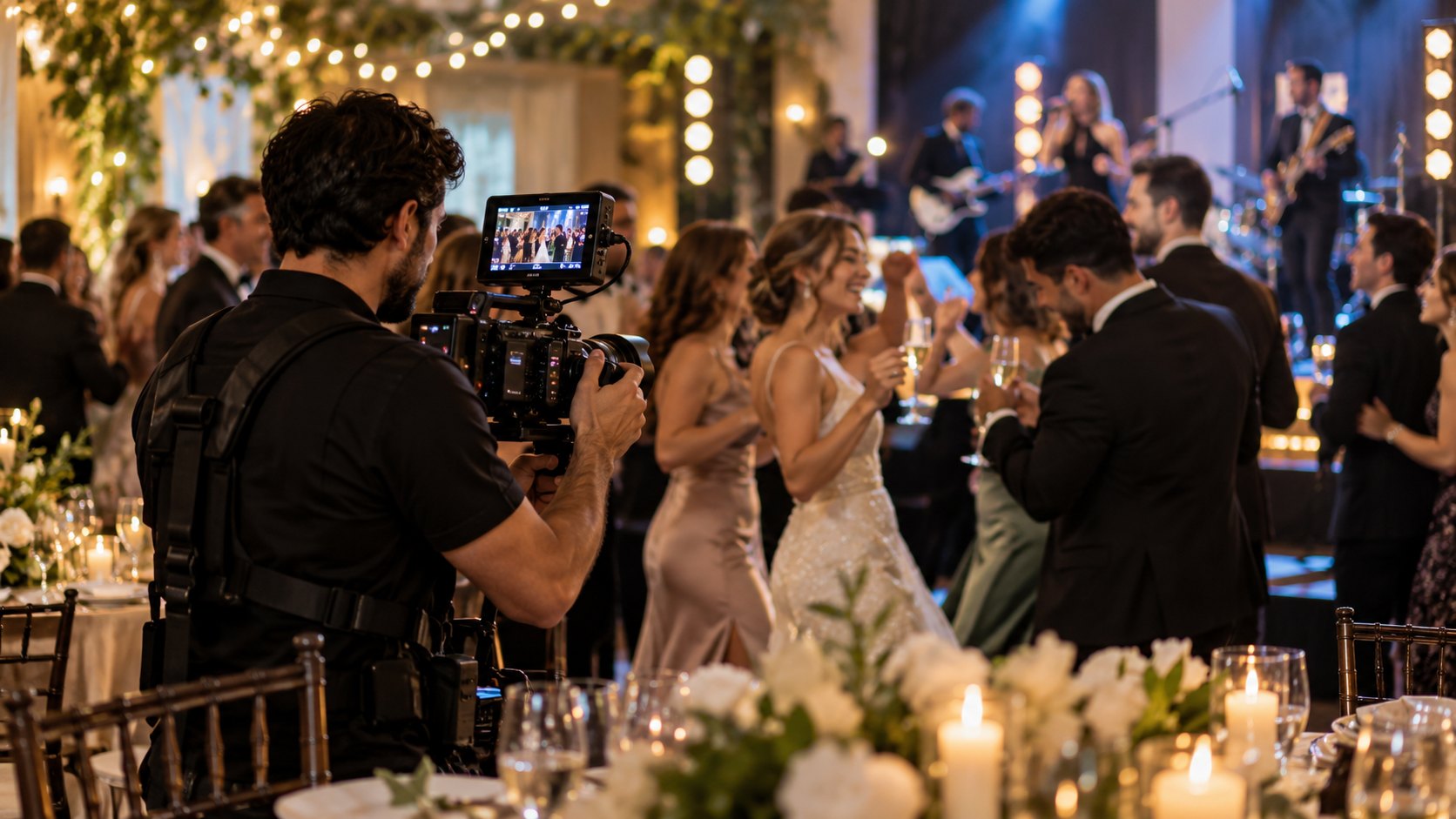
The owner-operator is one person with two cameras who shoots and edits everything personally. The entry cost is low, the quality can be excellent, and the ceiling is the calendar — one wedding on a Saturday, and a month of them is a month with no edit time. It is how nearly everyone starts and the hardest shape to grow out of.
The wedding studio runs crews and editors, takes several jobs a weekend, and sells packages with named inclusions. It is a production business with staffing and scheduling problems rather than a creative one, and its real skill is consistency: the second camera operator's footage has to cut together with the first's.
The corporate and conference supplier works for marketing departments and event agencies, invoices against purchase orders, and gets paid on terms rather than up front. The revenue is forecastable and repeats annually, and the work is less emotionally charged and far more deadline-driven.
The venue's preferred supplier has negotiated a position on a hotel or ballroom's list. Volume arrives without marketing, at a commission or a referral fee, and the dependency is obvious: the relationship is the business, and it can end.
The social-first operator cuts vertical clips on site and delivers during the event. It is the newest version of this business, it sells to brands rather than to families, and it needs an editor working on the night, which is a different crew shape altogether.
Where it sits between the mainland and a free zone
This follows the shoot rather than the edit, and that is the useful way to think about it.
A crew filming at a hotel in Dubai for a family or a company in Dubai is doing work on UAE soil for a UAE client, and that is a mainland proposition. A free zone licence genuinely suits a different business: post-production and editing services, content sold to clients outside the country, and media or production companies whose output is delivered rather than performed locally. Several media-oriented zones exist and are built for exactly that.
The complication to be honest about is that the two do not blend as neatly as a package comparison suggests. Physically attending a mainland venue to film a mainland client's event is mainland work regardless of which licence the invoice carries, and a company that chose a zone because the first-year cost was lower may find that the jobs it actually wins sit on the other side of that line. Which zones permit what, and which mainland wording covers filming at third-party premises, are worth settling before the first booking rather than after a venue asks for documents.
Three conditions attach to the work itself and none of them comes with the licence. Filming in public places is a separate permission, not an extension of a trade licence, and the same is true of flying a drone, which is controlled on its own terms as an aviation matter and is never covered by a filming activity. And consent is the one that turns a happy job into a complaint: photographing and publishing images of identifiable people without their agreement is a genuine sensitivity in the UAE, and at a private party the guests are not the client. What may be filmed, what may be published, who owns the footage and what may be used for marketing belong in a written contract signed before the event, together with the organiser's confirmation that guests have been told.
What the licence costs to hold, which wording covers the three phases, and what permissions a particular shoot needs depend on the emirate, the venue and the job. ConsultZone confirms those for the specific case.
References
- General Civil Aviation Authority — aviation matters including the operation of unmanned aircraft, which is a separate permission from a filming licence. General Civil Aviation Authority
- Ministry of Economy — intellectual property and copyright in produced work, and commercial matters. Ministry of Economy
- UAE Government portal — federal law and general government information, including privacy and the publication of images of individuals. UAE Government portal
- Ministry of Human Resources and Emiratisation — work permits and labour contracts for crews, including freelance and part-time arrangements. Ministry of Human Resources and Emiratisation
- Federal Tax Authority — VAT and corporate tax enrolment and filing on production fees. Federal Tax Authority
Elsewhere in Photography & Filming
Activities that sit beside this one
Most licences carry more than one activity. Adding a neighbouring line at the application stage costs a fraction of amending the licence afterwards.
Begin with a clear conversation
Tell us what you intend to build.
A consultant will map the structure, jurisdiction, approvals and likely cost against what you actually described — not against a package.
