
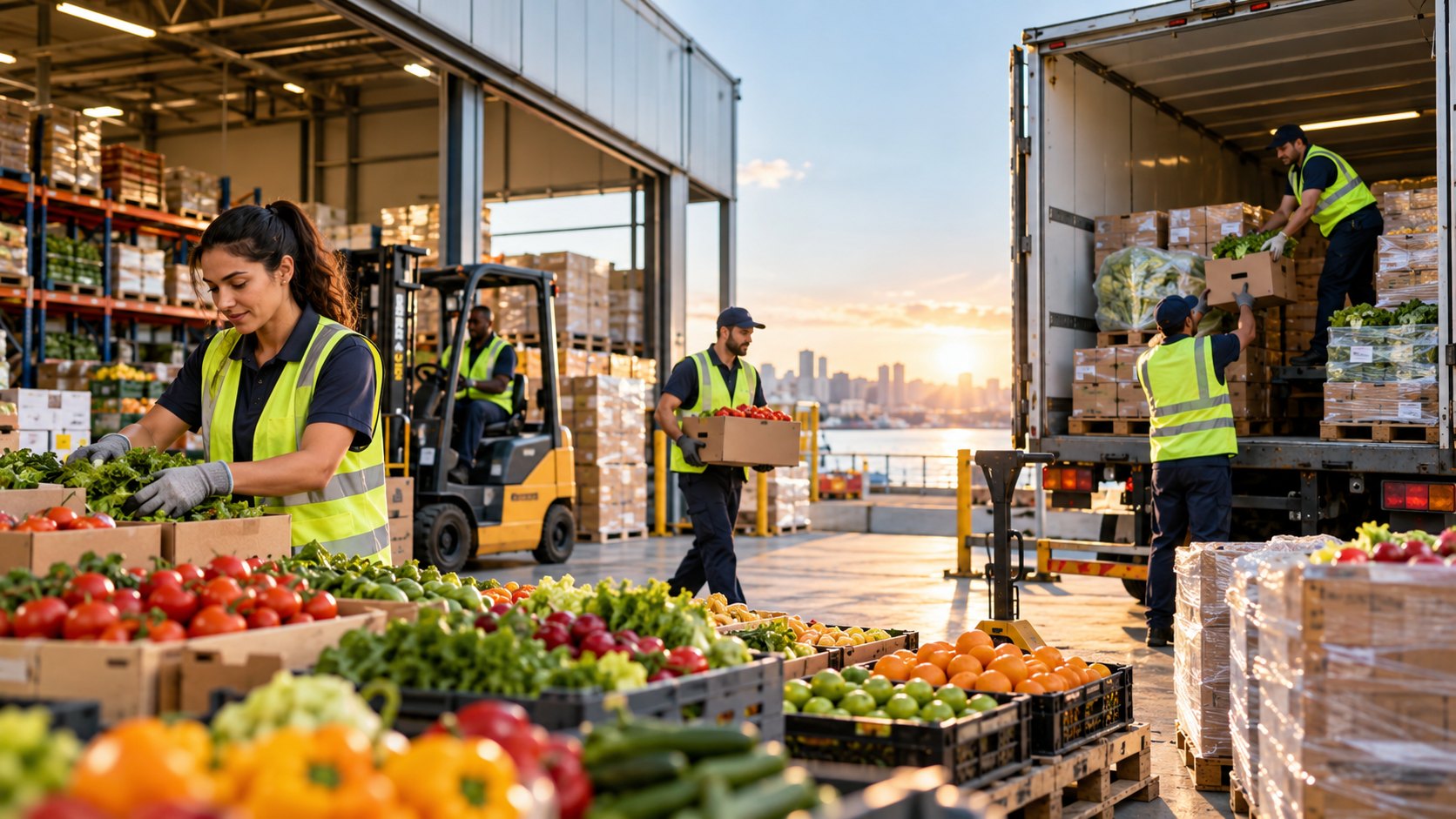
Activity CZ 261
How to Start a Foodstuff Supply Services Business in Dubai
The word in the name that matters is supply. A foodstuff contract is won on a price list fixed for a term and bought against a market that is not, and it is judged on fill rate rather than price.
ConsultZone licensing desk
- Activity code
- CZ 261
- Category
- Trading
- Reviewed
- Read
- 7 min
Listen instead
40 seconds
An audio summary of this guide.
Topic summary
How to Start a Foodstuff Supply Services Business in Dubai
A kitchen cannot stop. Service is at a fixed hour, the menu is already printed, and the ingredients either arrived or they did not. That is the thing you are actually being paid for in this line, and it is why Foodstuff Supply services behaves nothing like the trading activities sitting beside it in the catalogue.
A trading company chooses what it carries and then goes looking for buyers. A supply company works the other way round: it wins the customer first, and from that moment the customer's specification writes the product list. You will carry a brand of chickpeas you would never have bought, in a pack size nobody else wants, because an executive chef wrote it into an agreement that runs for a year. You are not selling goods at all — you are selling reliability, measured in two numbers a client checks every week: how much of the order arrived, and whether it arrived inside the window. Price gets you onto the tender list. Those two numbers are what keep the contract.
Who is this for?
The customers are kitchens that cannot stop, and each type behaves differently enough to be worth naming.
Hotels and restaurant groups buy to a chef's specification and expect daily or near-daily delivery of mixed goods. Orders are small, frequent and unforgiving about substitutions, because a dish on a printed menu cannot be changed at four in the afternoon.
Catering contractors and staff canteens are volume, routine and schedule-driven. The menu cycles, the headcount is known, and the operator wants the same pallet of the same things at the same hour. This is the easiest work to plan and the most sensitive to price at renewal.
Labour accommodation and remote sites are the volume end of the trade, with long runs, difficult access windows and the largest single order sizes. The margin is thin and the route economics are everything.
Schools, hospitals and institutional buyers are the most demanding on documentation and the most stable once won. They will audit where the food came from, how it was carried and who handled it, and they renew for years when satisfied.
Airline and offshore catering is a specialist end with the tightest paperwork and the least tolerance for a late delivery, because the customer's own slot cannot move.
What they have in common is the structural risk of this line, and a first-time operator should see it clearly before bidding. A supply contract fixes your price list for a term while the market you buy in does not stand still. A shortage in an origin market, a freight rate, a currency, a bad harvest — none of these are events the contract will share with you. The experienced bidder prices the volatile categories differently from the stable ones, keeps review language in the agreement for the lines that genuinely move, and declines the tender that demands a flat annual price across fresh produce.
What you can and cannot do under this line
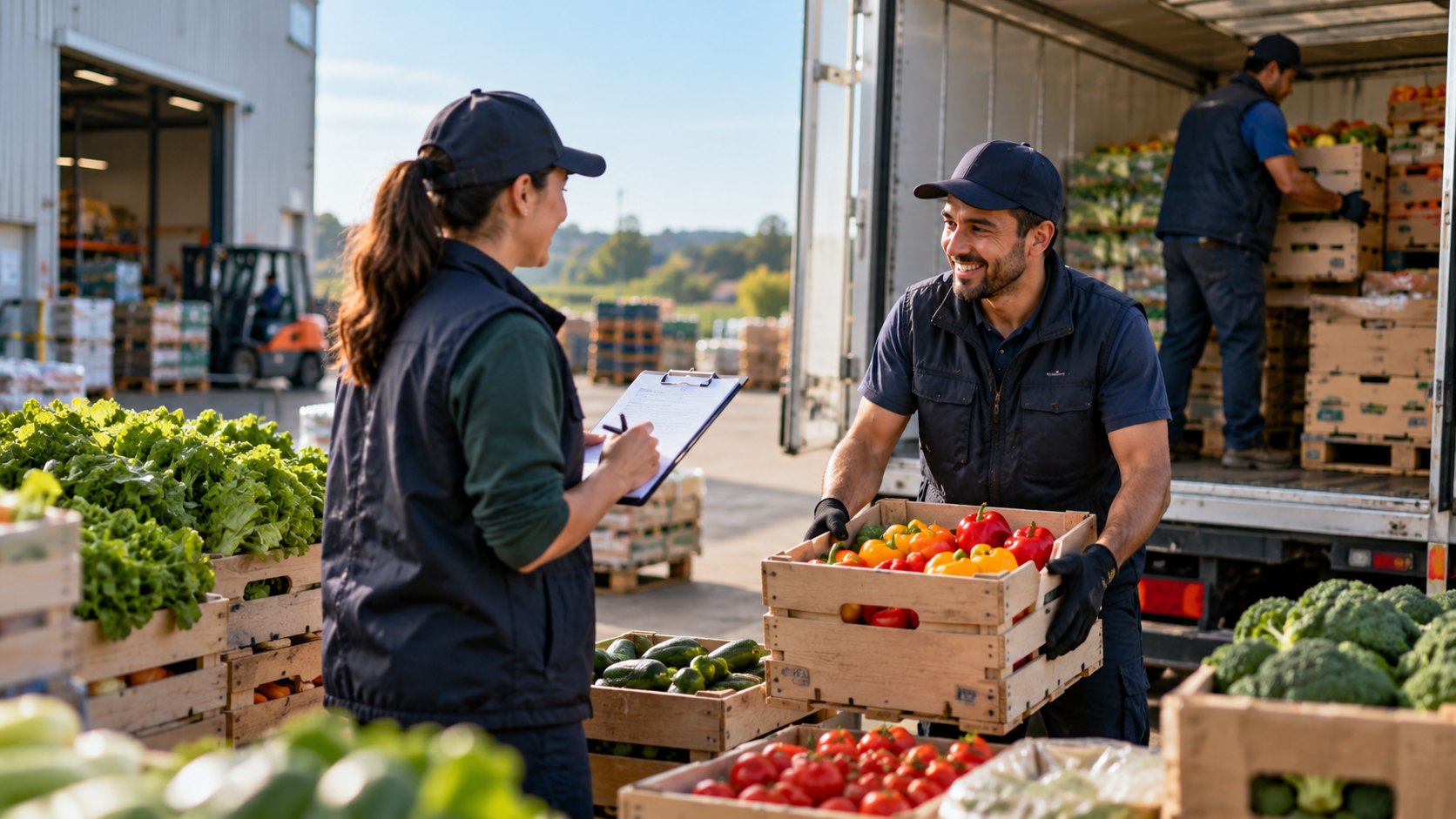
You can buy, hold, carry and deliver foodstuff to businesses under contract. That is the core: sourcing from importers and producers, consolidating a mixed order, and delivering it to a kitchen, a depot or a site on an agreed schedule. Picking, packing, order consolidation, scheduled delivery and the account management around it are all part of the service.
You cannot cook. The moment food is prepared, portioned into meals, cooked, assembled or otherwise made ready to eat, the business has moved into catering or food production — a different activity with a materially different premises standard, different staff requirements and a different kind of inspection. This is the boundary crossed most often by accident, and usually by a well-meant favour: a client asks for the vegetables cut, or the meat portioned, and a supply operation quietly becomes a processing one. Cutting, trimming, marinating and re-packing into retail or portion packs are processing steps, not supply steps.
You cannot treat storage as neutral. Holding food for a customer in your own facility is part of the service, but the facility is assessed on what is stored in it rather than on what the licence is called.
You cannot sell to the public under this line. Supplying businesses and selling to consumers are different activities, and a depot that starts letting the neighbourhood buy a case at the door is retailing from unsuitable premises.
And you cannot import without the standing to do it. Buying landed stock from a UAE importer and buying direct from an overseas producer are two different operations, the second requiring its own customs arrangements and its own product clearance work. Plenty of good supply businesses never import at all, and that is a deliberate choice rather than a limitation — it trades margin for the removal of an entire category of risk.
the seven gates named on this page
The emirate's economic department
- The trade licence with this activity recorded on itFirst; no contract can be signed before it
The municipality
- Suitability of the depot for the food actually storedWith the tenancy, not after the first order
- Fitness of each vehicle to carry food, and at what temperatureBefore the first delivery, and on inspection afterwards
- Health and handling standing of the staff who touch the goodsOn hiring, and continuously
The roads and transport authority
- Permits for the delivery vehicles and their access to routes and sitesAlongside the fleet decision
Food control at the point of entry
- Clearance of each imported product, if you import rather than buy landedBefore the first shipment lands
The federal labour ministry
- Work permits for drivers, pickers and depot staffOnce the licence is cut
Read the second column and the shape of this business appears. The licensing authority issues the licence and then has very little further to say; the municipality holds three of the seven gates, and they are the three that decide whether you can physically operate — the building, the vehicles and the people. An operator who treats the trade licence as the approvals question and the depot as a property question has misread which authority actually governs his day.
Premises and practical conditions
This is the heaviest premises question in the food family, because the operation has two sites: a depot that does not move and a fleet that does.
The depot has to hold three temperatures. Ambient for dry goods, chilled and frozen for everything else, with enough separation that raw and ready-to-eat goods are not sharing space and enough space to pick a mixed order without blocking the dock. The honest planning figure is not floor area but dock and picking area, because a supply depot's bottleneck is almost never storage — it is the two hours before dawn when forty mixed orders have to leave at once.
The vehicle is a food premises on wheels, and it is assessed that way. For mixed-temperature delivery that means either multi-compartment refrigeration or more vehicles, and the choice drives both capital and route design. The usual mistake is to buy fleet for average demand and discover that demand is not average: it peaks on the same two mornings for every customer, because kitchens take delivery before service.
Delivery windows are the product. Most of this work happens between two and seven in the morning, into service lifts and loading bays with their own access rules, and a missed window is not a late delivery — it is a kitchen that opens without an ingredient. That is why fill rate and on-time performance appear in supply contracts where price appears only once.
Traceability is contractual as well as regulatory. An institutional client will ask which batch went to which kitchen on which day, and the answer has to come off a system rather than out of a driver's memory. Building that in from the first contract costs very little; retrofitting it during an audit costs the contract.
What the licence costs to hold, which emirate suits the customer base, what the depot and the vehicles must provide for the goods actually carried, and what changes if you import rather than buy landed, all depend on the licensing authority and the premises themselves. ConsultZone settles those against the real contract and the real route plan, because in this line the depot and the fleet are committed long before the first invoice is paid.
References
- Dubai Municipality — food premises suitability, food transport, and the health and handling standing of food staff. Dubai Municipality
- Roads and Transport Authority — vehicle and transport permits for a delivery fleet operating in Dubai. RTA
- Ministry of Human Resources and Emiratisation — work permits and labour contracts for drivers, pickers and depot staff. MoHRE
- Dubai Customs — import procedures and customs codes, where the operation sources directly rather than buying landed stock. Dubai Customs
- UAE Government portal — the federal food safety and food security framework behind the controls above. UAE Government portal
Elsewhere in Trading
Activities that sit beside this one
Most licences carry more than one activity. Adding a neighbouring line at the application stage costs a fraction of amending the licence afterwards.
Begin with a clear conversation
Tell us what you intend to build.
A consultant will map the structure, jurisdiction, approvals and likely cost against what you actually described — not against a package.
