
Activity CZ 344
How to Start a Restaurant Business in Dubai
A restaurant closes because of a rent signed before the covers were known and a menu written before the brigade was hired. The food is rarely the problem, and it is almost never what gets fixed.
ConsultZone licensing desk
- Activity code
- CZ 344
- Category
- Food & Hospitality
- Reviewed
- Read
- 7 min
Topic summary
How to Start a Restaurant Business in Dubai
Restaurants rarely close because the food was bad. They close because a lease was signed at a rent that needed more covers than the room could physically turn, or because a menu was written for a kitchen that was never staffed to produce it. Both decisions are made before the doors open, both are made by the founder, and both are made in a mood of optimism that the first quiet Tuesday does nothing to justify. By the time the problem is visible in the accounts it is a fixed cost with years left to run.
The three variables are the room, the menu and the brigade, and the reason they are worth separating is that only one of them can be changed quickly. A menu can be rewritten inside a week. A kitchen team takes a season to rebuild and cannot be rebuilt in the middle of one. A lease cannot be changed at all. That ordering is the whole of restaurant risk management, and an operator who understands it designs the menu around the kitchen he can actually hire and the rent he has actually signed, rather than the other way round.
CZ 344 — Restaurant
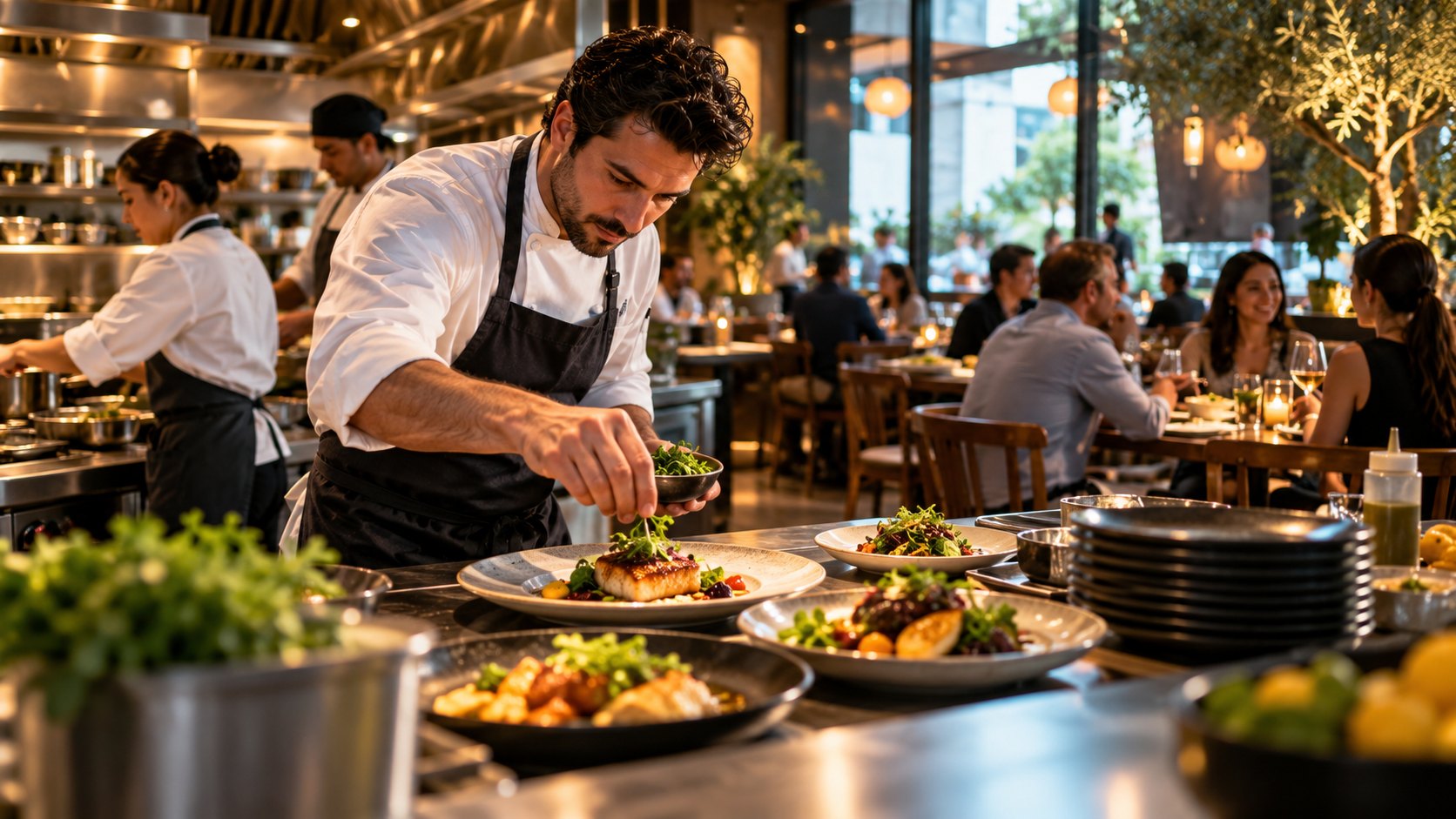
The activity covers preparing and serving food and drink to customers for consumption on the premises, with table service, from a kitchen in those premises. In practice it carries everything around that: a dining room with seating and service, a full kitchen with preparation, cooking, washing and cold storage, a menu held in stock, a reservation book, takeaway and delivery alongside the dine-in trade, and — depending on the concept and the location — outdoor seating, a bar service area and private dining.
Three things run it, and they do not behave alike.
| The menu | The room | The brigade | |
|---|---|---|---|
| What it actually decides | Margin on every cover | How many covers are possible at all | Whether the menu survives a full service |
| What a guest notices first | The price beside the dish | Whether it feels worth the price | How long the wait is |
| What goes wrong when it is too ambitious | Waste, and a kitchen missing tickets | A rent the covers cannot carry | A wage bill arriving whether the room filled or not |
| Who you are competing with on it | Everybody within walking distance | The landlord | Every other kitchen hiring the same skills |
| How quickly you can change it | Within a week | Not until the lease ends | Slowly, and never mid-season |
The focus row is the one to plan around. Because the menu is the only fast variable, it is where most operators try to solve problems that are actually in the other two columns — adding dishes to lift a weak room, or simplifying in a hurry because the kitchen cannot cope. Both are symptoms. The useful discipline is the reverse: fix the room's realistic cover count, hire the brigade you can actually get and pay, and write the menu last, to fit both.
The kitchen also sets a hard limit that has nothing to do with skill. What can be cooked depends on what can be extracted, what gas is available and what the fire provisions allow, and that is settled with the premises rather than with the chef. A concept built on a charcoal grill in a unit with no route for a duct is a concept that will be rewritten, and it is far cheaper to discover that before a lease is signed than after a fit-out.
Three neighbouring lines, and what each one gives up
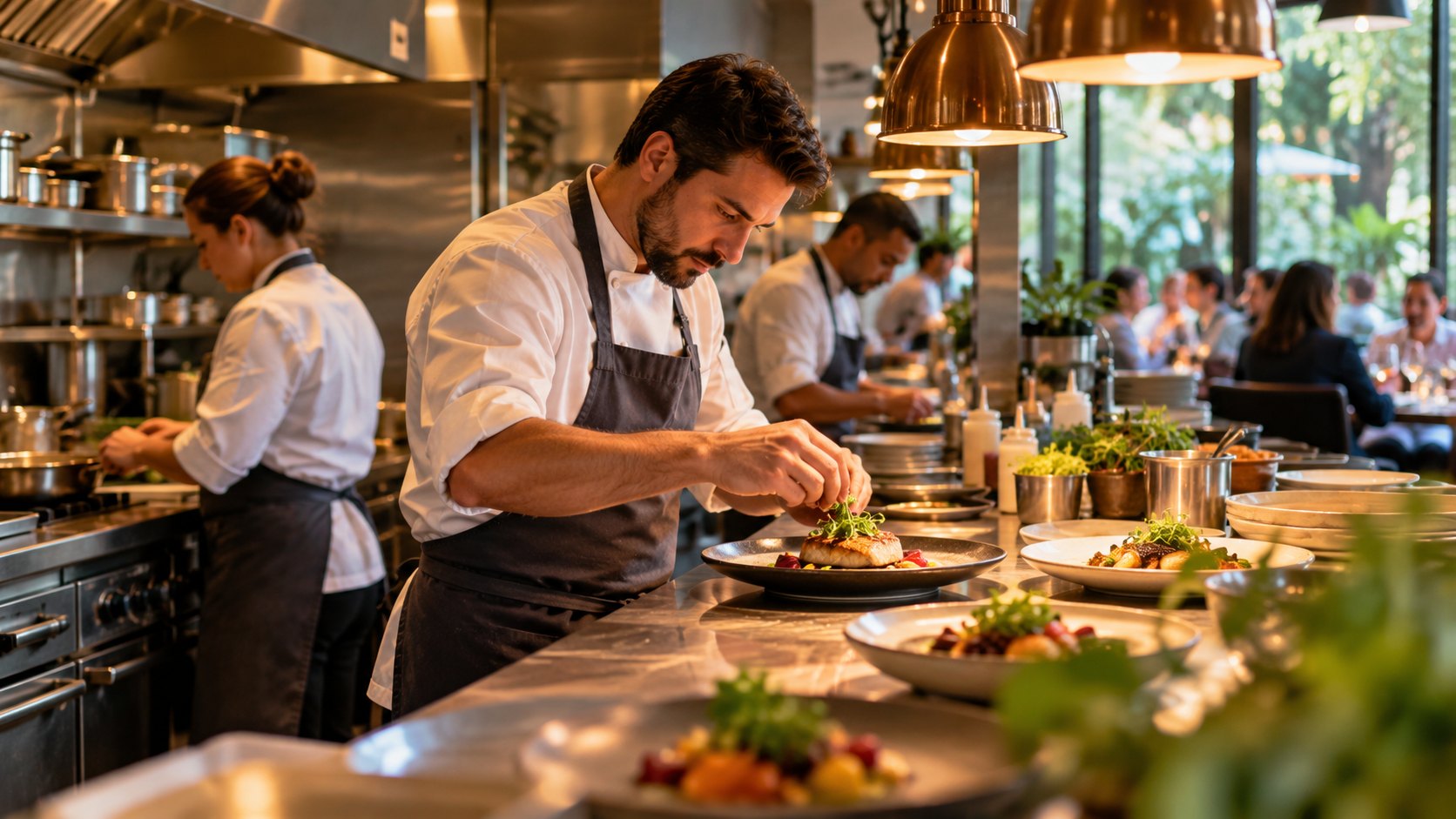
Operators routinely choose the wrong activity for the business they are describing, and the distinctions are commercial rather than semantic.
CZ 220, Cafeteria. A counter, a short menu, no table service and a low ticket, covering a lower rent with volume. It is not a cheap restaurant; it is a different model, aimed at people who are already nearby for another reason and who will not wait. Applying restaurant ambitions to cafeteria pricing is a reliable way to lose money, and the reverse — running a cafeteria in a restaurant's premises — cannot carry the rent.
CZ 275, Hospitality Services. Supplying an operation or a brigade into premises somebody else holds the food licence for. If the food leaves a kitchen licensed in your own name, that is this line and not that one, however the agreement is drafted. The useful question is whose name is on the premises licence.
A delivery-only kitchen. No dining room, no service staff, a production space and a dispatch window, selling through platforms. It gives up the thing a restaurant is actually for — a room people choose to sit in and pay a premium for — and it takes on a dependence on platform commission and ranking. It is a different business with different premises requirements, and it should be chosen deliberately rather than arrived at because the dine-in trade failed.
Catering is not a restaurant with deliveries
Worth stating separately because the boundary is crossed casually. Producing food in your restaurant kitchen to be served at somebody else's event, at volume and on their premises, is event catering: different production planning, different transport and temperature control, and different premises conditions. Doing it occasionally from a restaurant kitchen is the point at which an operator should ask what is on the licence rather than assume the kitchen covers it.
The operator who survives has already run somebody else's kitchen
The single best predictor in this trade is whether the founder has worked a full service as a manager or a head chef. Not whether they can cook — whether they have stood in a dining room at eight o'clock on a Friday with two staff missing, a table complaining and the pass backing up, and made the decisions that get the night finished. That experience teaches cover counts, waste, rota cost and the gap between a tasting and a service, and nothing else teaches it.
Three entrants do well. The experienced restaurant manager or chef going out alone, who knows the operation and usually needs a partner for the capital. The established operator opening a second site, which is the lowest-risk expansion in hospitality provided the first site can run without the founder in it. And a food business with a proven following — a home kitchen, a market stall, a delivery-only brand with real repeat orders — converting demand it can already measure into a room.
The entrant who struggles is the investor buying a concept. A restaurant is an operating business that needs somebody competent present at service, most nights, for the first year. An absent owner's losses appear in portion control, waste, stock and staff turnover long before they appear in a monthly report, and by then the lease is the problem rather than the management.
Two things are confirmed for the specific unit rather than assumed from the activity name. Food premises approval, kitchen layout, extraction, gas and fire provisions attach to the building, differ between emirates and are substantially cheaper to establish before a fit-out than after one. And where the concept involves anything beyond food and soft drinks, the conditions and permissions are specific to the emirate, the location and the premises, and are settled with the licensing authority in advance. ConsultZone establishes the licence form, the emirate and the premises conditions before a lease is signed, because the lease is the one commitment in this business that cannot be unwound.
References
- Dubai Municipality — food control, food premises approval, kitchen layout requirements and food handler obligations for restaurants in Dubai. Dubai Municipality
- Dubai Civil Defence — fire safety, extraction and gas provisions in a commercial kitchen and a public dining room. Dubai Civil Defence
- Ministry of Human Resources and Emiratisation — work permits, labour contracts and wage obligations for kitchen and service staff. Ministry of Human Resources and Emiratisation
- Federal Tax Authority — value added tax as it applies to dine-in, takeaway and delivery sales, and corporate tax enrolment and filing for the operating company. Federal Tax Authority
Elsewhere in Food & Hospitality
Activities that sit beside this one
Most licences carry more than one activity. Adding a neighbouring line at the application stage costs a fraction of amending the licence afterwards.
Begin with a clear conversation
Tell us what you intend to build.
A consultant will map the structure, jurisdiction, approvals and likely cost against what you actually described — not against a package.
