

Activity CZ 281
How to Start an Industrial Plant Equipment and Spares Trading Business in Dubai
One licence name covers two businesses. Selling industrial plant equipment is lumpy and competitive; selling spares into the installed base you supplied is the annuity that pays the rent.
ConsultZone licensing desk
- Activity code
- CZ 281
- Category
- Trading
- Reviewed
- Read
- 8 min
Topic summary
How to Start an Industrial Plant Equipment and Spares Trading Business in Dubai
Industrial plant Equipment & Spares Parts Trading is one activity name covering two businesses that behave nothing like each other, and a great many entrants discover the second one too late to build it properly.
The first is capital equipment. A mixer, a conveyor, a crusher, a heat exchanger, an industrial fan, a materials-handling system, a packaging line — sold against a written specification, bid against named competitors, decided by somebody's engineer, paid in stages, and arriving perhaps three or four times a year. One order can be most of the annual figure. It is a sales cycle measured in months, and between orders nothing much happens.
The second is spares into the machines you already supplied. Every item of plant sold is an installed base that consumes wear parts, seals, bearings, drive components and consumables for as long as it runs, which in a working factory is fifteen or twenty years. The orders are small, they are unglamorous, they arrive without a tender, and over the life of the machine they are frequently worth more than the machine was — and they are steadier, which matters more than the margin.
The argument of this page is the relationship between those two halves. A trader who sells only equipment has a business with no floor under it: a quiet year is a genuinely quiet year. A trader who sells only spares for machines he did not supply is competing on price with everybody, because the plant's maintenance planner has no reason to prefer him. The business works when the first feeds the second, and that means the equipment side must be sold with the spares life in mind rather than as a one-off win.
Who this line actually suits
The engineer with a manufacturer relationship. The strongest entrant by some distance. Industrial plant is bought on technical confidence rather than on a brochure, and the buyer's engineer can tell within a few minutes of conversation whether the person opposite understands the process the machine sits in. Somebody who has commissioned, specified or maintained this class of equipment is selling from the same side of the table as the customer.
The agent for an overseas manufacturer. A common and sound route. A factory outside the region wants representation here and does not want to open an office; the trader carries the stock of fast-moving spares, handles the documentation and the clearance, and holds the customer relationship. Worth knowing before the discussion starts: an exclusive distribution arrangement for a foreign principal is a commercial agency matter in its own right, with its own rules about how such an arrangement is recorded and ended, and that sits with the economy ministry rather than with the licensing desk.¹ It is the single most important thing to get advice on in this line, because the terms agreed casually at the start are the terms that bind years later.
The maintenance contractor stepping up the chain. A firm already servicing plant knows exactly which components fail, how often, and which machines are worth owning the aftermarket for. The spares half of this business is already running inside the service business; a trading licence lets it be sold rather than consumed.
The trader who found a cheap source. The weakest. Price is the one thing an industrial buyer discounts most heavily, because the cost of the wrong machine is measured in lost production rather than in the purchase price. A supply relationship with no technical depth behind it tends to win the orders nobody else wanted.
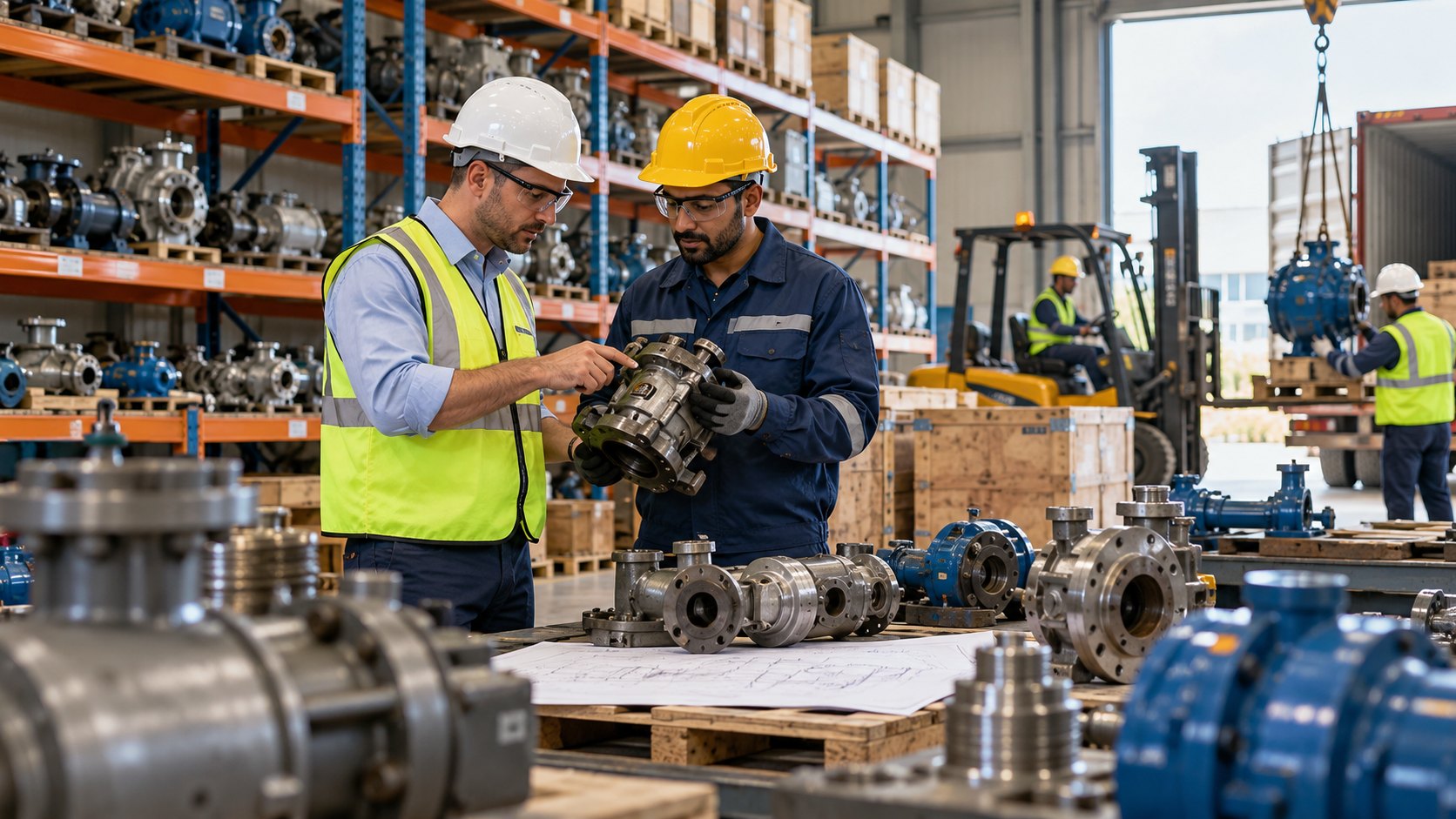
CZ 281 — Industrial plant Equipment & Spares Parts Trading
The line covers process and production plant and the components that keep it running. Equipment: mixers, agitators, crushers, mills, screens, conveyors and materials-handling systems, industrial fans and blowers, heat exchangers, dryers, boilers and pressure vessels, filtration and separation plant, packaging and bottling lines, compressed-air plant, workshop machine tools. Spares and consumables: wear liners, screens and mesh, bearings and seals, couplings, gearboxes and drives, belts and chains, filter elements, refractory, gaskets, instrumentation and the control components that fail in service.
Two things about this category are commercially decisive and neither is obvious from the activity name.
The paperwork is part of the product
On anything that matters, what the buyer's engineer accepts is not a price and a photograph. It is a file: a technical datasheet with performance figures that can be held to, material certificates where the metallurgy matters, pressure and leak test records on anything that contains a fluid, a declaration that the equipment meets the standards written into the specification, a recommended spares list and a manual. Technical regulation, national standards and conformity marking for industrial products sit with the federal industry ministry, and a specification will often name the standard rather than describe it.²
The practical consequence is that a trader who cannot produce the file cannot win the bid however good the price is, and chasing certificates out of a manufacturer after an order has been placed is the commonest way these projects go wrong. The file is negotiated with the principal before anything is quoted.
The specification is written before you are invited
A consultant or the main contractor's engineering team writes the requirement, and if a competitor's model is effectively written into it — its dimensions, its performance curve, its control philosophy — the tender is already lost when it arrives. The real commercial work in this line happens upstream, at the design stage, getting a product in front of the people writing specifications rather than in front of the people issuing them. That is why this trade rewards technical salespeople and punishes catalogue resellers, and why a quiet relationship with three consulting engineers can be worth more than a large advertising budget.
| The equipment itself | Spares for what you supplied | Spares for somebody else's machine | |
|---|---|---|---|
| Who writes the requirement | A consultant or contractor, before you are invited | The plant's own maintenance planner | Whoever quotes cheapest that week |
| What actually wins it | A specification you can meet on paper | Being on the shelf while the line is down | Price, and very little else |
| How the money arrives | In stages, against one large order | Small, and again next quarter | Small, and not reliably |
| What the buyer's engineer inspects | Datasheets, material and test certificates | The part number and the lead time | The part number and the lead time |
| What it is worth over fifteen years | One order | Fifteen years of the same plant | Nothing you can plan around |
| What takes it away | A rival's model written into the specification | A substitute the plant has approved | A supplier who holds the installed base |
The focus row is the argument. The column that looks like the business is the one that generates a single order; the column beside it is the one that is still paying in a decade. Entrants fund the first and neglect the second, and then wonder why the figures swing so violently from year to year.
What a supply licence does not let you do on site
This is the most useful paragraph on the page, because the mistake it describes is made constantly and in good faith.
A trading licence lets you supply. It does not let you install. Erecting the equipment, aligning and grouting it, making pipework and electrical connections, welding, commissioning it and signing it over are construction and contracting activities with their own licences, their own approvals and in several cases their own competence requirements. Nor does a supply licence cover maintaining the machine afterwards, which is a service activity, or fabricating any part of it, which is manufacturing.
The reason this bites is that buyers do not ask for supply. They ask for supply and installation in a single line of a tender, because that is how they want to buy it, and a trader who says yes has stepped outside his licence without noticing. The honest answers are to subcontract the site work to a licensed contractor and price it as a pass-through, to hold the additional activity if site work is going to be a permanent part of the offering, or to quote supply only and say so plainly. All three are respectable. Saying yes and working it out later is not.
Two further conditions attach to the goods rather than to the trader. Pressure vessels, boilers and anything storing or handling a flammable or hazardous material bring the premises and sometimes the installation inside fire-safety approvals, which sit with the civil defence authority.³ And classification, the importer's customs code and the clearance of each consignment — often oversized, frequently arriving in pieces against one order — sit with the emirate's customs authority.⁴
Which activity name matches the intended range, whether site work needs an additional licence, how an agency arrangement with a principal should be structured, and what the licence costs to hold all depend on the emirate, the premises and the activity mix. ConsultZone confirms that for the specific case before an agreement with a manufacturer is signed.
References
- Ministry of Economy — commercial agency arrangements for representing a foreign manufacturer, and company matters. Ministry of Economy
- Ministry of Industry and Advanced Technology — national standards, technical regulation and conformity marking for industrial equipment, and in-country value. Ministry of Industry and Advanced Technology
- Dubai Civil Defence — fire-safety approvals for pressure equipment and for hazardous or flammable storage. Dubai Civil Defence
- Dubai Customs — customs codes, classification and clearance of plant and spares consignments. Dubai Customs
Elsewhere in Trading
Activities that sit beside this one
Most licences carry more than one activity. Adding a neighbouring line at the application stage costs a fraction of amending the licence afterwards.
Begin with a clear conversation
Tell us what you intend to build.
A consultant will map the structure, jurisdiction, approvals and likely cost against what you actually described — not against a package.
