
Activity CZ 210
How to Start an Auto Accessories Business in Dubai
Fashion rather than fitment is what kills accessory stock. What auto accessories trading covers, the lines it is filed under by mistake, and who actually holds this licence.
ConsultZone licensing desk
- Activity code
- CZ 210
- Category
- Trading
- Reviewed
- Read
- 7 min
Listen instead
45 seconds
An audio summary of this guide.
Topic summary
How to Start an Auto Accessories Business in Dubai
Nobody's car breaks down and forces them to buy a set of alloy wheels. That sentence separates this trade from the spare parts business standing next to it on the same street, and almost everything else about the licence follows from it.
A spare part is bought under duress at a moment the customer did not choose, and the only question he has is whether you have it. An accessory is bought because somebody wants their car to look, sound or feel different, which means the purchase can be deferred indefinitely and the competition is not the shop across the road — it is a holiday, a phone, or simply not bothering. Three consequences fall out of that, and they shape the company more than any licensing decision will.
Obsolescence replaces fitment as the thing that kills stock. Presentation stops being decoration and becomes part of the product, because a customer who is spending discretionary money is buying how it looks on the shelf as much as on the car. And margin lives in curation and in fitting rather than in availability, because nobody is paying a premium for speed on a purchase they have been considering for a month.
CZ 210 — Auto Accessories Trading
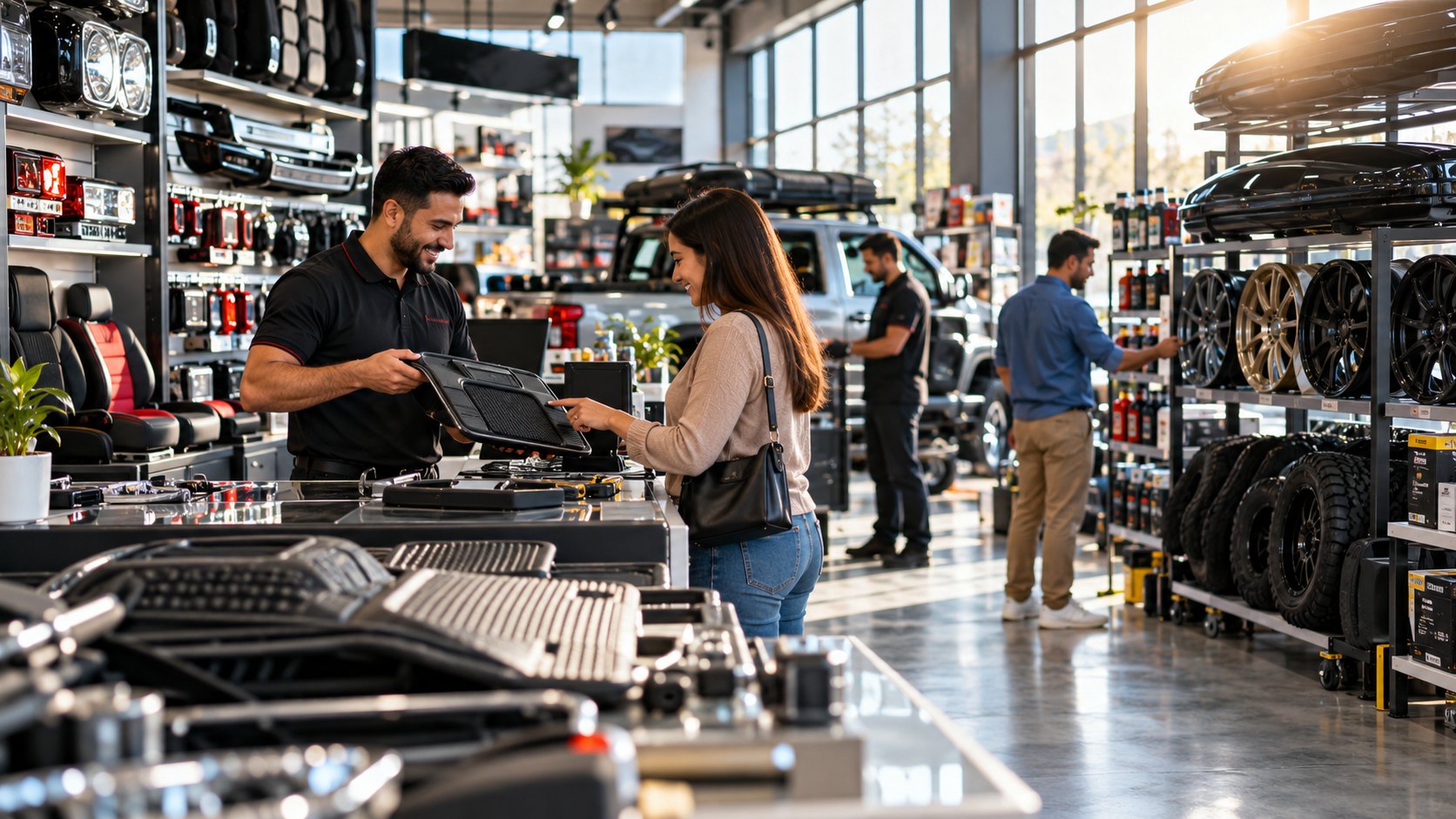
The line covers goods fitted to or carried in a vehicle after it leaves the factory, for appearance, comfort, convenience, protection or capability rather than to repair it. Wheels, trims and styling hardware. Seat covers, upholstery kits, mats and boot liners. Audio, screens and in-car entertainment. Dash cameras, parking sensors and trackers. Lighting, window film and paint protection. Roof racks, boxes and the off-road hardware that is a real market in this country — bull bars, winches, recovery gear, roof tents, auxiliary lighting. Car care chemicals, interior gadgets and the long drift of small items that sit beside a till.
Two things about that list are worth knowing before the first container is ordered.
Fashion is the inventory risk and it gives no notice. A wheel design, a lighting style or an interior trend dies without a recall and without a warning: dead stock looks exactly like stock until somebody tries to sell it. The problem compounds because accessories multiply across sizes, fitments, colours and finishes, so a single buying decision made badly becomes forty lines of slow-moving inventory rather than one. The traders who survive this buy shallow and often, hold the universal items deep, and accept that a share of each season's range will be cleared rather than sold.
Some of what you sell changes the car in the eyes of the road. Most accessories are ordinary goods and nobody will ever ask about them. A minority are not. How dark a window film may be, what colour and brightness a lamp may show, what noise an exhaust may make, what may protrude from a bumper, and what may be bolted to the structure of a vehicle in use are governed by road traffic rules and by national vehicle standards — not by the licence that lets you sell them. The control attaches to the vehicle rather than to the shop, and the person stopped at the roadside is your customer. A shop that sells and fits without knowing where that line falls is selling its customer a penalty, and the figures move, so they are checked against the authority rather than quoted from a supplier's catalogue.
How those goods reach a buyer is what decides the jurisdiction, and it is a sharper question here than on a parts counter because so much of this trade is now sold through a screen.
five routes to market, two destinations
- Fitting film, audio or wheels for an owner at your own unitBoth the customer and the car are inside the local market
- Supplying accessory shops and workshops across the UAEThe sale lands inside the UAE whoever eventually fits it
- Selling online to UAE buyers with delivery to an address hereDelivery into the country is a domestic sale wherever the storefront sits
Mainland licence
- Consolidating container loads for onward African and Central Asian marketsThe goods never clear into the UAE market at all
- Holding a brand's regional stock for distributors in several countriesThe UAE is the warehouse rather than the buyer
Free zone licence
The weight of that drawing sits on the mainland side, and the third row is the reason rather than the first. An online accessory business feels borderless and is not: a parcel delivered to a UAE address is a sale into the UAE market, and a founder who chose a zone licence because the storefront is a website discovers the limitation at the first delivery rather than at the first container. The free zone answer is correct for an operation whose goods genuinely pass through, and expensively wrong for one that intends to sell to people living here.
Three adjacent lines this one is filed under by mistake
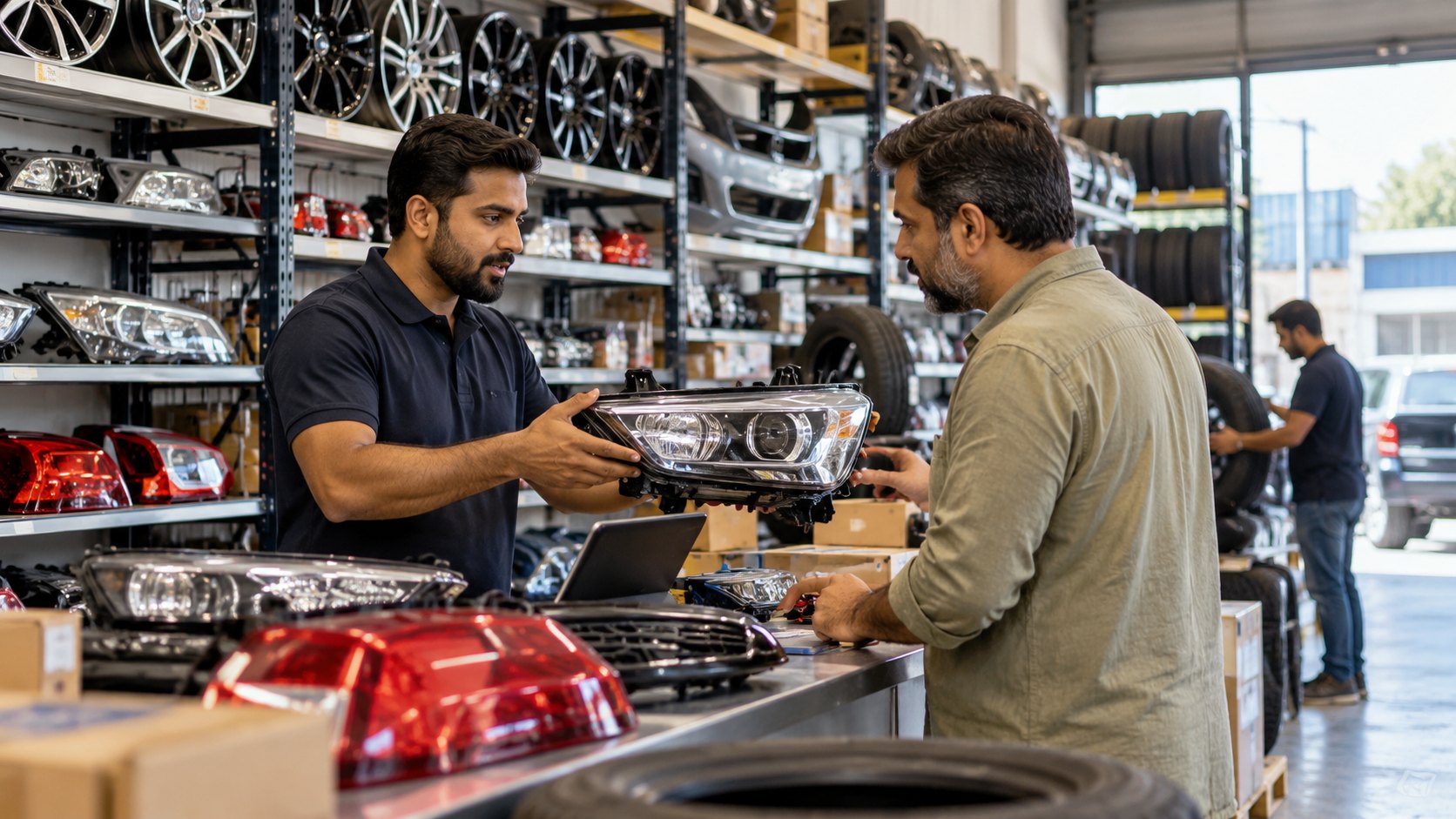
Auto spare parts and components trading. The functional part — the thing that failed. A different buyer, a different urgency, and a stock discipline built on part numbers rather than on taste. The practical test is the price list: if most of what is on it is bought because something stopped working, that is the other line, and the two are frequently held together on purpose by a business that does both.
The motor vehicle parts and accessories counter. A retail counter selling parts and accessories side by side to walk-in owners is its own activity in this catalogue. This line is the accessory trade itself — supplying it, importing it, wholesaling it, retailing it as a specialism — rather than a general counter that happens to stock mats.
Fitting, and anything that touches a vehicle's systems. Installation and repair are separate activities. Applying film, wiring an amplifier, cutting a dashboard for a screen, mounting a bar to a chassis or setting up a suspension kit is work performed on a vehicle, and a business that intends to both sell and fit holds both lines deliberately. Tyres are worth naming separately as well: they are safety-critical goods with their own conformity obligations and are usually dealt with on their own line rather than slipped in beside the wheels they bolt to.
Who this is for: the shop, the fitter and the exporter
The specialist retailer with a visible unit in an automotive cluster, trading on range and display, usually built around one theme — off-road, audio, styling or protection — because a shop that stocks everything shallowly has nothing a customer cannot buy elsewhere.
The fitter who sells what he installs. The most durable version of this business, because the fitting bay converts browsing into a sale on the same visit and the labour margin is not exposed to a price comparison. It requires both activities, and planning them together is cheaper than adding the second one later.
The online seller with a warehouse rather than a shopfront, competing on photography, cataloguing and delivery speed, and carrying a returns rate that a physical shop never sees because nothing was handled before it was bought.
The wholesaler and exporter supplying shops across the UAE and shipping onward to the region. Volume, pallets, documents and payment terms rather than a counter, and a different product mix because the vehicles in those markets are older than the vehicles here.
Where this is the wrong licence. A founder whose real plan is a workshop — tinting, audio installation, body kits, suspension work — is describing a service business that happens to sell goods, not a trading business that happens to fit them. What the premises must be, which conformity obligations reach a particular product, and what a licence costs to hold all depend on the emirate, the unit and the final product list, and ConsultZone confirms those against the actual plan rather than against the activity name.
References
- Roads and Transport Authority — vehicle and transport permits in Dubai, and the rules governing what may be fitted to a vehicle in use. Roads and Transport Authority
- Ministry of Industry and Advanced Technology — national standards and conformity marks for vehicle equipment offered for sale. Ministry of Industry and Advanced Technology
- Dubai Customs — importer codes, consignment clearance and the treatment of restricted goods. Dubai Customs
- Dubai Municipality — premises suitability for a retail unit and its storage space in Dubai. Dubai Municipality
- UAE Government portal — the commercial agency framework behind distributor arrangements, and federal government information on licensed trading. UAE Government portal
Elsewhere in Trading
Activities that sit beside this one
Most licences carry more than one activity. Adding a neighbouring line at the application stage costs a fraction of amending the licence afterwards.
Begin with a clear conversation
Tell us what you intend to build.
A consultant will map the structure, jurisdiction, approvals and likely cost against what you actually described — not against a package.
