
Activity CZ 237
How to Start a Decoration Design and Implementation Business in Dubai
The second half of Decoration Design and Implementation is the half that earns: it turns a drawing into work somebody pays for. What this line lets you build, and the three places it stops.
ConsultZone licensing desk
- Activity code
- CZ 237
- Category
- Construction & Interior Works
- Reviewed
- Read
- 6 min
Listen instead
45 seconds
An audio summary of this guide.
Topic summary
How to Start a Decoration Design and Implementation Business in Dubai
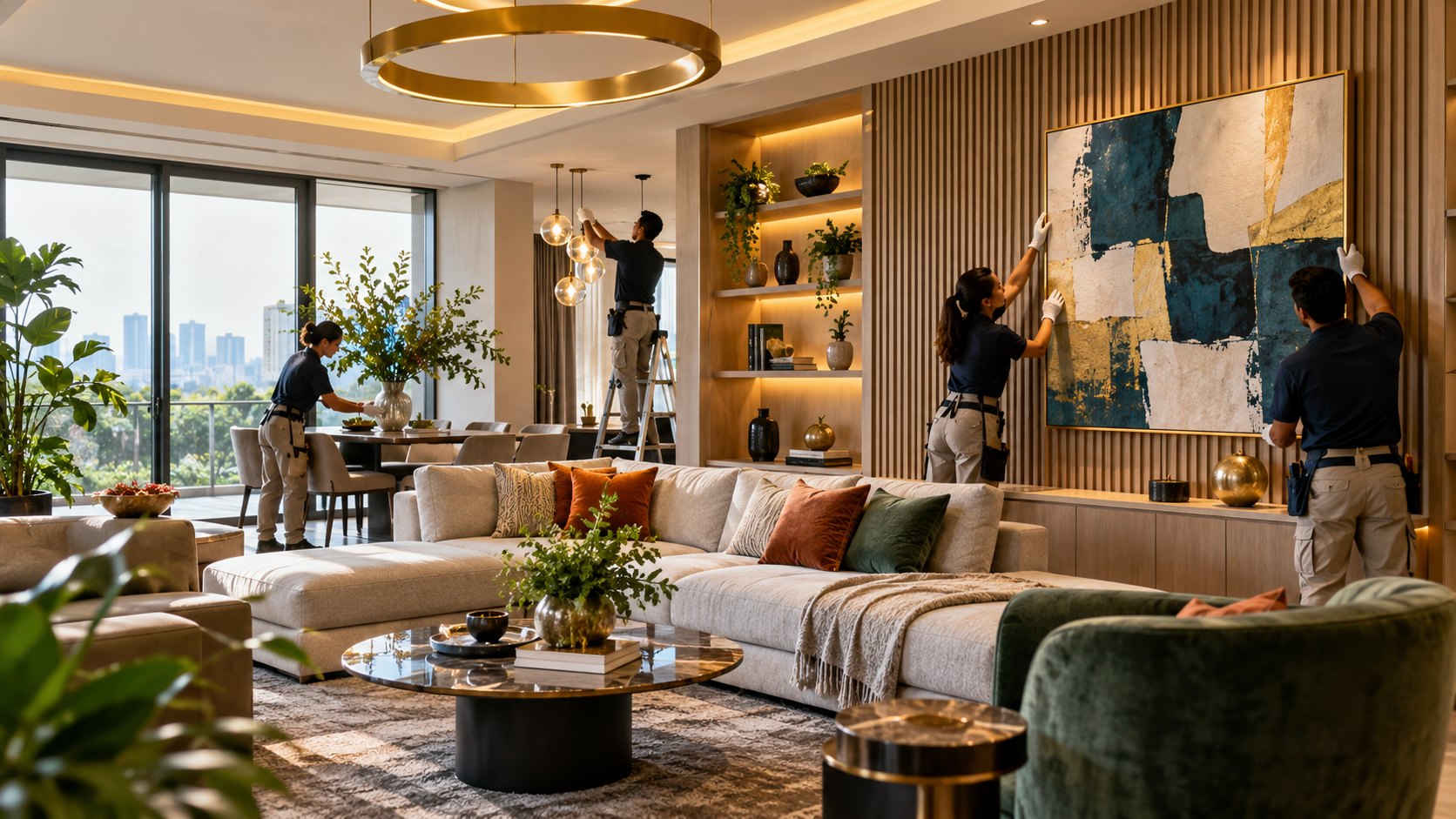
Most of the trades in a finished interior do one thing well and are paid for that thing. Decoration Design and Implementation is the line that sells the drawing and then the building of it, and the second half of that name is the half that earns. A designer who only draws hands the client a set of sheets and a problem. A contractor who only builds is given a scheme he had no part in and inherits every awkward decision inside it. This activity is the one that owns both ends, which is why it is the line that fit-out firms, interior studios and home-renovation businesses in the UAE most often end up holding.
It is also the line with the most uncomfortable conversation built into it. A business that designs and then builds its own design is recommending work it will quote for. Clients know this, and the good ones ask about it. The firms that handle it best separate the two commercially from the start — a design fee that buys drawings the client owns and could take elsewhere, then a build price quoted against those drawings. Whether the design fee is credited back against the build is the single most negotiated line in the proposal, and leaving it unsaid is how a profitable job turns into an argument at the end.
The commercial shape follows from that. Design is a short, intellectually dense engagement billed in stages — concept, developed layout, finishes, construction drawings — and it costs almost nothing but time. Implementation is a works contract with material, subcontractors, a programme and a liability, and it is where the money and the risk both live. A studio that wins the design and loses the build has worked for weeks to hand a competitor a priced scope.
- Fix the scope in a drawing the client signs, not in a conversation
- Price the design and the build separately, and say which credits against which
- Does the work touch structure, power distribution or drainage
- YesThose trades sit on their own permitted lines, and the drawing goes for approval before anybody is on site
- NoA finishes-only fit-out, and the building owner or association is the gate
- Put every trade you do not hold on a subcontract that carries its own licence
That question in the middle is the one that decides how hard a job is going to be. A scheme that replaces finishes, joinery and lighting fittings inside an existing layout is a decoration job. A scheme that moves a wall, relocates a distribution board, adds a bathroom or reroutes a drainage stack has become a building alteration, and in the UAE those are not interchangeable. The second kind needs the drawing looked at and permitted before a tool arrives, and the trades inside it are separately licensed activities rather than things a decoration firm simply does. Pricing a job of the second kind as if it were the first is the classic way a small fit-out business loses a year.
Who is this for?
Interior studios that are tired of being a drawing office
The most natural fit. A studio with a portfolio, a client list and no construction arm is already being asked to recommend contractors, and is already blamed when one of them performs badly without being paid for carrying that risk. Taking the implementation side converts an advisory fee into a project margin, at the cost of needing a project manager, a subcontractor base and the appetite to be the one holding the programme.
Home renovation and villa refurbishment businesses
A genuinely large market here, driven by a stock of villas and apartments old enough to need a second interior and owners who have no intention of managing eleven trades themselves. The buyer is a household, the decision is emotional as well as financial, and the work is sold on photographs, references and the ability to give a fixed price. Cash flow is the better part of it: a private client pays stages directly, with no main contractor between you and the money.
Retail and hospitality roll-out contractors
Brands opening a second, fifth and twentieth outlet want the same interior reproduced quickly in a different shell. The design is largely done, the value is in adapting it to each unit and delivering inside a landlord's fit-out window. This is the most operationally demanding version of the line and the most repeatable, because one brand relationship can carry a business for years.

What you can and cannot do under this line
Design and implementation of decorative and finishes work is the core: layouts, finishes and colour schemes, joinery and fitted furniture, false ceilings, decorative wall treatments, floor finishes, loose furniture specification, lighting selection and the coordination of everybody who installs it. That coordination is real work and is the part clients undervalue until they have tried doing it.
Three boundaries matter, and all three are places where the licence runs out rather than where skill does.
It is not an engineering consultancy. Structural calculation, the design of a building's mechanical, electrical and plumbing systems and the stamping of drawings are separately licensed professional activities. A decoration firm specifies and coordinates; it does not certify.
It does not absorb the other trades. Electrical work, plumbing, air conditioning installation, plaster, painting and carpentry each have their own activity lines, several of them in the same catalogue as this one. A decoration business may hold some of them, and many do, but holding none of them means every trade on site must be a properly licensed subcontractor rather than your own labour in your own shirt.
It does not override the building. In an occupied tower or a managed community, the owner, the developer or the owners' association controls access, working hours, lift use, protection of common areas and what may be altered at all. Those permissions sit above whatever the licence permits, and they are the reason an apparently simple apartment refurbishment can wait weeks before it starts.
Premises and practical conditions
The design half needs very little: an office, a meeting space and somewhere to keep a sample library, because clients choose finishes by touching them rather than by looking at a rendering. The implementation half needs decisions. A store for materials and tools, a vehicle, and — if any joinery is to be made rather than bought — a workshop, which is a different class of tenancy altogether and usually the point at which a firm decides to subcontract the making instead.
Two practical conditions shape everything else. Fit-out materials are looked at for fire performance in commercial buildings and common areas, which is a fire safety matter rather than a licensing one and is settled by specification rather than by argument on site. And construction waste from a strip-out has to leave by a route the municipality recognises, which is an item in the price that inexperienced firms forget to include.
What the licence costs, what the premises must provide, which activity combinations may sit on one licence and what approvals a given scheme needs all depend on the emirate, the licensing authority and the building. ConsultZone confirms those for the specific project rather than offering a figure that will not survive contact with it.
References
- Dubai Municipality — building works, premises suitability, alterations to existing buildings and construction waste in Dubai. Dubai Municipality
- Dubai Civil Defence — fire safety requirements affecting fit-out materials, finishes and site conditions. Dubai Civil Defence
- Ministry of Economy — commercial and company matters, and intellectual property in design work. Ministry of Economy
- Ministry of Industry and Advanced Technology — national standards and conformity marks applying to building and finishing materials. Ministry of Industry and Advanced Technology
Elsewhere in Construction & Interior Works
Activities that sit beside this one
Most licences carry more than one activity. Adding a neighbouring line at the application stage costs a fraction of amending the licence afterwards.
Begin with a clear conversation
Tell us what you intend to build.
A consultant will map the structure, jurisdiction, approvals and likely cost against what you actually described — not against a package.
