
Activity CZ 01
How to Start an Animal Production Business in Dubai
Animal production is one of the few licence lines where the premises decide the jurisdiction. What the activity covers, where it stops, and who is obliged to buy from a UAE farm.
ConsultZone licensing desk
- Activity code
- CZ 01
- Category
- Agriculture
- Reviewed
- Read
- 7 min
Listen instead
43 seconds
An audio summary of this guide.
Topic summary
How to Start an Animal Production Business in Dubai
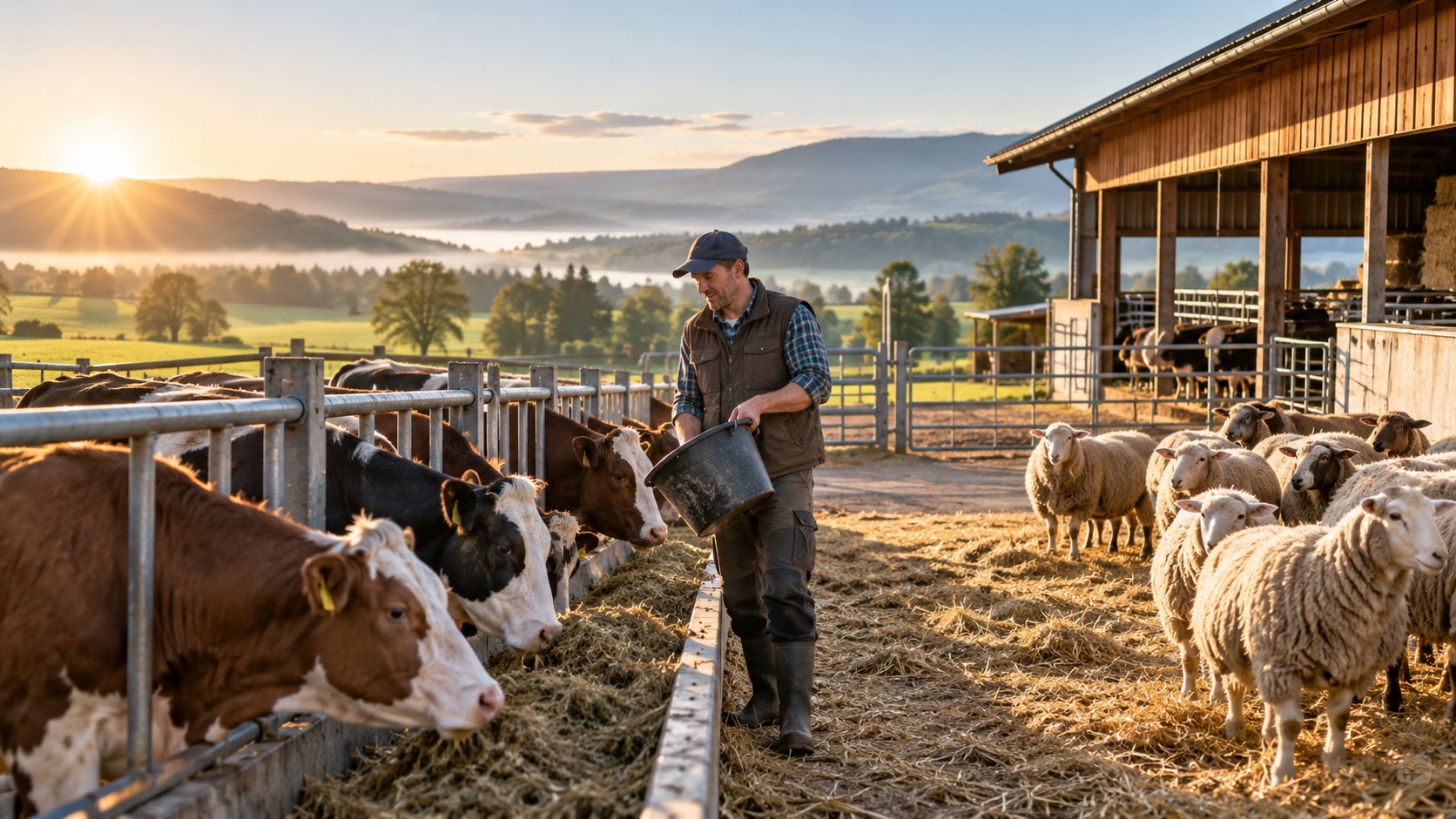
Animal production means keeping and breeding land animals for commercial output — cattle, sheep, goats, camels, poultry, horses, rabbits, bees — from the moment they are born or hatched until they are ready for market. It is the first link in the food chain, and in the UAE it is a link the country is deliberately trying to shorten.
The reason is structural. The UAE grows a minority of the food it eats and imports the rest, which is the stated premise of its own National Food Security Strategy — and animal protein is one of the widest of those gaps, because a desert climate makes feed, water and cooling the three most expensive inputs in the business.¹ That gap is the market, and it is the one thing about this activity that has not changed in a decade.
A gap that size only becomes a business if somebody is obliged to buy from the near side of it. Somebody is. The Ministry of Climate Change and Environment runs the National Farms Sustainability Initiative, which commits government and semi-government buyers to taking a rising share of their food from UAE farms in three phases — 50 per cent of their requirement in 2023, 70 per cent in 2025 and 100 per cent by 2030.² Red meat, poultry and table eggs are all named in the first group of ten products it covers, alongside dairy, dates and salad crops.
share of the public food requirement that must come from UAE farms
- 2023Public and semi-government buyers must take 50 per cent of their food requirement from UAE farmsNational Farms Sustainability Initiative, phase one
- 2025The floor rises to 70 per centPhase two
- 2030The floor reaches 100 per centPhase three — red meat, poultry and table eggs all named
Read that precisely, because it is narrower and more useful than the way it is usually quoted. The commitment binds public purchasing and the contractors who supply it — not the whole market. It does not promise that every household will buy local. What it does mean is that ministries, schools, hospitals, military catering and their suppliers have a procurement floor that rises on a published timetable, and a licensed UAE farm with a food-safety record is who they have to buy from.
Who is this for?
Investors
A sector whose demand floor is set by policy rather than by fashion. The attraction is not the margin on a kilo of chicken; it is that the offtake is legible years ahead.
Agri-food founders
Operators who already run food production, processing or distribution elsewhere and want a UAE base for regional reach. The question for them is whether the farm feeds their own supply chain or somebody else's.
Livestock specialists
Veterinarians, animal nutritionists and farm managers commercialising genuinely scarce expertise. Worth checking first whether the plan is farming at all or a service sold to farmers — those are two different licence lines, and the boundary is below.
CZ 01 — Animal production
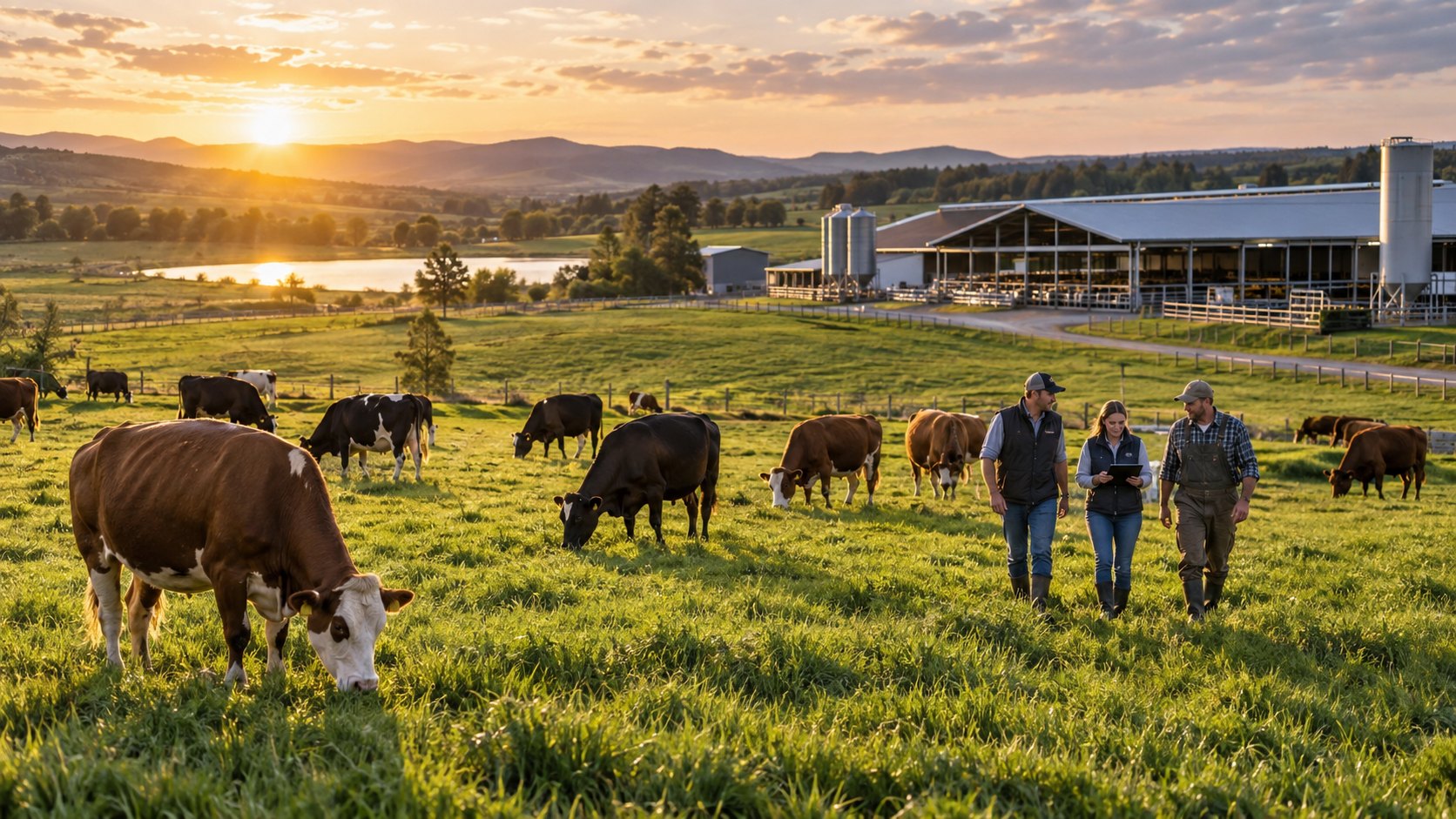
Under this activity you keep, feed, grow and breed land animals for commercial output, whatever form the output takes: meat, milk, eggs, wool, hair or honey. In practice that is five families of business under one line.
Poultry
The largest of them and the shortest route in — broilers raised for meat, layers kept for table eggs, and the same for ducks and turkeys. The cycle is measured in weeks rather than years, which is why a poultry operation reaches a supply contract long before a herd does. It is also the most price-exposed, because imported frozen chicken sets the benchmark your fresh product is measured against.
Dairy
Cows kept for fresh milk and cattle bred for the meat chain. Capital-heavy, slow to start, and already served by established operators with national distribution.
Red-meat livestock
Sheep and goats raised for meat and milk. Demand is steady, the seasonal peaks are sharp, and supply is fragmented enough that a well-run mid-sized farm has somewhere to sell.
Camels
Their own market — milk, cultural use and racing stock. Camel dairy in particular has moved from a heritage product to an exported one.
Specialty
Everything else the line permits: beekeeping for honey and wax, rabbits raised for meat, ostrich and emu. Small volumes, high value. Sidr honey from the Hatta hills is the clearest example of a UAE speciality that commands a premium abroad as well as at home.
Horse breeding belongs here too, as the raising of an animal. Running racing or stud services does not.
What this activity does not cover
The line stops at the farm gate, and most licensing trouble on it comes from assuming otherwise. Slaughter, cutting and packing sit on a separate licence. Treating hides and skins is classified as manufacturing rather than farming. Selling stud or insemination services to other farms is a service sold, not an animal raised. Boarding or grazing animals somebody else owns is the same. Anything involving fish, shrimp or other aquatic species belongs to aquaculture, which is its own activity entirely.
The test is short. If you are raising and growing the animal, you are inside this line. If you are servicing, boarding or processing after the animal leaves the farm, you are not — and amending an activity after the licence is issued costs more than getting it right, at exactly the point when there are animals on the ground and no lawful way to sell them.
The premises decide the jurisdiction
This is the question we are asked last and should be asked first. Animals need premises that are approved to hold them, with housing, feed handling, water, waste and somewhere for veterinary work. That requirement is physical, and it is what actually settles where the company should be incorporated — not the tax position and not the licence fee. A free zone licence gives you a company and an address; it does not come with agricultural land, and most zones have none to give. Settle the site first and let the site narrow the list of jurisdictions.
Where this is the wrong purchase. If you intend to trade animal products rather than produce them — importing frozen poultry, wholesaling dairy, distributing feed — this is the wrong activity, and a trading line will serve you better and cost less to hold.
Third-party approval
Two bodies have a say beyond the authority that issues the licence, and the order matters more than the total. The Ministry of Climate Change and Environment is the federal authority for agriculture and animal wealth; it sets the sector policy, operates the National Agriculture Centre and administers the federal animal health regime. The local municipality covers public health and environmental conditions on the site itself — waste, effluent, odour, groundwater and the handling of anything that leaves the farm as food. Files on this activity run long when the site approval is chased after the licence application rather than before it. The approvals that apply to your chosen emirate or zone should be confirmed before you commit, because the wording and the conditions differ between them.
Anti-money-laundering supervision
Animal production is not one of the designated non-financial activities the UAE's anti-money-laundering regime supervises. Two federal instruments do bear on how the farm operates: Federal Law No. 16 of 2007 on the Protection of Animals, which sets the standards for feeding, housing, transport and treatment,³ and Federal Law No. 9 of 2017 on Veterinary Products, which governs the medicines and biologicals a farm may use.⁴ The veterinary and agricultural quarantine framework was itself replaced in 2025, so import and movement permits should be checked against the current text rather than against older guidance.
Corporate tax applies as it does to any UAE business: nine per cent on taxable income above AED 375,000 and zero on the first AED 375,000, with a zero rate available to a qualifying free zone person on qualifying income subject to the substance conditions.⁵ Every taxable person completes their own corporate tax filings with the Federal Tax Authority whatever rate ends up applying.
References
- National Food Security Strategy 2051 — the UAE's own statement of its import dependence and its domestic production targets. UAE Government portal
- National Farms Sustainability Initiative — the phased domestic procurement floor for public and semi-government buyers, 2023, 2025 and 2030. Ministry of Climate Change and Environment
- Federal Law No. 16 of 2007 on the Protection of Animals — housing, feeding, transport and treatment standards. UAE Government portal
- Federal Law No. 9 of 2017 on Veterinary Products — the medicines and biologicals a farm may hold and use. UAE Government portal
- Federal Decree-Law No. 47 of 2022 on the Taxation of Corporations and Businesses. Ministry of Finance
Elsewhere in Agriculture
Activities that sit beside this one
Most licences carry more than one activity. Adding a neighbouring line at the application stage costs a fraction of amending the licence afterwards.
Begin with a clear conversation
Tell us what you intend to build.
A consultant will map the structure, jurisdiction, approvals and likely cost against what you actually described — not against a package.
