

Activity CZ 207
How to Start an Air Freight and Passenger Charter Business in Dubai
Air charter is sold on the day a schedule broke, and response time is the product. What the freight and passenger charter line lets you arrange, and where arranging a flight stops and operating one begins.
ConsultZone licensing desk
- Activity code
- CZ 207
- Category
- Transport & Logistics
- Reviewed
- Read
- 7 min
Listen instead
54 seconds
An audio summary of this guide.
Topic summary
How to Start an Air Freight and Passenger Charter Business in Dubai
Nobody charters an aircraft because it is the cheap option. A charter is bought on the day a plan failed — a production line standing idle for one component, a grounded aircraft waiting on a part, a transformer that will not fit through the door of anything scheduled, a crew rotation into a place no airline serves, a team that has to be in two countries before Monday. Air Freight & Passengers Charters, as the line reads in the activity catalogue, is the business of answering that call inside the hour, and the hour is the product.
That one fact shapes the whole trade. The buyer is not weighing your quote against a better one next week; he is weighing the flight against the cost of whatever has stopped. Price sensitivity collapses and response time becomes the entire competitive position. A desk that answers at three in the morning with an aircraft type, a tail held on option and an honest wheels-up time takes work that a desk answering at nine with a keener rate has already lost.
It also makes the income lumpy in a way newcomers underestimate. A charter desk does not earn a little every month; it earns a lot on a handful of days and nothing in between, and the gap between those days is funded out of working capital. Operators generally want to be satisfied about payment before an aircraft moves, while corporate clients pay on their own terms afterwards. The desk sits in the middle of that mismatch, and the size of the deals makes the mismatch heavy — a single wide-body freighter movement can be worth more than a month of ordinary logistics billing, which cuts both ways. Credit discipline, not sales, is what kills young charter businesses.
Dubai is a rational place to run one. The emirate sits inside a night's flying of Europe, Africa, the Indian subcontinent and most of Asia, it has the ground infrastructure and the aircraft population of a major hub, and it is a natural staging point for exactly the cargo that ends up on an ad-hoc flight: energy equipment, mining and drilling spares, humanitarian loads, live animals, and anything outsized moving between continents that lack a direct service.
Who this line suits, and who it defeats
The common thread among people who make this work is that they already have the telephone numbers. A charter desk is a network business with a licence attached, and the licence is the easy half.
Freight forwarders and logistics operators
The most natural entrants, because they already have the client relationships and already meet the moment when a scheduled shipment has failed. For them the charter line is a way of keeping an escalation in-house rather than handing it to a competitor and watching the client discover how good that competitor is.
People out of the aviation industry
Former charter sales, operations and ground-handling staff with live operator relationships. The advantage is knowing which operators actually deliver on a promised slot and which only promise, which is knowledge that cannot be bought and is the difference between repeat work and one angry client.
Corporate and private travel operators
The passenger half is a separate market with its own buyers — corporate groups, sports teams, film and events crews, delegations, medical transfers. It is relationship-led, repeat, and far less technical than the cargo side, but it is also where a reputation is lost in one badly handled departure.
Traders and project contractors
Businesses chartering mainly for themselves who conclude they may as well sell the capability. This works least often. Selling charter to third parties is a service business with a service business's obligations, and it does not run itself alongside something else.
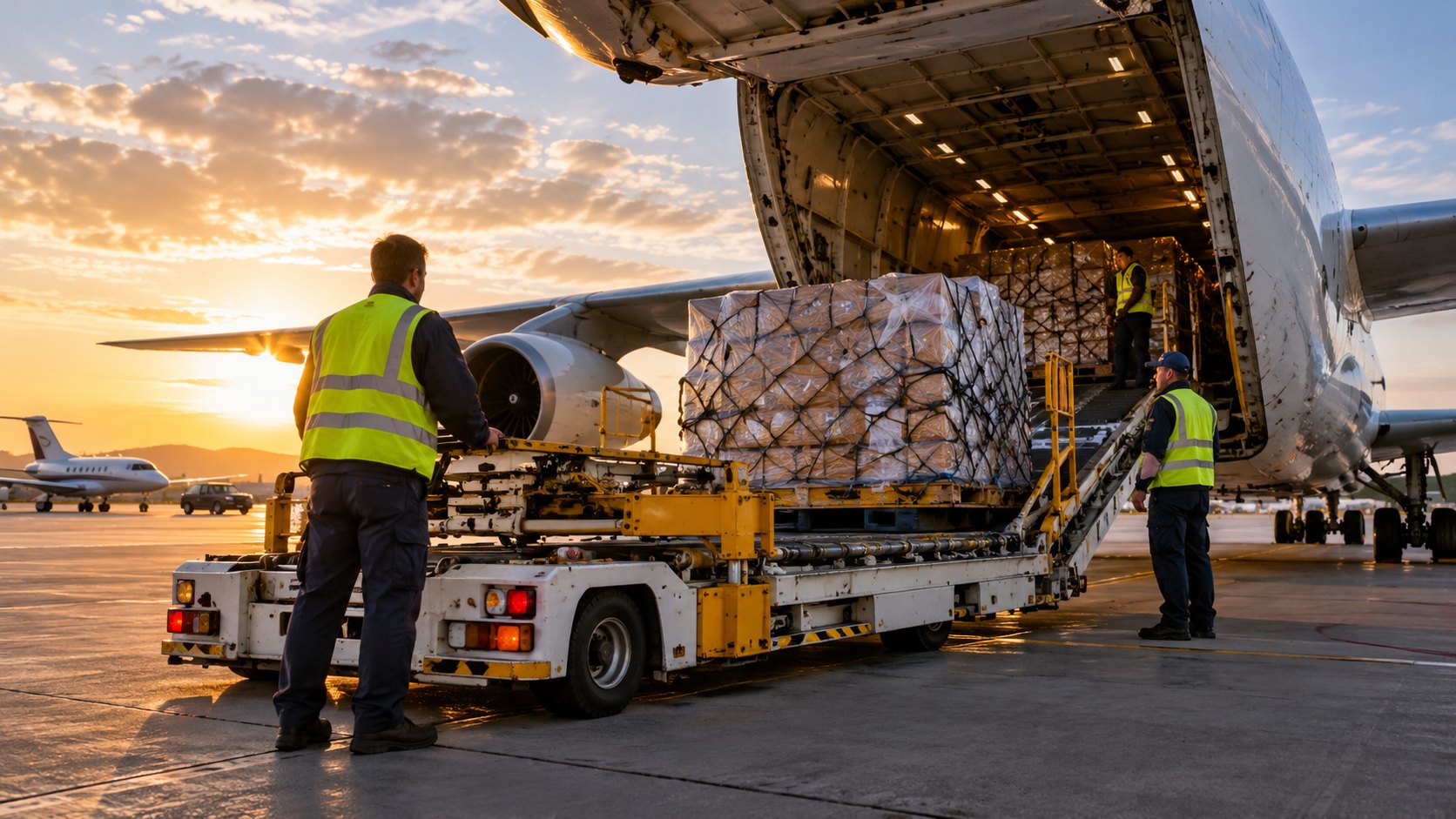
What you can and cannot do under this line
The single most important boundary on this page is the one between arranging a flight and operating one, because it is invisible from the licence and absolute in practice.
Under a commercial licence of this kind you can solicit and quote charter work, source capacity from operators, negotiate and contract for it, arrange the attendant services through the parties who provide them, handle the paperwork and the client relationship, and sell to clients inside and outside the UAE. You are selling access, judgement and speed. That is a real business and most of the charter market is conducted by people doing exactly it.
What a commercial licence does not do is put you in command of an aircraft. Carrying cargo or passengers for reward in your own right is an operator's activity, and in the UAE operator approvals are a matter for the federal civil aviation regulator and are held on their own terms by the airline or operator that holds them. Nothing issued by an economic department substitutes for that. So the aircraft on every flight you sell belongs to, and is operated by, somebody who has been approved to operate it, and your contract sits in front of that arrangement rather than replacing it.
Two further limits are worth stating because they catch people. Holding out a published, repeating service with a timetable is a scheduled operation and a different thing entirely. And the goods themselves do not become your business merely because you booked the flight: dangerous goods, pharmaceuticals, live animals and anything restricted at either end carry their own carriage and clearance conditions, which are satisfied by whoever actually carries and clears them. Dubai Customs decides what may enter and leave and under what documentation, whoever arranged the aircraft.
Premises and practical conditions
This is a desk business, and recognising that saves a great deal of money. What the work needs is a quiet office, two screens, good telephony and — the condition that actually binds — somebody awake. Charter enquiries arrive out of hours by definition, because an emergency has no office hours, and a rota is the real fixed cost of the business rather than the rent.
What it does not need is airside access, a hangar, a bonded warehouse or any ground-handling capability. Those belong to the operators and handlers you buy from, and acquiring them is a decision to enter a different and far more capital-hungry trade. The practical question that decides your licensing conversation is whether you ever intend to take the cargo into your own custody. A desk that never touches freight is a straightforward commercial operation; the moment you want to consolidate, store or hold goods yourself, premises and bonded status come into it and the activity mix changes.
The jurisdiction question follows from the client list rather than from the aircraft.
five rows, judged the same way for both
| Judged on | Mainland | Free zone |
|---|---|---|
| Sell and invoice charters to UAE-based corporate clients | Yes | Through a mainland intermediary |
| Invoice clients outside the UAE | Yes | Yes |
| Bid for UAE government and semi-government charter work | Yes | Generally not |
| Take cargo into your own custody or storage | Needs the premises for it | Needs bonded premises inside the zone |
| Operate the aircraft yourself | No, that is an operator approval | No, that is an operator approval |
The last row is the useful one: neither answer changes it. A desk selling mainly to UAE companies, and anybody who wants to be eligible for public-sector work, has a straightforward reason to be on the mainland. A desk whose clients are overseas traders and whose money never touches the local market has a real argument for a free zone. What the exact conditions and costs are depends on the emirate, the premises and the activity mix, and that is what ConsultZone settles against a specific plan rather than a general one. The one thing neither route buys is the right to fly the aeroplane.
References
- General Civil Aviation Authority — aircraft operation, operator and maintenance approvals, aviation fuel. General Civil Aviation Authority
- Dubai Customs — air cargo import and export documentation, restricted and prohibited goods. Dubai Customs
- Federal Tax Authority — how VAT applies to the international carriage of goods and passengers, and enrolment for it. Federal Tax Authority
Elsewhere in Transport & Logistics
Activities that sit beside this one
Most licences carry more than one activity. Adding a neighbouring line at the application stage costs a fraction of amending the licence afterwards.
Begin with a clear conversation
Tell us what you intend to build.
A consultant will map the structure, jurisdiction, approvals and likely cost against what you actually described — not against a package.
